In endocrinology, timing can be everything. The earliest windows of development can shape health for years to come, while a timely diagnosis, a trusted voice, or a committed clinician can alter the course of a patient’s life. This issue of Endocrine News explores those pivotal moments — and the people working to make them count.
In “Closing Windows of Vulnerability: EDC Exposure During Development,” Kelly Horvath examines how exposure to endocrine-disrupting chemicals during vulnerable stages of development may influence brain function, bone development, and hormonal programming. Drawing on three studies, it moves beyond identifying risk to consider practical ways individuals, clinicians, regulators, and product designers can help reduce exposure and lessen its consequences.
In “Building Trust, One Post at a Time,” Sehrish Waheed, MD, talks to Glenda Fauntleroy Shaw about how social media can become more than a platform: Used thoughtfully, it can strengthen professional connections, support learning, and help build trust with patients, including those affected by obesity stigma. Her perspective offers an encouraging look at how early-career endocrinologists are shaping both practice and public conversation.
A Focus on Hypophosphatasia
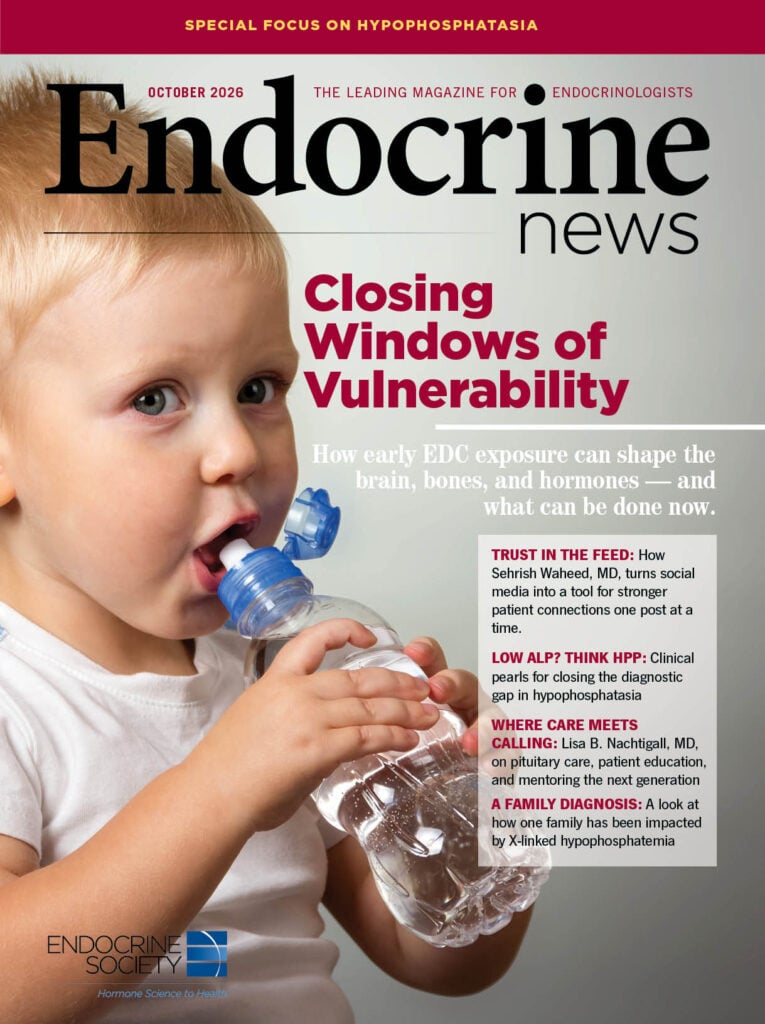
- Ahead of World HPP Day on Oct. 30, we are turning our attention to hypophosphatasia with two articles on this rare disorder. Courtesy of the Endocrine Society’s Bone and Mineral Special Interest Group Steering Committee, we have a discussion of how persistently low alkaline phosphatase can be an important clinical clue in “Low ALP, Think HPP: Clinical Pearls in Hypophosphatasia” co-written by Anika Anam, MD, and Azarmindokht Khosravi, MD. This piece not only addresses the diagnostic gap, it serves as a preview for an October 29 webinar titled “Hypophosphatasia: From Molecular Mechanism to Clinical Practice.”
- X-linked hypophosphatemia can be overlooked for generations when bone and mobility problems are mistaken for normal development or inherited family traits. “X-Linked Hypophosphatemia: A ‘Family Diagnosis’” by Kelly Horvath presents one family’s diagnostic experience and emphasizes testing, genetic counseling, and family-wide follow-up. Kelly also highlights one pharmaceutical’s company efforts to support families dealing with XL HPP through a family friendly portal.
And in “Where Care Meets Calling,” our Practice Resources Q&A, 2026 Vigersky Outstanding Clinical Practitioner Award recipient Lisa B. Nachtigall, MD, talks to Glenda about her career and reflects on complex pituitary care, patient education, service, and the enduring value of early mentorship.
Together, these stories remind us that progress often begins with recognizing a critical window — then having the knowledge, tools, and determination to act. I hope this issue informs your work, sparks new questions, and reinforces the many ways endocrinology improves lives. And, as always, feel free to reach out to me for your comments, suggestions, and recommendations: [email protected].