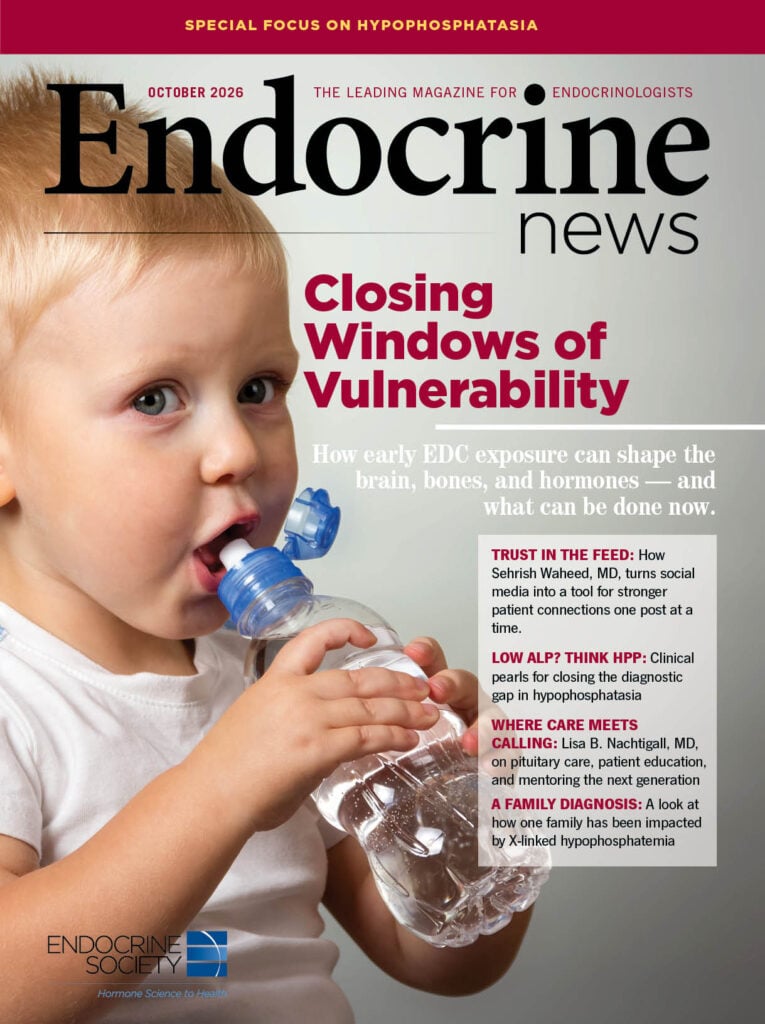
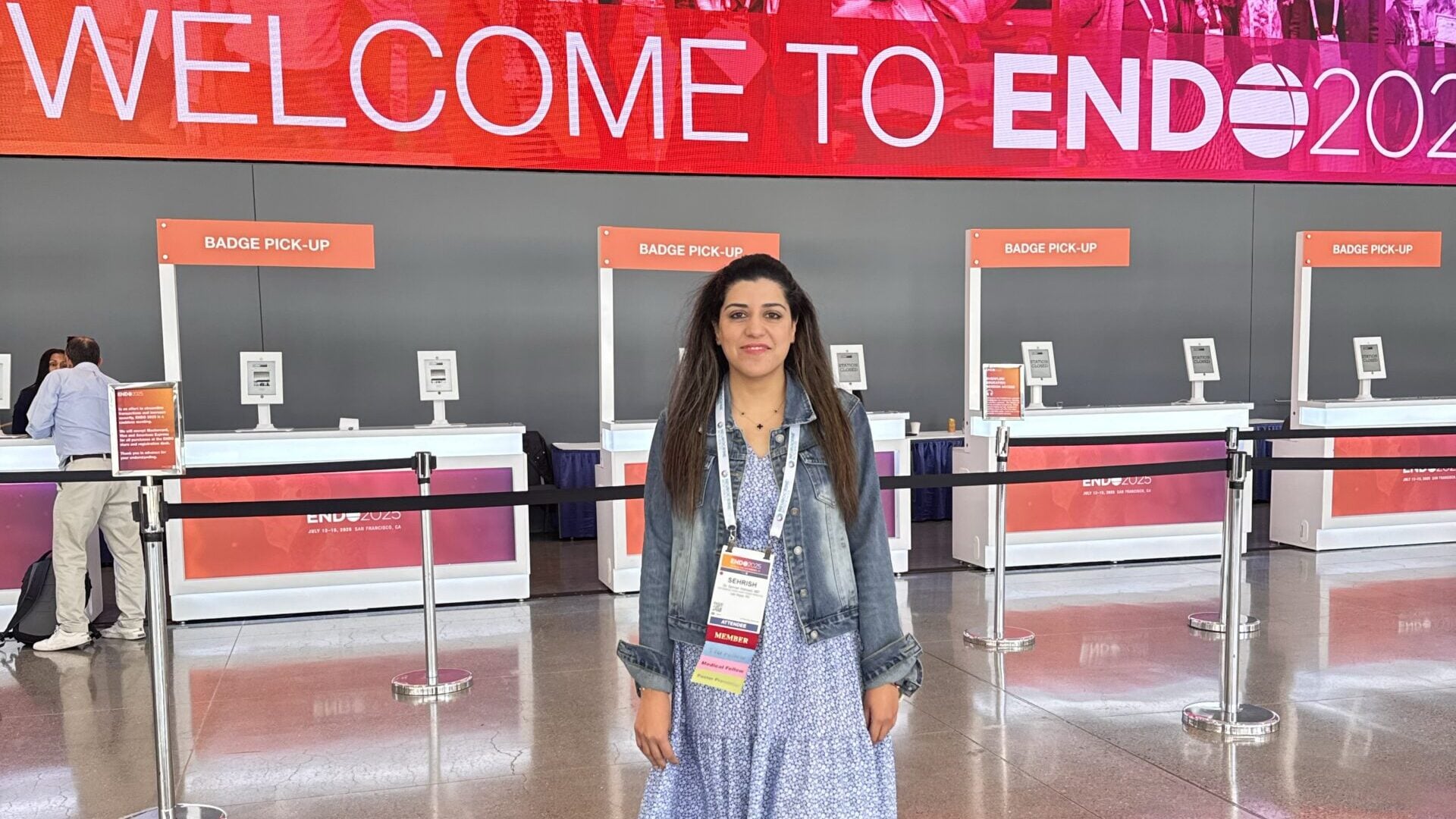
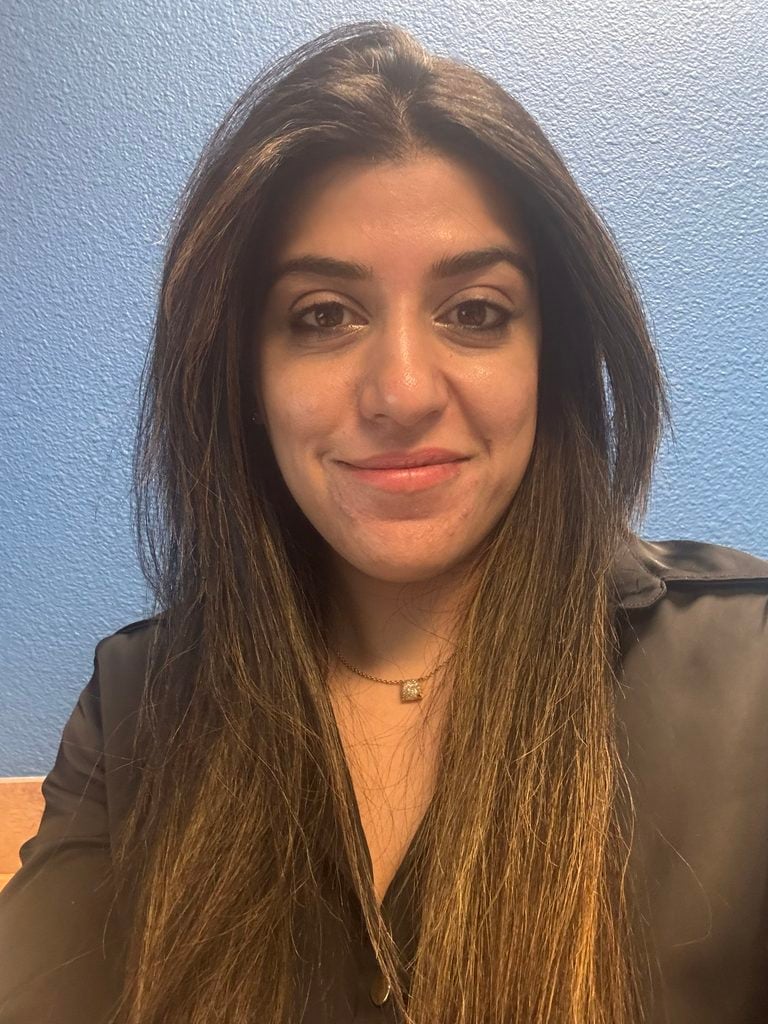
Sehrish Waheed, MD, discusses her use of social media, preparation for the Endocrinology, Diabetes, and Metabolism certification exam, and the professional support she received from the Endocrine Society. She also describes her commitment to building trusting relationships with patients, particularly those affected by obesity stigma.
Last October, Sehrish Waheed, MD, better known as “@NoSugarMD” to her social media followers, was deep in study mode, preparing for the American Board of Internal Medicine (ABIM) Endocrinology, Diabetes, and Metabolism certification Endocrine Board exam.
Like many physicians facing a board exam, Waheed had assembled an arsenal of study materials to help her prepare. One day, she snapped a photo of some of the resources making the process a little easier and shared it on Instagram. Among them were the Endocrine Society’s Endocrine Board Review (EBR) resources, including sample cases, interactive practice exams, and the Endocrine Board Review book.
EBR is the Society’s comprehensive board-preparation program designed to help endocrinologists prepare for the exam. But for Waheed, the post was simply a glimpse into the work happening behind the scenes as she prepared for an important milestone in her young career.
“My clinical focus is obesity, and there is so much stigma surrounding obesity. Many of my patients have already been through so much. Being able to give them confidence and let them know that I’m not there to judge them is incredibly important to me.”
Sehrish Waheed, MD, endocrinologist, Platinum Hospitalists, Las Vegas, Nev.
Waheed practices at Platinum Hospitalists in Las Vegas, where she joined in August 2025 after completing an endocrinology fellowship at MountainView Hospital in Nevada.
Endocrine News caught up with her to talk about the story behind her social media posts, how she approached studying for the boards, and the Endocrine Society resources she found useful along the way.
Endocrine News: You use your social media account regularly as part of your professional life. What do you find most valuable about blogging?
Sehrish Waheed: I enjoy doing the medicine part, but I also want to make sure I’m adding in a glimpse from my personal life as well. What I think is more helpful, from a medical standpoint, is that it allows me to help patients beyond the exam room. I feel like there’s so much misconception on the internet about basic things I tell my patients, like about PCOS (now officially referred to as Polyendocrine Metabolic Ovarian Syndrome [PMOS]) and checking insulin levels. I like to blog about my personal life because I want to show the human side of being a physician. Medicine can feel very clinical and intimidating, and I think allowing people to see that I’m also a person with a life outside of medicine helps create a sense of connection and makes me more relatable and approachable and I really enjoy it.
EN: You did a post last October showing some Endocrine Society materials, such as the Endocrine Board Review book, while you were studying for your board exam. What made the materials you chose most useful to you?
Waheed: The materials I used from the Endocrine Society included the Endocrine Board Review, ESAP (Endocrine Self-Assessment Program), and the in-training examination questions. I actually started working on questions very early during my fellowship and continued doing them throughout my training. In the particular post you mentioned, I was listening to lectures by Dr. Stephanie Page and Dr. Lippincott from the Endocrine Board Review live study sessions from September of the previous year. Those two lectures were extremely helpful. One of them focused on hormonal therapy, a topic that we unfortunately don’t get a lot of exposure to during endocrine fellowship. As a result, many of us don’t develop strong foundational concepts in that area. Listening to Dr. (Margaret F.) Lippincott’s lecture really helped me better understand and approach women’s health questions on the board exam.
EN: What do you hope that other trainees who are studying for the Boards can take away from your posts?
Waheed: If I had to do it all over again, I would recommend starting early. Start working on questions early in fellowship and keep doing them consistently throughout your training. I think that steady practice makes a big difference when it comes time to prepare for the boards.
EN: What are other ways the Society has supported you in the early part of your career so far?
Waheed: The Endocrine Society has been a tremendous resource for early-career scientists and endocrine fellows. The Endocrine Society meetings, for example, are incredibly valuable because they provide an opportunity to learn about the latest developments in the field.
The mentorship program has also been amazing. During my first year, I had the opportunity to connect with people I never imagined I would have the chance to speak with. Through the program, I was able to gain new perspectives, make new friends, and meet colleagues in the field.
I also had the opportunity to participate in the Diabetes Type 1 and Obesity Fellow Programs, and both were incredibly valuable experiences for me. I was especially excited to be selected for these programs alongside other fellows from across the country. They gave me the opportunity to learn from experts in these areas, expand my knowledge, and connect with other fellows who share similar interests.
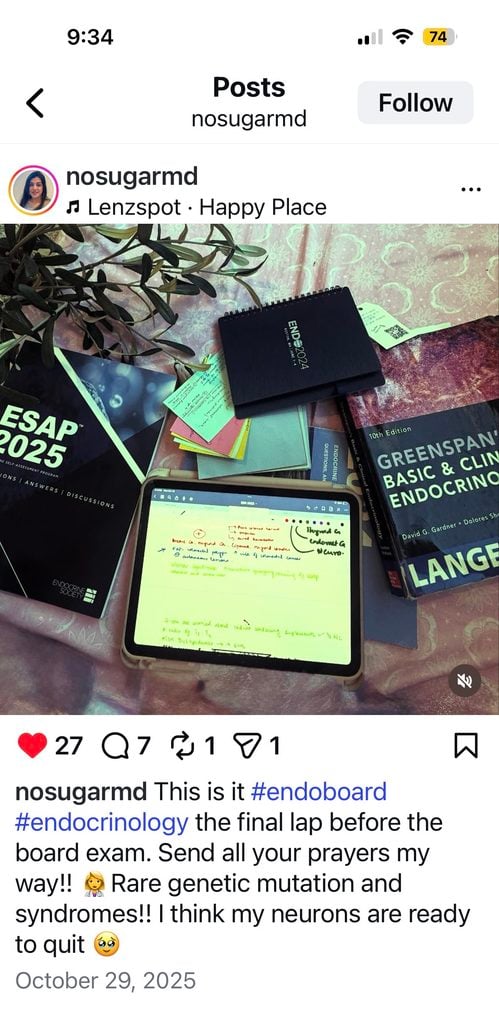
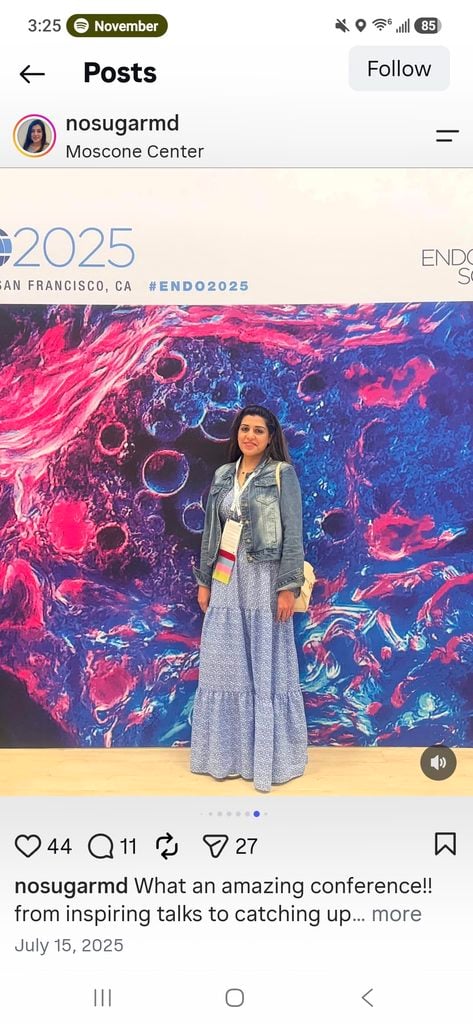
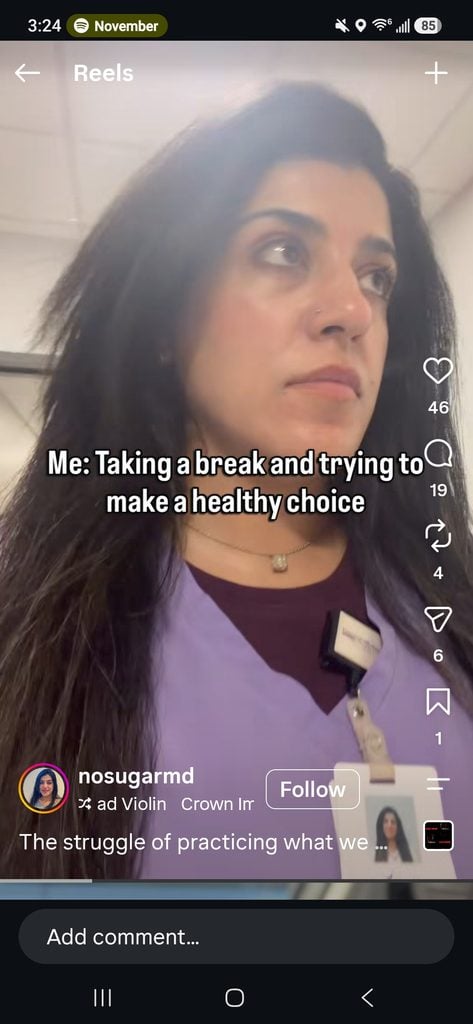
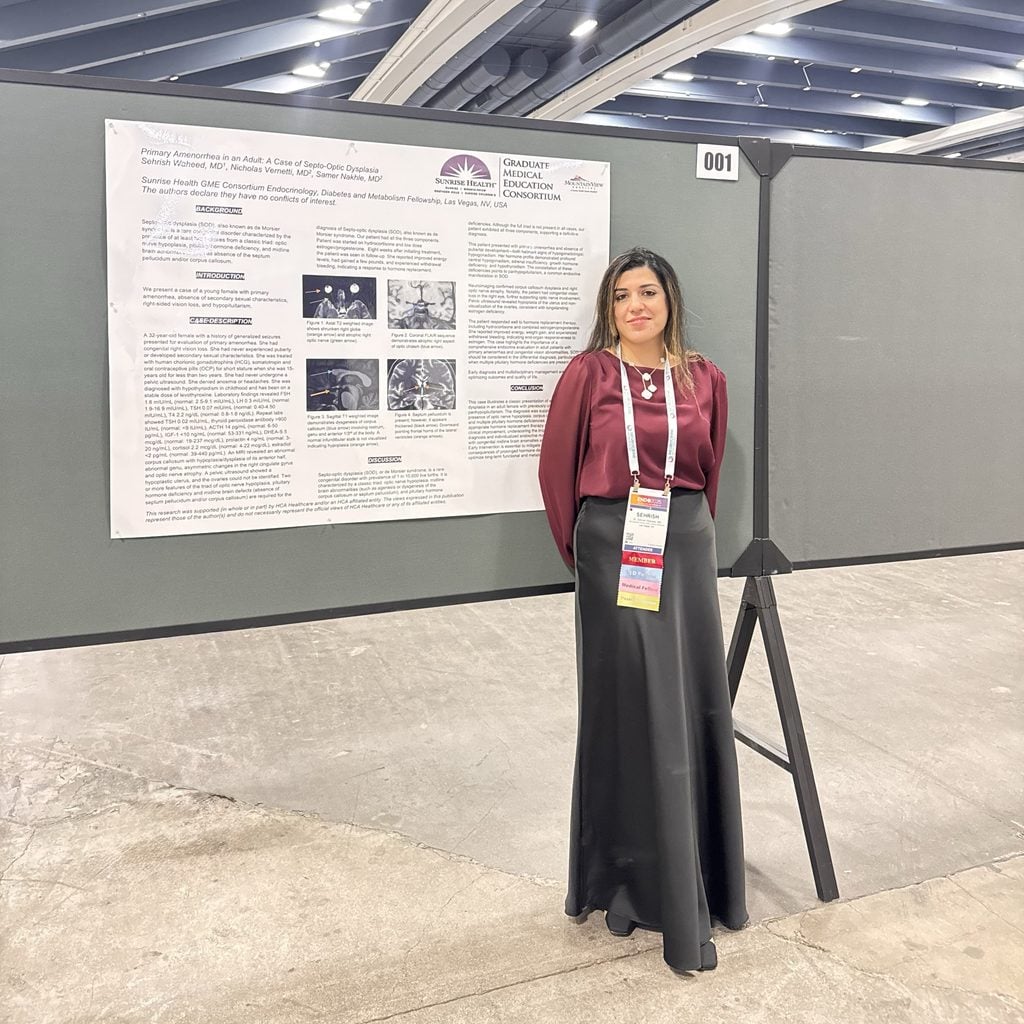
A variety of Waheed’s social media posts highlighting her Endocrine Society-aided study resources (far left); proclaiming how amazing ENDO 2025 was in San Francisco (center); and her own daily struggles with trying to eat healthy while maintaining a busy lifestyle (right), something her patients appreciate.
One of the things I appreciate most about the Endocrine Society is how genuinely they care about what young endocrinologists are doing. I’m not a big influencer. I only have a few hundred followers but for the Society to notice me and other young physicians, recognize our work, and appreciate what we’re doing means a lot. It makes you feel seen and supported early in your career, and that has been really special to me.
EN: You mentioned that blogging is a way to help you connect with your patients. What do you find is the most rewarding part of today’s doctor-patient relationship with the patients you see in your practice?
Waheed: For me, it’s really about a sense of community. As an early-career endocrinologist, building long-term relationships with my patients is very special to me. I’m still early in my career, but I’ve already started developing those relationships. Now, some of my patients are coming back for their third visit, and I know what is going on in their lives and how they’re doing.
My clinical focus is obesity, and there is so much stigma surrounding obesity. Many of my patients have already been through so much. Being able to give them confidence and let them know that I’m not there to judge them is incredibly important to me.
“One of the things I appreciate most about the Endocrine Society is how genuinely they care about what young endocrinologists are doing. I’m not a big influencer. I only have a few hundred followers but for the Society to notice me and other young physicians, recognize our work, and appreciate what we’re doing means a lot. It makes you feel seen and supported early in your career, and that has been really special to me.”
Sehrish Waheed, MD, endocrinologist, Platinum Hospitalists, Las Vegas, Nev.
I really appreciate it when my blogging helps patients connect with me on a more personal level. They get to know me as a person, and then, when we’re in the exam room, I can focus on treating their medical problems while also listening to them and understanding their experiences.
I think that combination allowing patients to know me as a person while also being there for them as their physician is helping me build meaningful relationships with my patients and give back to my community.
—Shaw is freelance writer based in Carmel, Ind. She is a regular contributor to Endocrine News and writes the monthly Laboratory Notes column.