Star Power 2026: Q&A with Konstantinos Stefanakis, MD
By Mark A. Newman
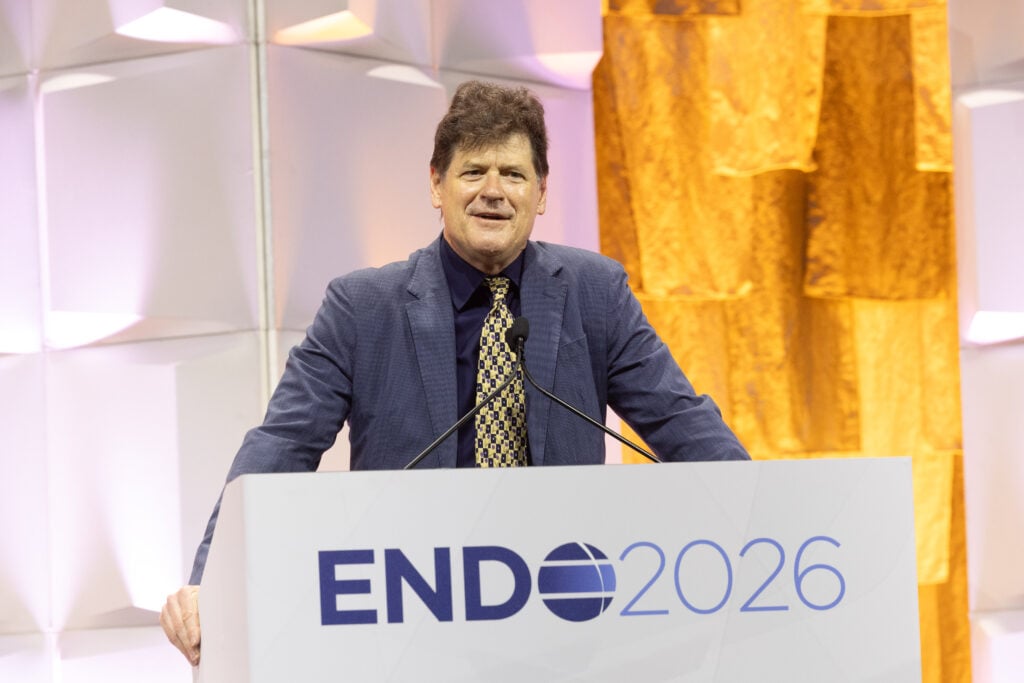
Early-career and in-training members get their chances to shine brightly at the Rising Star Power Talks that take place at ENDO each year. Endocrine News caught up with this year’s Audience’s Choice was Konstantinos Stefanakis MD, PhD (candidate), cardiology fellow, postdoctoral research fellow, Harvard Medical School, Beth Israel Medical Center, Boston, Mass., to find out more about his research, future plans, and how his mentor has helped shape his career path.
Each year, one of the most popular events at ENDO is the Rising Stars Power Talks and ENDO 2026 was certainly no different. These talks see 15 early-career and in-training Endocrine Society members get the chance to communicate their groundbreaking research with an audience of their peers.
“The Rising Star Power Talks are important because they give up-and-coming researchers a national platform to share strong, high-quality science with the broader endocrine community,” says TCDCC co-chair Nichole Ehrhardt, MD, co-medical director, Seattle Clinical Research Center, Seattle, Wash. “For early investigators, visibility matters — but so do connection and community. ENDO creates an opportunity to put these emerging scientists in the spotlight, helping them build relationships, exchange ideas, and grow the collaborations that can strengthen and advance their research careers.”
The judges panel was composed of somewhat different group of endocrine processionals than in years past, according to TCDCC co-chair Christine Krieger, PhD, science program manager, National Institutes of Diabetes and Digestive and Kidney Diseases (NIDDK), Bethesda, Md. “This year, we challenged our competitors to present their science in front of guest judges drawn from our close partners outside of academia such as Crinetics, Argenx, and Abbvie,” she explains, adding “We valued their fresh perspective and the chance to show them our latest science.”
The judges and audience decided the winners of this blitz style research communication competition, and this year’s winners were: Basic Science: Lila Dabill, PhD student, Washington University, St. Louis, Mo.; Clinical Science: Brittany Weisbrot, internal medicine resident, Loyola University Medical Center, Maywood, Ill.; Translational Science: Dillon Boulton, PhD, postdoc fellow, Department of Pathology, University of Colorado – Anshutz Medical Campus, Aurora, Colo.; and the Audience’s Choice was Konstantinos Stefanakis MD, PhD (candidate), cardiology fellow, postdoctoral research fellow, Harvard Medical School, Beth Israel Medical Center, Boston, Mass.
Endocrine News scored a front-row seat to the proceedings and caught up with this year’s winners to find out more about their award-winning research, their future research goals, how it felt to present in a room of their peers, and more.
In this third of four installments, we chat with Stefanakis, this year’s Audience Choice winner.
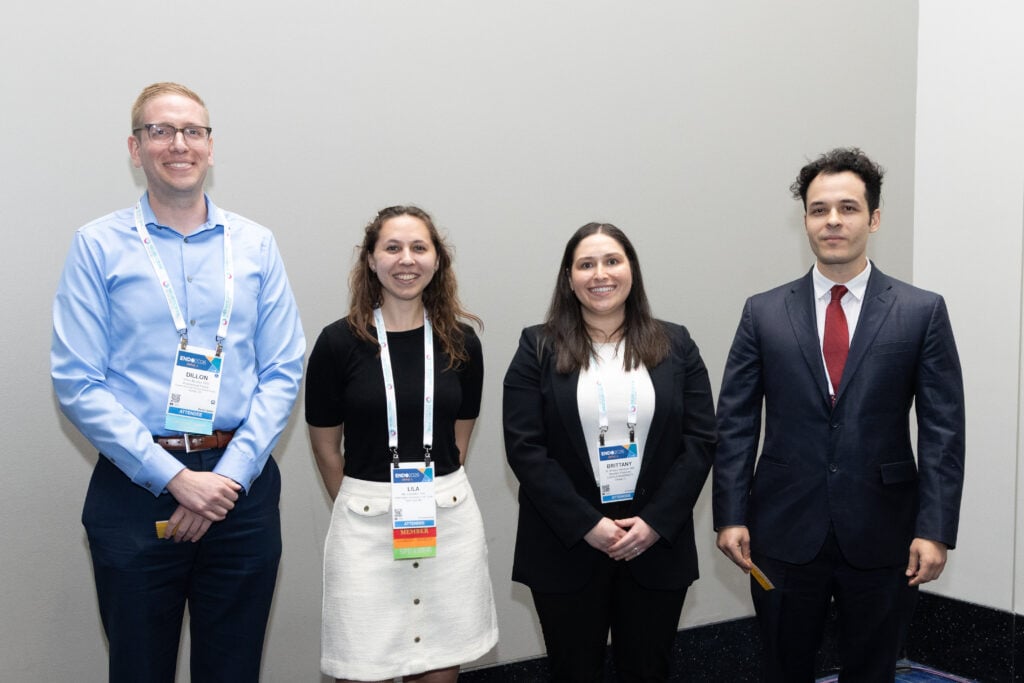
From left to right are the 2026 Rising Star Power Talks winners: Translational Science: Dillon Boulton, PhD, postdoc fellow, Department of Pathology, University of Colorado – Anshutz Medical Campus, Aurora, Colo.; Basic Science: Lila Dabill, PhD student, Washington University, St. Louis, Mo.; Brittany Weisbrot, internal medicine resident, Loyola University Medical Center, Maywood, Ill.; and the Audience’s Choice was Konstantinos Stefanakis MD, PhD (candidate), cardiology fellow, postdoctoral research fellow, Harvard Medical School, Beth Israel Medical Center, Boston, Mass.
Endocrine News: Tell us a little bit about the research that you presented at the session.
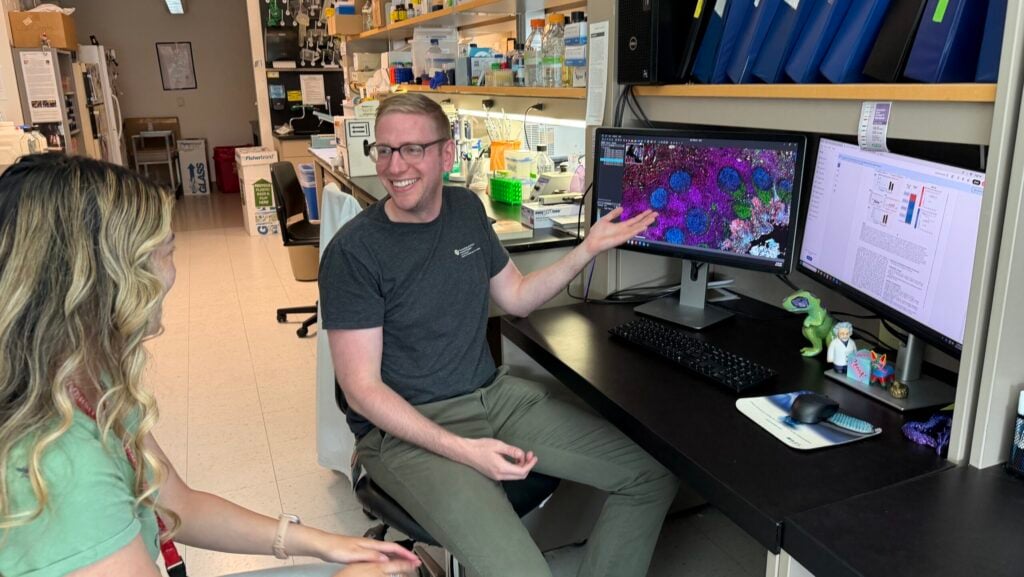
Konstantinos Stefanakis: My research focuses on using blood-based omics to better understand pathophysiology of metabolic dysfunction-associated steatotic liver disease (MASLD) and steatohepatitis (MASH) and identify patients who are at higher risk for progressive liver disease and complications. This work was performed in the Mantzoros Laboratory at Harvard Medical School, where our broader goal is to study obesity, diabetes, metabolic disease, and cardio-renal-liver-metabolic complications in a way that will ultimately improve patient care.
MASH is important because it is not only a liver disease; it is a metabolic disease. It affects patients who often already live with obesity, insulin resistance, type 2 diabetes, dyslipidemia, and cardiovascular risk. It can progress to advanced fibrosis, cirrhosis, liver failure, and liver cancer, but it is also part of a broader metabolic disease state in which cardiovascular disease remains a major cause of illness and death.
This is especially urgent now because we finally have approved treatment options for patients with at-risk MASH i.e. MASH with moderate to advanced fibrosis, but identifying these patients remains difficult. Liver biopsy is still the most definitive way to diagnose and stage MASH, but it is invasive, expensive, and cannot be applied broadly to the very large number of patients at risk. Current non-invasive tests are very helpful, especially for fibrosis risk stratification, but they do not always tell us which disease biology is active in a given patient.
In this project, we studied circulating proteins in serum and plasma from patients with biopsy-characterized MASLD/MASH. We asked whether blood proteins could be altered with progressive stages of the disease, and how, and whether the proteomic changes would reflect important features seen on liver biopsy, including inflammatory activity, fibrosis,and at-risk MASH. Proteomics may help add a missing biological layer to current non-invasive testingand eventually improve how we select patients for referral, treatment, clinical trials, and monitoring.
EN: What inspired you to undertake this specific research?
Stefanakis: This project was strongly inspired by my mentor, Dr. Christos Mantzoros, and by the environment of the Mantzoros Laboratory. One of the things I have learned from him is the importance of identifying real unmet clinical needs and then using rigorous translational science to address them. That is something I deeply admire and want to cultivate in my own career.
Endocrinologists, but also internists and cardiologists, take care of many patients with obesity, insulin resistance, type 2 diabetes, and metabolic syndrome. These are the same patients who are at highest risk for MASLD and MASH. But in everyday practice, it is still difficult to know who has mild disease and who has active, progressive disease without relying on indirect tests or biopsy. What underlies that is a need for a deeper understanding of disease pathophysiology across all its stages.
“ENDO has given me a scientific home. My work sits at the intersection of endocrinology, obesity, diabetes, liver disease, and cardiometabolic risk, and the Endocrine Society is one of the communities where all of these areas naturally come together. Through these experiences, I feel not only part of the Mantzoros Laboratory, but also part of the broader scientific family of the Endocrine Society.” – Konstantinos Stefanakis MD, PhD (candidate), cardiology fellow, postdoctoral research fellow, Harvard Medical School, Beth Israel Medical Center, Boston, Mass.
That clinical gap inspired the project. In the Mantzoros Laboratory, we are very interested in translating endocrine and metabolic biology into tools that can help patients. We wanted to see whether the circulating proteome could provide a more direct window into the biology of MASH, including inflammation, metabolic stress, tissue remodeling, and fibrosis.
For patients, the goal is very practical: fewer unnecessary invasive procedures, earlier recognition of progressive disease, and better selection of those who may benefit from emerging MASH therapies.
EN: How did it feel to present your work in such a lively environment among your peers and mentors?
Stefanakis: It was a very special experience. ENDO was the ideal place to present this work because MASLD and MASH are not only liver diseases; they are deeply connected to obesity, insulin resistance, type 2 diabetes, dyslipidemia, cardiovascular risk, and endocrine-metabolic biology. These are the patients endocrinologists see every day, so presenting this work to the endocrine community made it feel especially clinically relevant.
It was also very meaningful personally because this project reflects a lot of collaborative effort within the Mantzoros Laboratory. Sharing it with an international audience and seeing it recognized by the Endocrine Society was both humbling and very motivating.
The discussion after the presentation was one of the most valuable parts of the experience. The questions were thoughtful and scientifically engaging, and they helped us think more deeply about how to strengthen and extend the work. Some of the questions pointed us toward important next steps, including integrating transcriptomics and other layers of biology, and thinking more carefully about how these tests could eventually be used in clinical practice, for risk stratification, referral, treatment selection, and monitoring.
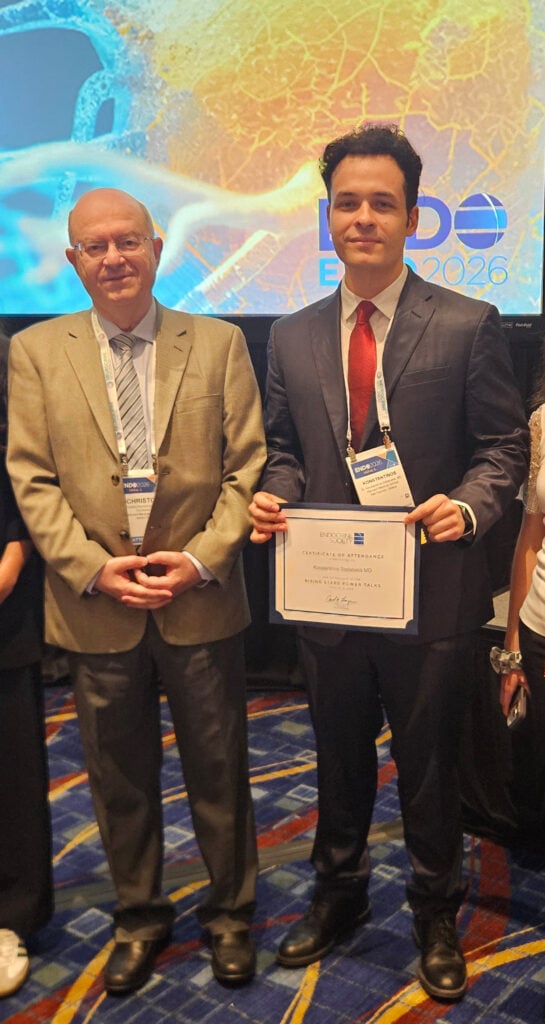
Konstanos Stefanakis with his mentor Christos Mantzoros, MD, PhD, just after the winners were announced.
EN: Can you explain what sort of impact the Endocrine Society has had on your research career?
Stefanakis: The Endocrine Society has had a major impact on my development as a physician-scientist. In 2020, I received the Summer Research Fellowship, now known as REGMS, and that support was tremendously important early in my research career. It gave me encouragement, visibility, mentorship, and momentum at a time when I was still developing my direction as an investigator.
Since then, the Society has continued to be a major part of my academic growth. I have been fortunate to receive the Outstanding Abstract Award at every ENDO from 2022 through 2026, and to publish work in several Endocrine Society journals.
The Endocrine Society has also been deeply connected to the growth of the Mantzoros Laboratory as a scientific community. Dr. Christos Mantzoros received the Outstanding Scholarly Physician Laureate Award in 2025, one of his former mentees received a Junior Faculty Award this year, and an MD student I had the privilege to co-mentor with Dr. Mantzoros received the 2026 REGMS fellowship, just as I had earlier in my career. Seeing this continuity across mentor, trainees, and newer students has been very meaningful for me and all of us.
More broadly, ENDO has given me a scientific home. My work sits at the intersection of endocrinology, obesity, diabetes, liver disease, and cardiometabolic risk, and the Endocrine Society is one of the communities where all of these areas naturally come together. Through these experiences, I feel not only part of the Mantzoros Laboratory, but also part of the broader scientific family of the Endocrine Society.
EN: What’s next for you and your research? Where do you go from here?
Stefanakis: The next step is deeper research of pathophysiology and then validation, translation, and expansion. Discovery proteomics is powerful, but the goal is not to measure thousands of proteins forever. The goal is to identify robust biological signatures that can be validated, simplified, and eventually developed into clinically useful non-invasive tests.
This is important because MASLD affects more than a billion people worldwide and is closely linked to obesity, type 2 diabetes, cardiovascular disease, and other metabolic complications. For patients, better non-invasive tests could mean earlier recognition of progressive disease, fewer unnecessary invasive procedures, better selection for treatment, and more rational monitoring over time.
Going forward, I want to help build more powerful NITs by integrating proteomics with other layers of data, including clinical variables, imaging, metabolomics, hormones, genetics, and other multi-omics approaches. This could help us better identify who has active MASH, who is likely to progress, and who may benefit most from treatment.
Multiomics also have the potential to catapult drug discovery through the delineation of pathophysiologically important disease pathways that could be leveraged to create and develop novel medications.
A major priority is also to make this work more inclusive. Many populations remain underrepresented in MASLD/MASH research, including Latin American populations and children with pediatric MASH. We still know too little about how disease biology differs across these groups. If we want non-invasive tests to work for real patients in real clinics, they need to be developed and validated in diverse populations.
Ultimately, the goal of this work, and of much of our work in the Mantzoros Laboratory, is to move metabolic disease care toward more biology-informed precision medicine: earlier diagnosis, better risk stratification, more appropriate treatment, less reliance on invasive testing, and, most importantly, helping people who are living with these diseases live longer and healthier lives.
Newman has been the editor of Endocrine News since he began working for the Endocrine Society in 2013. Feel free to send him story ideas at: [email protected].
Join the Global Movement Advancing Endocrine Science and Medicine
Become a part of a community of 18,000-plus endocrine investigators and clinicians who conduct research and provide quality patient care in more than 100 countries. Advance your career and the field of endocrinology through our many educational, leadership and advocacy opportunities.