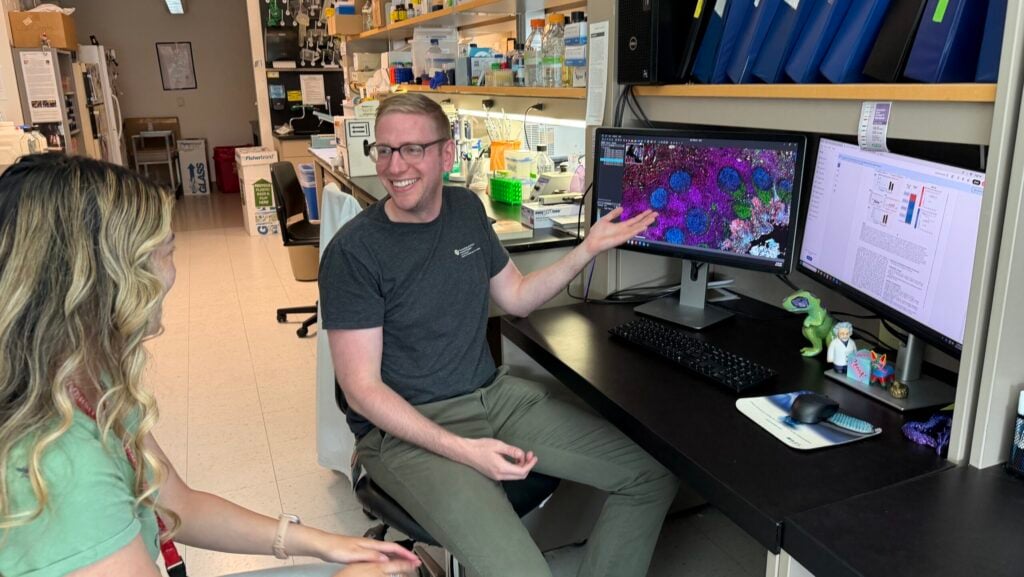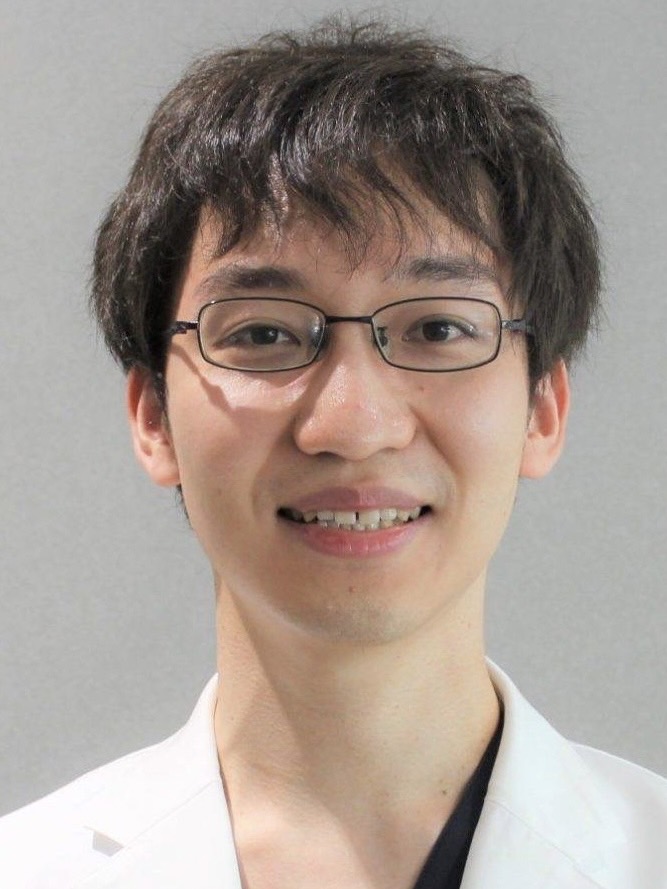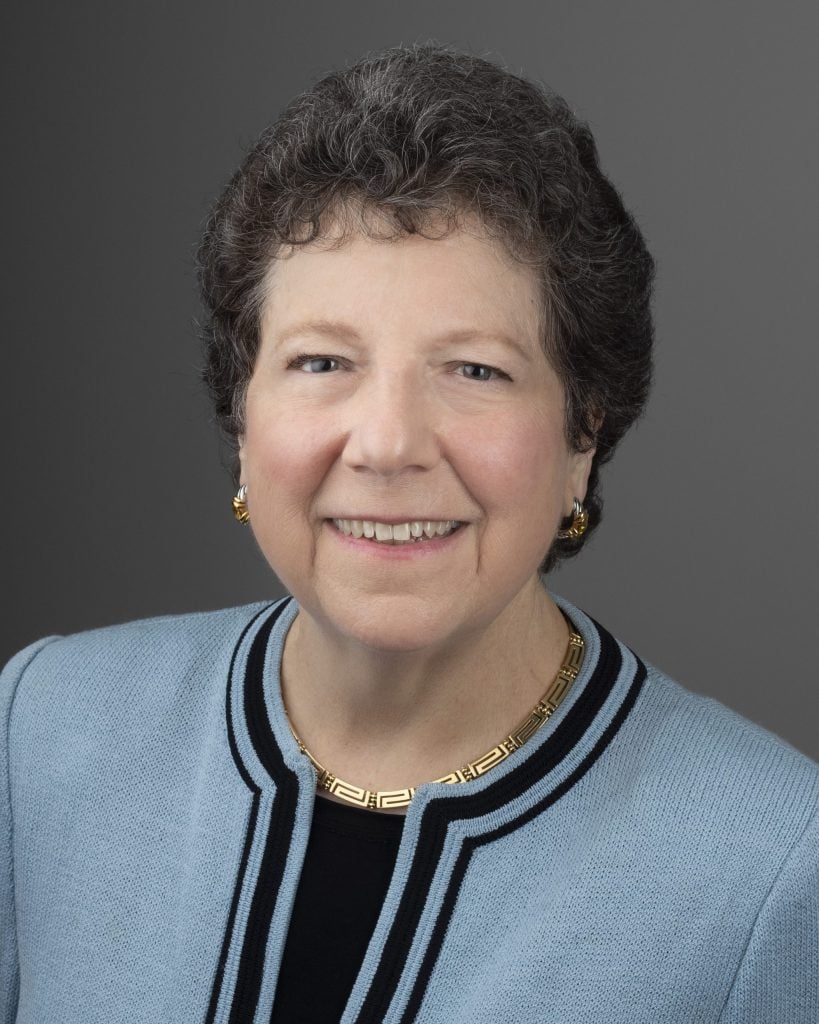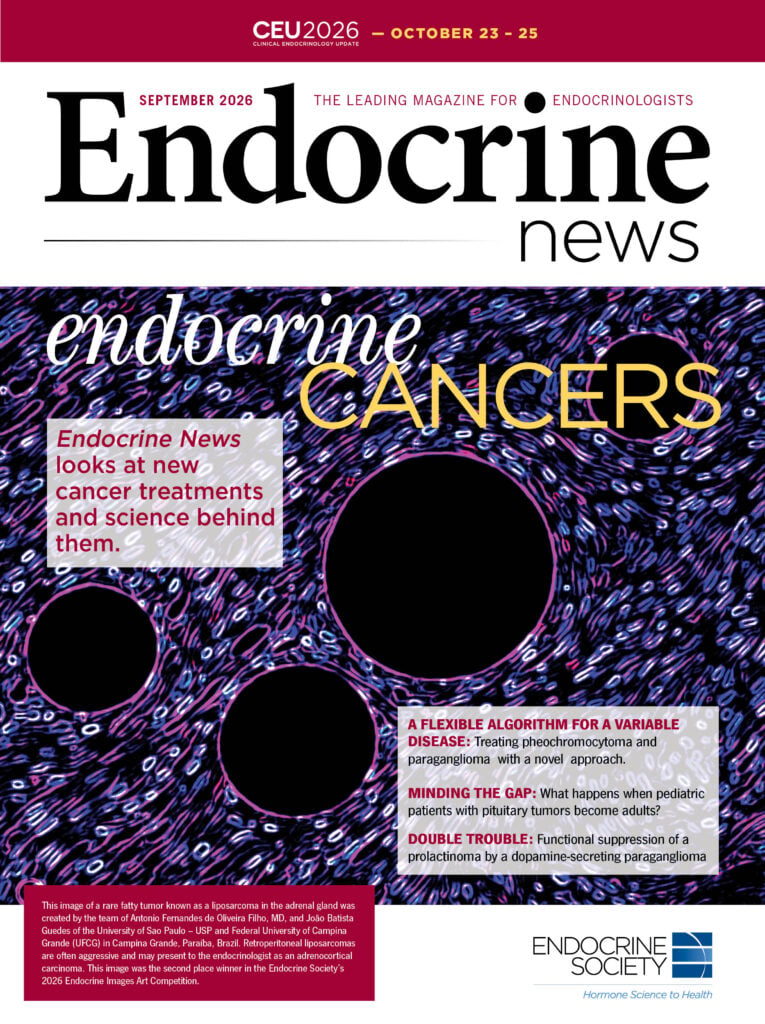
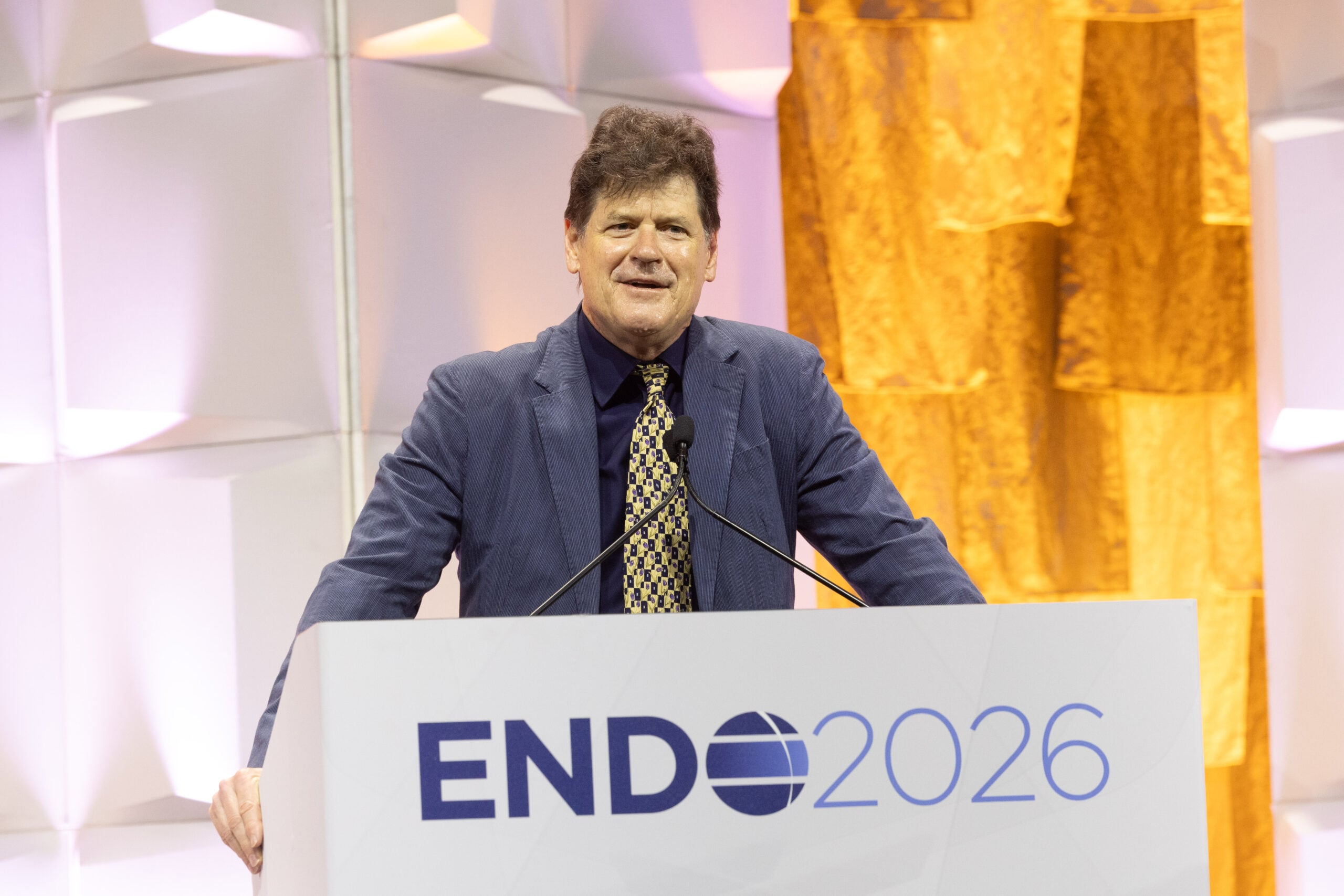
Endocrine News chats with Bradley David Anawalt, MD, honored with the Endocrine Society’s 2026 Outstanding Educator Laureate Award for his contributions to education and andrology. He discusses his years of tailoring his teaching techniques based on his students as well as why he finds male reproductive endocrinology so fascinating.
Great teachers do more than share knowledge. They inspire curiosity, ignite enthusiasm, and leave a lasting impression on generations of learners. Few embody that philosophy better than Bradley David Anawalt, MD, one of the Endocrine Society’s 2026 Laureates and recipient of the Outstanding Educator Award.
A professor and vice chair in the Department of Medicine at the University of Washington School of Medicine in Seattle, Wash., Anawalt has earned widespread recognition for his excellence in medical education, receiving many of his institution’s highest teaching honors. He is also a world-renowned expert in andrology and the diagnosis and treatment of male hypogonadism. Throughout his career, he has been a dedicated leader within the Endocrine Society and a regular presenter at ENDO, contributing countless hours as a scientific presenter, plenary lecturer, session chair, meeting planner.
Endocrine News recently spoke with Anawalt about the educators who influenced him, his philosophy of teaching, and why inspiring a joy of learning is one of the greatest gifts an educator can offer.
Endocrine News: What did hearing the news about the Laureate recognition mean to you?
Anawalt: It was very meaningful to me. I’ve gone to ENDO every year since 1992, and I’ve had the honor and privilege of being able to give presentations just about every year that I’ve attended. Many of those were opportunities to do teaching presentations, in addition to research presentations. I’ve just always enjoyed going to ENDO where I see colleagues and friends and meet new colleagues. So, getting this recognition really feels like a great honor because it means that people assessed that my contributions to education were meaningful.
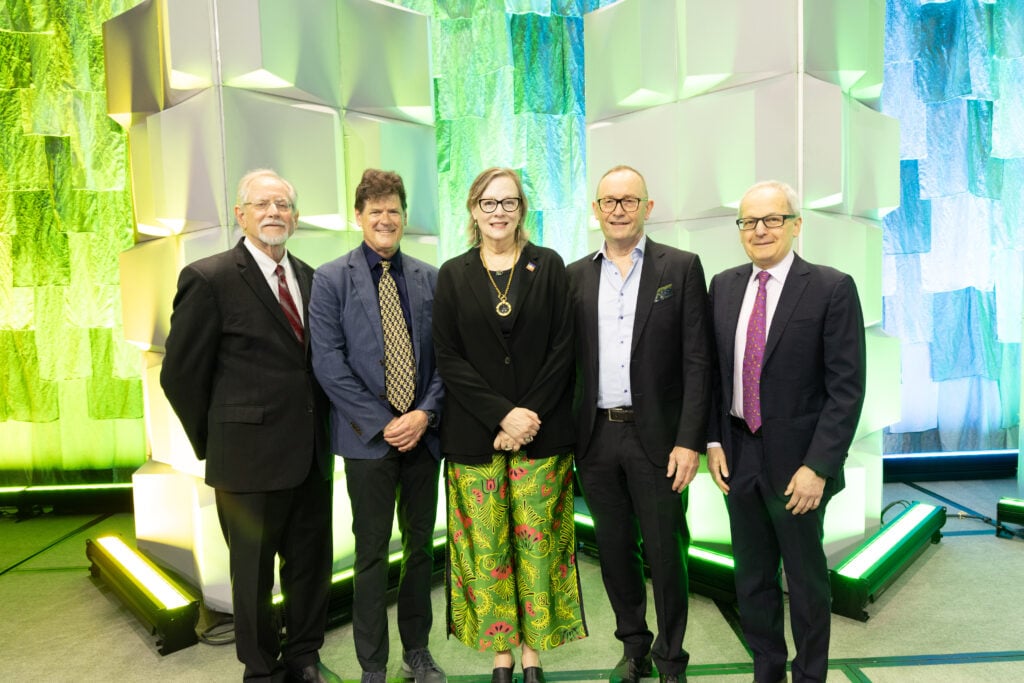
Society Laureates (left to right) Alvin C. Powers, MD, Roy O. Greep Award for Outstanding Research; outgoing Endocrine Society President Carol Lange, PhD; Martin Reincke, MD, Outstanding Scholarly Physician Award; and Samuel Klein, MD, Outstanding Clinical Investigator Award.
EN: In addition to being an outstanding educator, you’re recognized globally for your expertise in andrology and male hypogonadism. What inspired you to focus on this particular area of endocrinology?
Anawalt: There’s a series of things that led me first into endocrinology and then into reproductive endocrinology. I took a college course in biochemistry that also taught some of the basics of endocrinology. That professor didn’t think much of me and told me that I would never make it in science or in medicine. But despite her statement, I thoroughly enjoyed the content of her class and went into medical school with the notion that I might like endocrinology.
My favorite professor in the School of Medicine at University of California at Davis was an endocrinologist. I took an elective in endocrinology my fourth year, and very much enjoyed working with him. He recommended that I look at the University of Washington for residency because he’d done his training there. Later, I had some more good fortune when I worked with a man by the name of Bill Bremner, who was the chief of medicine at the VA and the vice chair of the department. He invited me to join his lab that was doing research on male hormonal contraception. And Seattle’s been one of the hubs, at least for the United States, for trying to be innovative about new methods for male contraception, including male hormone contraception.
“I’ve worked with hundreds of research participants, all these guys who are enthusiastic about the notion ofworking in clinical trials that are going to contribute to science and give men more contraceptive options. It has also been really exciting to be a part of the expanded knowledge about male reproductive endocrinology, where we’re getting better insights into infertility and its treatment, and the diagnosis and treatment of male hypogonadism.”
Bradley David Anawalt, MD, professor and vice chair, Department of Medicine, University of Washington School of Medicine, Seattle, Wash.
So, I got interested in doing those kinds of studies and really enjoyed the field of male reproductive endocrinology, in part because of doing these studies on male contraception and the intrinsic social good that it offered. The end goal of the research is trying to give couples and men more choices for male contraception and redistribute the burden of contraception. Over the years, I’ve worked with hundreds of research participants, all these guys who are enthusiastic about the notion ofworking in clinical trials that are going to contribute to science and give men more contraceptive options. It has also been really exciting to be a part of the expanded knowledge about male reproductive endocrinology, where we’re getting better insights into infertility and its treatment, and the diagnosis and treatment of male hypogonadism.
EN: As this year’s Outstanding Educator, is there an educator in your past who made a huge impression during your career? If so, what do you remember most about his/her message to students?
Anawalt: There are a couple of mantras. One of them is “repetition is the mother of learning,” and that was something one of my early instructors imparted to me. There isn’t one particular person who stands out as the single teacher who inspired me. I have had a series of them, and what I would say is that the common denominator of these teachers is that they all took joy in teaching and learning themselves. They had curiosity, enthusiasm, and joy, and that was infectious. When I attempt to teach, I put on that hat and say, ‘This is an opportunity’ opportunity to share my excitement, my curiosity, and my joy of learning. That part of teaching has been a real source of pleasure for me.
EN: Your award announcement read that you are known for your “ability to convey not only factual material, but a sense of collegiality and joy in learning among his students.” What excites you most about your students as the next generation of endocrinologists?
Anawalt: I will say that one of the things I learned as I was aspiring to become a competent teacher and what one of my teachers told me was, ‘If you want to become a good teacher, you say yes to every teaching opportunity.’ For many years I said ‘yes’ to everything, and I volunteered to teach as often as I could. What I learned was that you don’t approach a talk given to students the same way you do when you give a talk on the same topic to residents, fellows, or faculty members. Not only is their content knowledge different and their level of learning, but what they want out of a talk is totally different. So, I had to think about who am I talking to today? Am I talking to a really educated reporter like you? Or am I talking to scientists? Or am I talking to undergraduate students? I have to completely reorient, and that means that I have to learn something about the learners. Adapting what I teach to different audiences and seeing what they take away from my lectures has been fascinating.
EN: Science can be all-consuming. What’s your favorite way to unplug when you step away from the classroom?
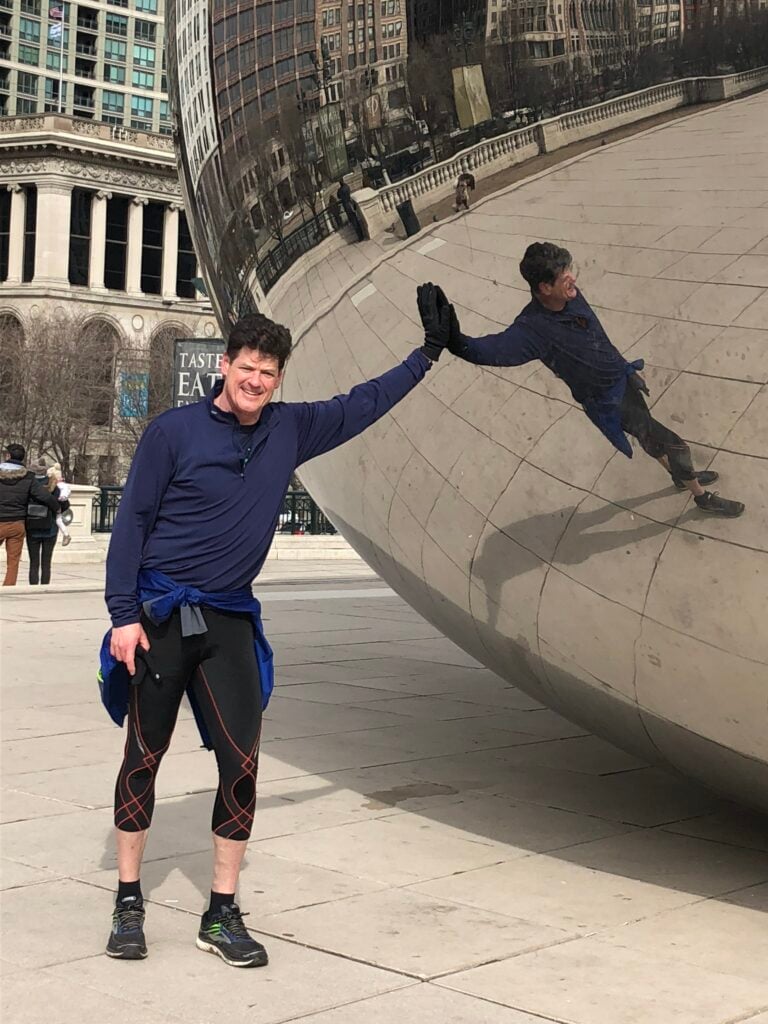
Anawalt: I have a broad range of interests. I like to be outside and exercise, and I run and bike most days. My wife and I like to do hiking and walking vacations, so we’re going to hike the Havasupai part of the Grand Canyon in September, and we’re going to walk the Scottish Highland Trail in October. I also have a wide range of reading interests. I also like a broad range of music. I went to hear some wonderful chamber music about a week and a half ago here in Seattle, and in August we’re going to see and listen to Noah Kahan here in Seattle.
—Shaw is a freelance writer based in Carmel, Ind., and is a regular contributor to Endocrine News and writes the monthly Laboratory Notes column. In the August issue, she interviewed the Endocrine Society’s 2026 Outstanding Scholarly Physician Laureate Award recipient, Martin Reincke, MD, for “Compassionate Curiosity.”