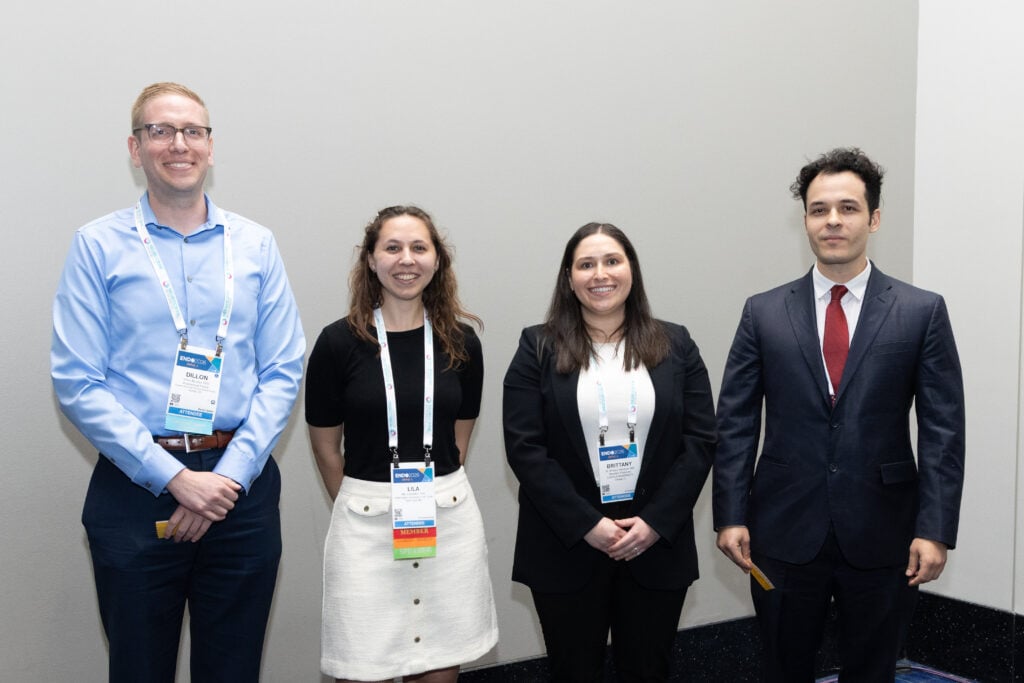
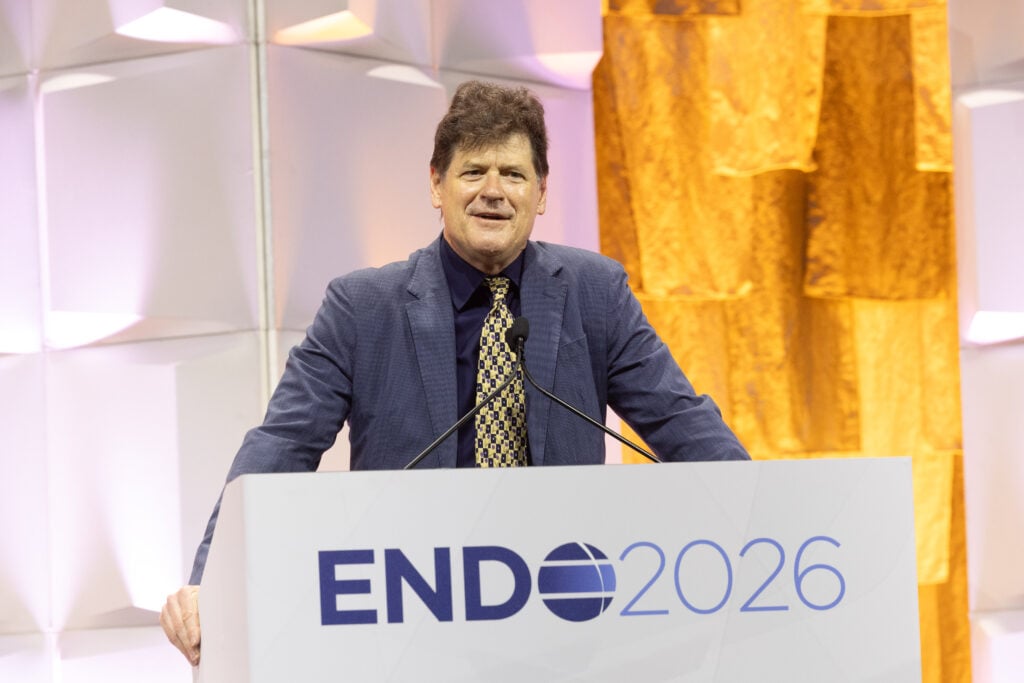
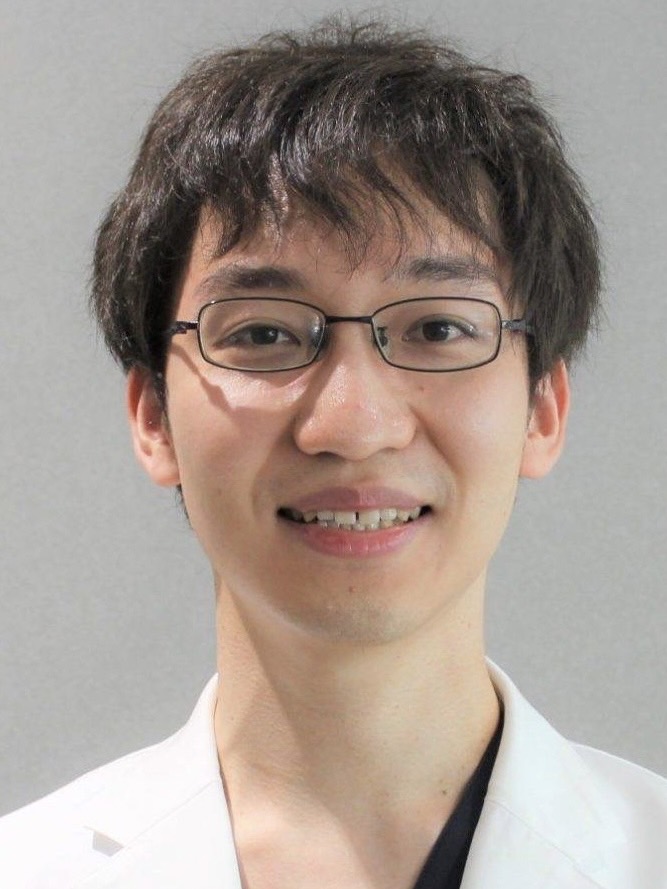
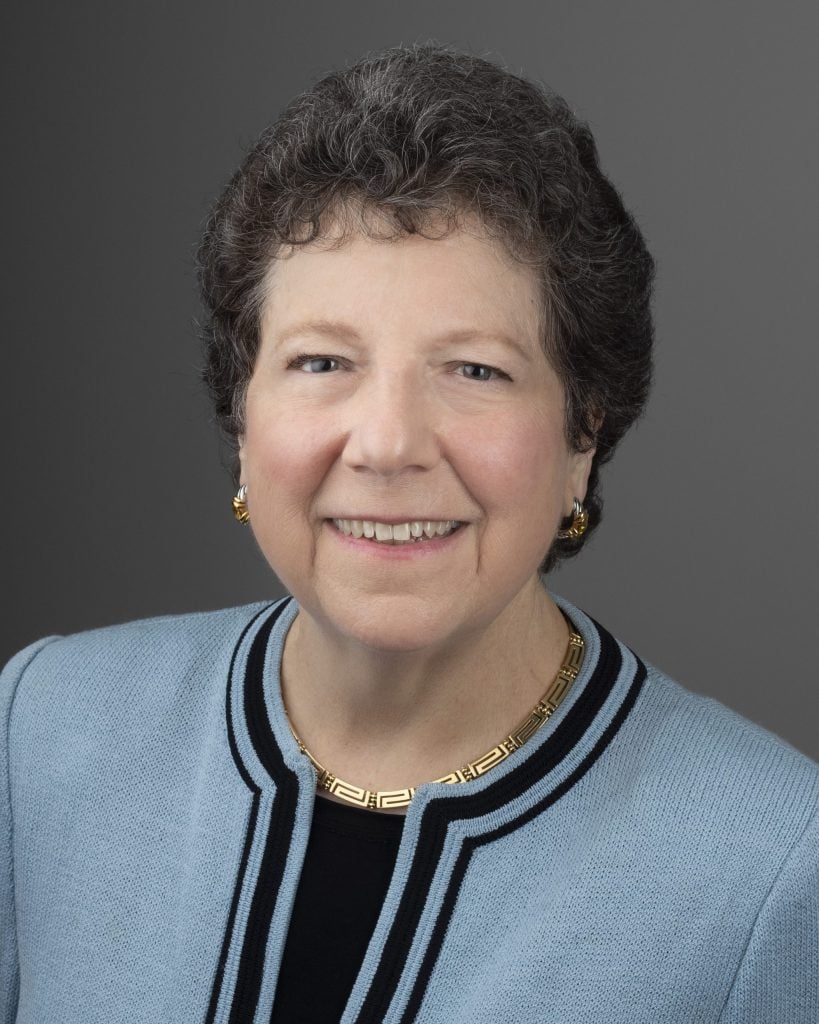
Early-career and in-training members get their chances to shine brightly at the Rising Star Power Talks that take place at ENDO each year. Endocrine News caught up with this year’s Translational Science winner, Dillon Boulton, PhD (above, far left), a postdoc fellow in the Department of Pathology at the University of Colorado – Anshutz Medical Campus in Aurora during ENDO 2026 in Chicago to learn more about his research, future plans, and more.
Each year, one of the most popular events at ENDO is the Rising Stars Power Talks and ENDO 2026 was certainly no different. These talks see 15 early-career and in-training Endocrine Society members get the chance to communicate their groundbreaking research with an audience of their peers.
To say that this event is fast paced would be an understatement; each of the participants had only three minutes to present their research, accompanied by a projected slide that changed and adjusted as they progress through their research findings. After each presentation, there are only two minutes for questions from the audience of observers, judges, mentors, and fellow participants.
Originally known as the Knockout Rounds, the Rising Stars Power talks is hosted by the Endocrine Society’s Trainee and Career Development Committee (TCDCC) and is always an intense and informative event. Once the event gets underway, it’s up to the participants to explain why their research is so vital.
“The Rising Star Power Talks are important because they give up-and-coming researchers a national platform to share strong, high-quality science with the broader endocrine community,” says TCDCC co-chair Nichole Ehrhardt, MD, co-medical director, Seattle Clinical Research Center, Seattle, Wash. “For early investigators, visibility matters — but so do connection and community. ENDO creates an opportunity to put these emerging scientists in the spotlight, helping them build relationships, exchange ideas, and grow the collaborations that can strengthen and advance their research careers.”
The judges panel was composed of somewhat different group of endocrine processionals than in years past, according to TCDCC co-chair Christine Krieger, PhD, science program manager, National Institutes of Diabetes and Digestive and Kidney Diseases (NIDDK), Bethesda, Md. “This year, we challenged our competitors to present their science in front of guest judges drawn from our close partners outside of academia such as Crinetics, Argenx, and Abbvie,” she explains, adding “We valued their fresh perspective and the chance to show them our latest science.”
From left to right are the 2026 Rising Star Power Talks winners: Translational Science: Dillon Boulton, PhD, postdoc fellow, Department of Pathology, University of Colorado – Anshutz Medical Campus, Aurora, Colo.; Basic Science: Lila Dabill, PhD student, Washington University, St. Louis, Mo.; Brittany Weisbrot, internal medicine resident, Loyola University Medical Center, Maywood, Ill.; and the Audience’s Choice was Konstantinos Stefanakis MD, PhD (candidate), cardiology fellow, postdoctoral research fellow, Harvard Medical School, Beth Israel Medical Center, Boston, Mass.
The judges and audience decided the winners of this blitz style research communication competition, and this year’s winners were: Basic Science: Lila Dabill, PhD student, Washington University, St. Louis, Mo.; Clinical Science: Brittany Weisbrot, internal medicine resident, Loyola University Medical Center, Maywood, Ill.; Translational Science: Dillon Boulton, PhD, postdoc fellow, Department of Pathology, University of Colorado – Anshutz Medical Campus, Aurora, Colo.; and the Audience’s Choice was Konstantinos Stefanakis MD, PhD (candidate), cardiology fellow, postdoctoral research fellow, Harvard Medical School, Beth Israel Medical Center, Boston, Mass.
Endocrine News scored a front-row seat to the proceedings and caught up with this year’s winners to find out more about their award-winning research, their future research goals, how it felt to present in a room of their peers, and more.
In this first of four installments, we chat with this year’s Translational Science winner, Dillon Boulton, PhD, a postdoc fellow in the Department of Pathology at the University of Colorado – Anshutz Medical Campus in Aurora to learn more about his research, future plans, and more.
Endocrine News: Tell us a little bit about the research that you presented at the session.
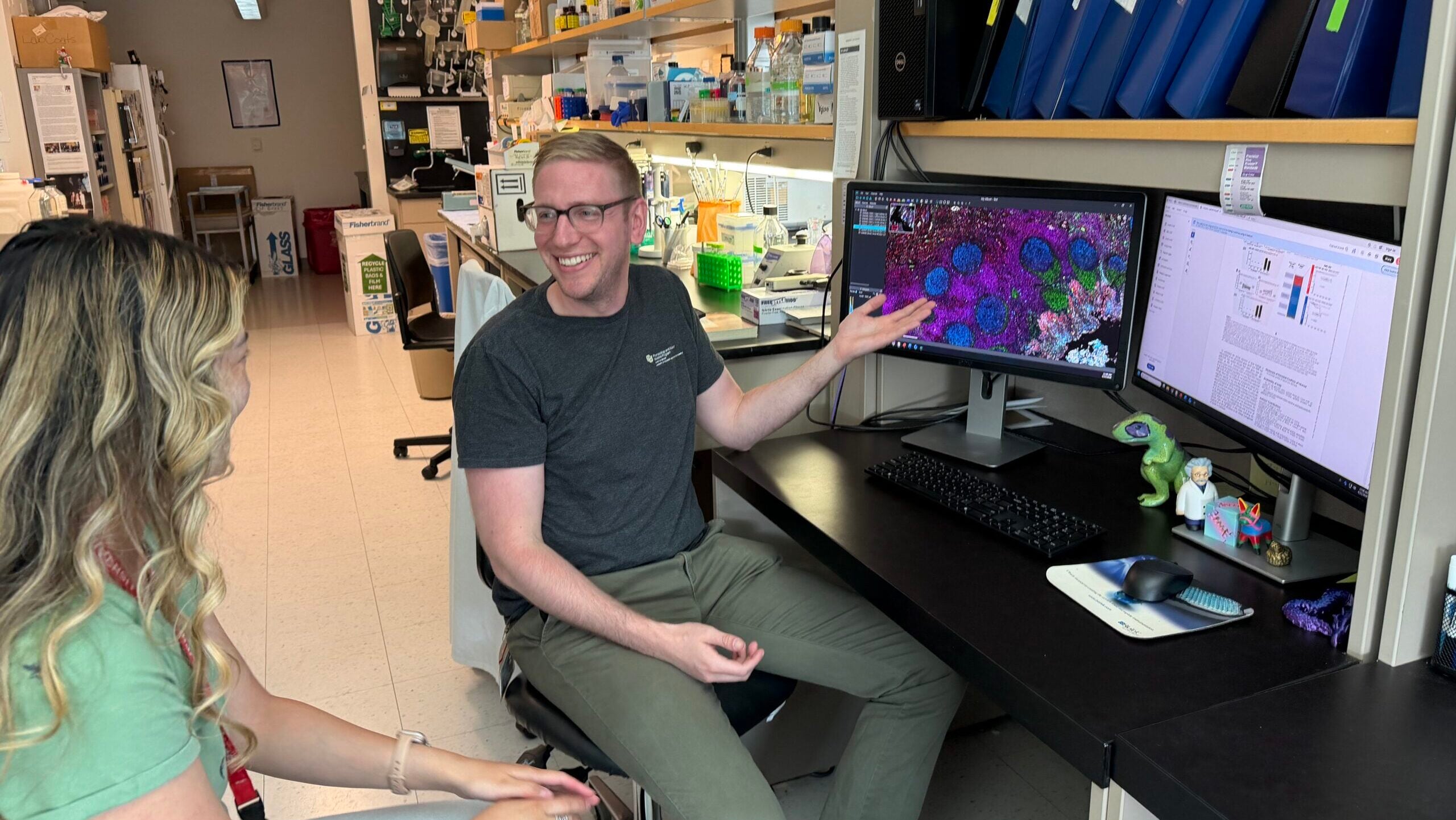
Dillon Boulton: Estrogen receptor positive breast cancer (ER+ BC) comprises about 80% of BC diagnoses, making this by far the most common subtype of BC. Typical therapy regimens for women diagnosed with this disease are endocrine therapies which target either ER expression and activity — with drugs like Fulvestrant and Tamoxifen — or through aromatase inhibitors, which block the conversion of androgens to estrogens. While endocrine therapies are highly effective, about 20% (or more, depending on lymph node involvement) of patients will eventually experience relapse with deadly metastatic disease within 10 years of diagnosis. Metastatic BC is typically not curable; thus, our lab’s overarching goal is to find new approaches to targeting persistent, lethal metastatic ER+ BC. My research specifically focuses on how androgens and androgen receptors (AR) modulate the tumor immune microenvironment (TIME) to an anti-inflammatory pro-tumor state. This work — utilizing valuable, matched patient samples from our recently completed collaborative Phase II clinical trial — suggests that antagonism of AR reinvigorates the TIME by decreasing the abundance of inhibitory immune cells and increasing anti-tumor immune structures called tertiary lymphoid structures.
EN: What inspired you to undertake this specific research?
Boulton: Everyone’s life has been affected by some type of cancer in some form or another, whether it is directly or through a loved one. As technologies improve and our understanding of different cancers increases, we are getting much better at treating these diseases. However, as the second leading cause of death in the United States, cancer remains a prominent problem in our society. My research goals have always been to perform impactful research that will ideally translate to help improve the lives of patients suffering from these diseases. Focusing on mechanisms of BC resistance to current standard of care treatments, Dr. Richer’s lab serves as an ideal environment to do highly relevant, patient-centric research. The advent of immunotherapy has been amazing and improved outcomes for patients with a variety of different cancers. However, ER+ BC is not responsive to any existing types of immunotherapies. By understanding the fascinating interplay between hormones and their receptors in both cancer cells and the surrounding immune cells we seek to open new treatment avenues for ER+ BC.
EN: How did it feel to present your work in such a lively environment among your peers and mentors?
Boulton: I previously worked on mitochondria signaling pathways in hormone receptor negative metastatic breast and prostate cancer, so this was my first time attending ENDO. It’s incredible to be able to present new and exciting data to colleagues at conferences like ENDO 2026. These forums serve as the catalyst for meaningful conversations with experts from around the world and facilitate the establishment of important collaborations. Everyone thinks about problems and gaps in the field uniquely, so discussing research with peers is how we all grow as scientists and improve the quality of research. Additionally, by listening to presentations from a diverse set of speakers, I was able to learn a lot about hormone actions in other diseases outside of cancer.
“It’s incredible to be able to present new and exciting data to colleagues at conferences like ENDO 2026. These forums serve as the catalyst for meaningful conversations with experts from around the world and facilitate the establishment of important collaborations. Everyone thinks about problems and gaps in the field uniquely, so discussing research with peers is how we all grow as scientists and improve the quality of research.” – Dillon Bolton, PhD, postdoc fellow, Department of Pathology, University of Colorado – Anshutz Medical Campus, Aurora, Colo.
EN: Can you explain what sort of impact the Endocrine Society has had on your research career?
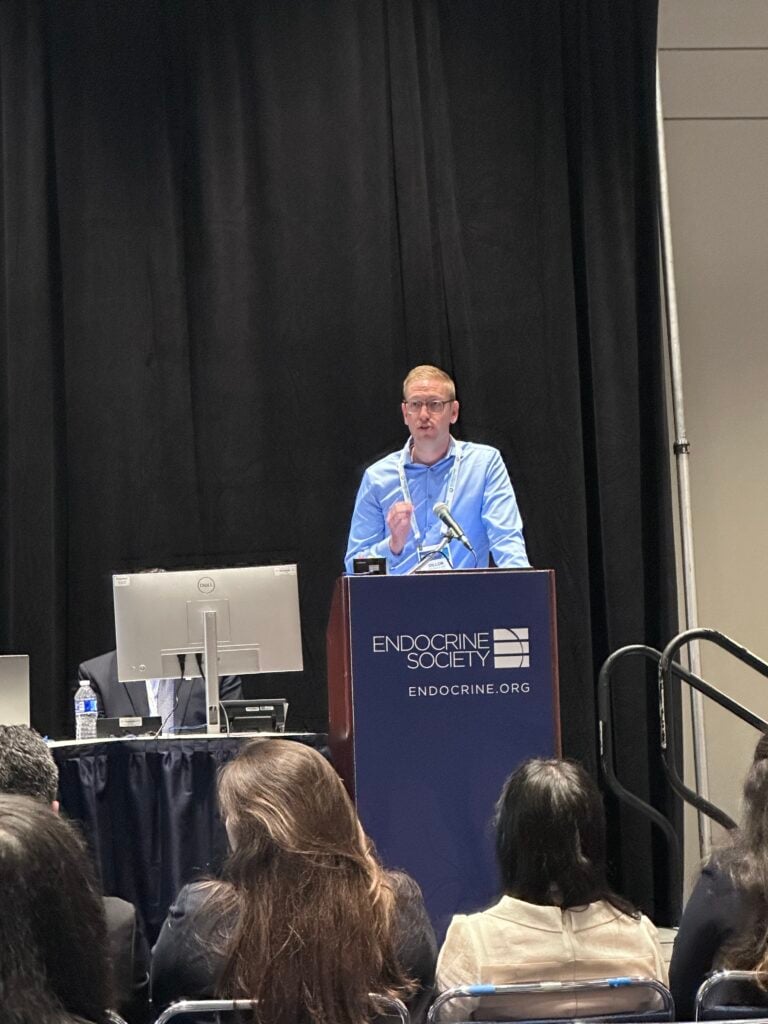
Boulton presenting his science at the Rising Star Power Talks at ENDO 2026 in Chicago, Ill., in June.
Boulton: The Endocrine Society has been a wonderful resource for dissemination of our work. We have been able to showcase our research using several Endocrine Society platforms, like publishing the research I contributed to when I first joined the lab in Endocrinology (“Androgen Receptors Promote Oxidative Phosphorylation and Resistance to Palmitate Lipotoxicity in ER-Mutant Breast Cancer”). Additionally, I was honored to be asked to present my most recent findings at the annual ENDO meeting in the three-minute Rising Star format as well as a 10-minute talk where I could go into more detail about our findings.
EN: What’s next for you and your research? Where do you go from here?
Boulton: At the end of the day our focus is always on improving outcomes and quality of life for patients through basic discoveries, like how one hormone receptor can compensate when another is being therapeutically targeted. While our preliminary studies suggest an important role for AR modulating immune responses in ER+ BC, there is much to be discovered about mechanisms, and how much of the response is through direct action of hormone receptors in the immune cells or indirect from AR-regulated, tumor-derived immunosuppressive factors. As we continue to uncover the different mechanisms by which AR suppresses immune responses, we aim to determine the best method to target AR or one of its downstream transcriptional target(s) to increase the effectiveness of immunotherapies which have been notoriously unsuccessful at treating ER+ BC.
Join the Global Movement Advancing Endocrine Science and Medicine
Become a part of a community of 18,000-plus endocrine investigators and clinicians who conduct research and provide quality patient care in more than 100 countries. Advance your career and the field of endocrinology through our many educational, leadership and advocacy opportunities.