Unpausing the Conversation: Menopause is Having a Moment at ENDO 2026
By Kelly Horvath
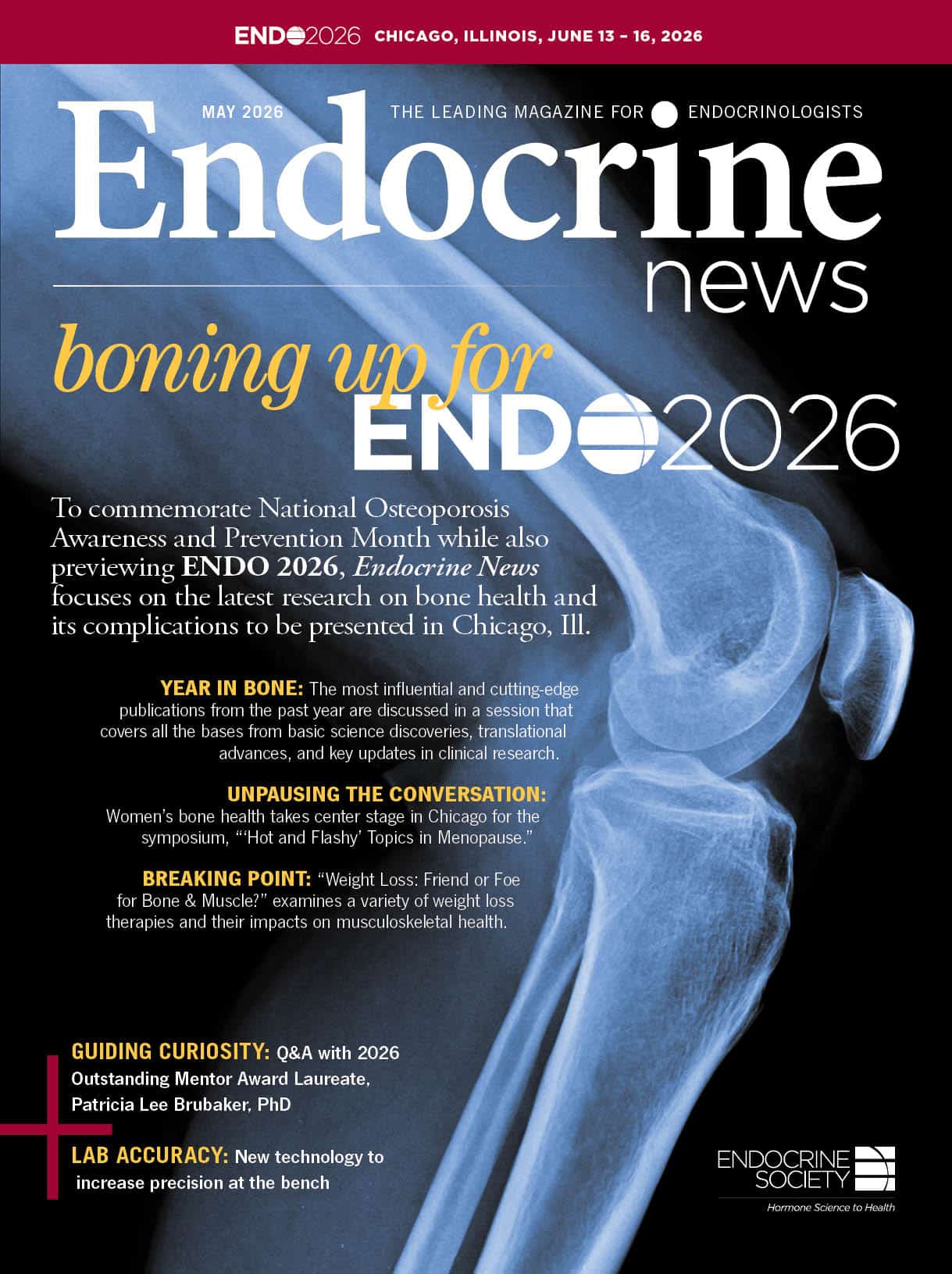
Women’s bone health takes center stage in Chicago during the symposium “Hot and Flashy: Topics in Menopause,” on Saturday June 13. From catching endocrinologists up regarding menopause care and past regulatory missteps to estrogen’s impact on bone health and the myriad non-hormonal options, this ENDO 2026 symposium will definitely give attendees something to talk about!
The field of medicine can move very fast, with advances happening in one area triggering a cascade of discoveries elsewhere — and endocrinology is no exception. With such rapid forward progress, however, it’s no wonder that some important conversations can get left behind, including one that concerns a condition that affects every woman who lives long enough to experience it: menopause. One session at ENDO 2026 in Chicago this June promises to change that.
“’Hot and Flashy’ Topics in Menopause” happening Saturday, June 13, brings together four leading experts in the field to address menopausal hormone therapy (MHT), bone health, and non-hormonal treatment options for vasomotor symptoms. Gina Woods, MD, MSCP, clinical professor of medicine and chief of the Division of Endocrinology and Metabolism at the University of California, in San Diego, who will chair the session, puts it this way: “I think some of the reasons the Endocrine Society is featuring this topic right now are the long-overdue reevaluation of safety and the U.S. Food and Drug Administration (FDA)’s removal of the black box warning for MHT, the ongoing social media buzz, the increased patient demand. I think another important component is that the Endocrine Society recognizes that menopause training has been largely missing from medical education. There is a huge knowledge gap, and we need to address it by bringing experts together in sessions like this.”
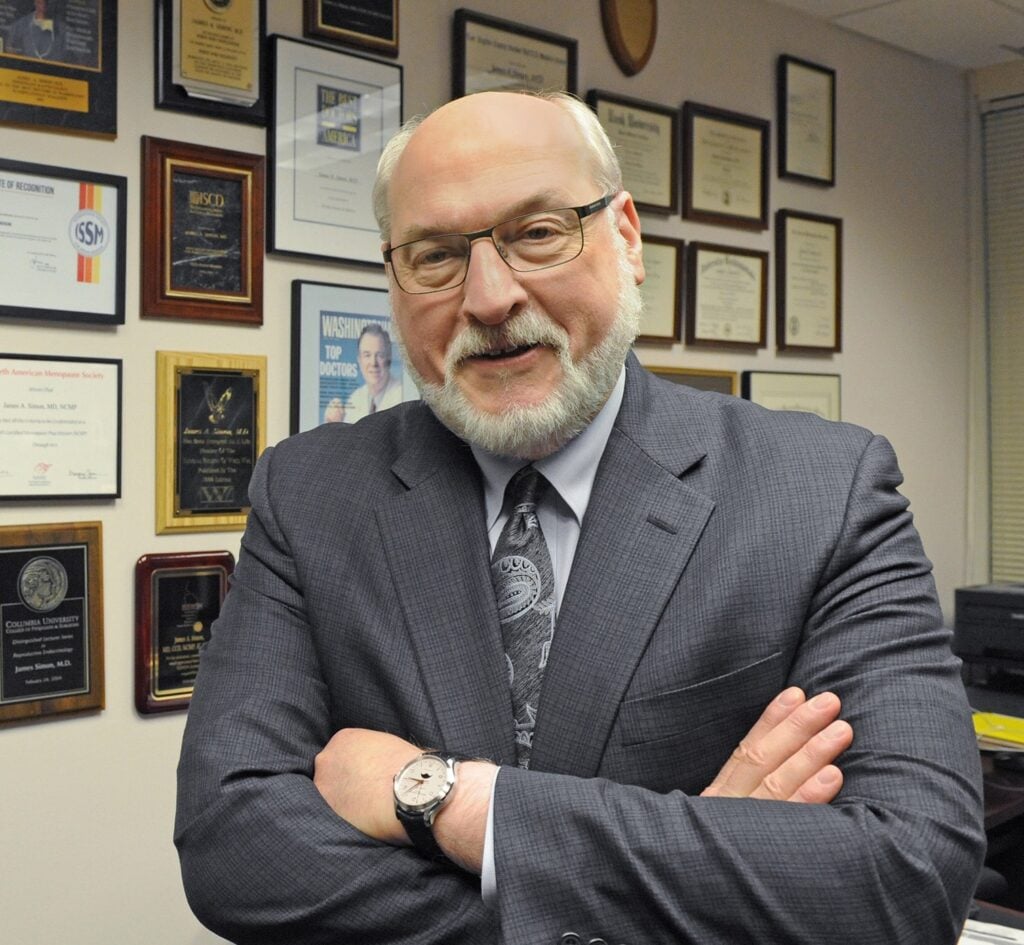
Joining Woods are three presenters: James A. Simon, MD, CDD, NCMP, FACOG, clinical professor of obstetrics and gynecology at the GW School of Medicine & Health Sciences in Washington, D.C., will explore the latest in MHT; E. Michael Lewiecki, MD, FACP, CCD, FASBMR, director of New Mexico Clinical Research & Osteoporosis Center and Director of Bone Health ECHO at University of New Mexico Health Sciences Center in Albuquerque, N.M., will talk about bone health in menopause; and JoAnn V. Pinkerton, MD, FACOG, MSCP, The Midlife Women’s Health and Mamie Jessup Professor of Ob Gyn; Division Director, Midlife Health at The University of Virginia Health System in Charlottesville, Va., will round out the session with a discussion of non-hormonal therapies in menopause. All four know each other’s work well — and all are eager to share their complementary insights and set certain records straight.
“The women who are candidates for non-hormonal therapy are fewer in number but more complex. These are the women who have been suffering the most, because they haven’t been getting effective therapies.” — JoAnn V. Pinkerton, MD, FACOG, MSCP, The Midlife Women’s Health and Mamie Jessup Professor of Ob Gyn; division director, Midlife Health, University of Virginia Health System, Charlottesville, Va.
Of the session and her role as Chair, Woods says, “This session will draw a big crowd, and I’m delighted to introduce this lineup of experts. I expect a lot of questions during the post-presentation Q&A and getting through as many of them as we can in a timely manner may be challenging. But I hope the audience is really engaged, and I anticipate they will be.” As for why Woods (as well as the co-presenters) expect a good audience turnout, this partly comes down to how topical menopause is currently as well as to correcting the short shrift it has sometimes gotten in the past. Woods invokes her colleague Cynthia A. Stuenkel, who is first author on the Endocrine Society’s clinical practice guideline on menopause: “[Stuenkel] often points out that medical students typically receive just one lecture on menopause, the same number of lectures as they receive on congenital adrenal hyperplasia, which is a rare condition. So, you can see that the time devoted to this incredibly common condition, one that affects half of all people who live long enough to experience it, is quite limited.”
Woods explains that this carries through into internal medicine residency and endocrinology fellowship training. “Historically, our fellows have had very little exposure to menopause care, either in lectures or in clinical opportunities to work in a menopause practice. Much of that work has been done by our OB-GYN colleagues. I’m glad to see that changing, because in my opinion, this falls squarely within the realm of what an endocrinologist should be able to provide. We need to do a much better job of training our endocrine fellows and our colleagues in this area.”
This session may indeed seem long overdue, and it will cover a lot of important clinical ground. According to Woods, some potentially fruitful areas of discussion include whether MHT should be used for osteoporosis prevention in women who have no menopausal symptoms as well as to treat osteoporosis in younger postmenopausal women who have no contraindications. Other areas of ongoing debate include timing of MHT and what might constitute absolute contraindications. “Another area I’d highlight is selective estrogen-receptor modulators (SERMs),” she says. “The question of how to use them, particularly in women who have an elevated breast cancer risk, deserves more focus. If a woman wants to be proactive about protecting her bones but is worried about breast cancer, where should SERMs fit into the treatment plan? I know there are ongoing studies working to address that.”
Setting the Record Straight on MHT
If the training gap Woods identified is one part of the problem, the misinformation gap is another, and few people are better positioned to set the record straight on MHT than Simon. A reproductive endocrinologist and gynecologist, he has been a long-time member of the Endocrine Society and, like his co-presenters, has attended dozens of its meetings. He also became president of the Menopause Society in 2003; in other words, he was at the epicenter of the MHT controversy when it mattered most. “About a quarter of all menopausal women were on hormones at that time,” he recalls, “which dropped to roughly 5% in the years following the Women’s Health Initiative (WHI) and the black box warning.”
That black box warning, he argues, should not have been applied in the first place: “It single-handedly reversed a trend toward investigation and study of hormone therapy in women.” It also contributed to the premature morbidity and mortality of tens of thousands of women who were, in reality, candidates for therapy but who went without it. “The warning had been applied broadly based on one arm of the WHI without adequately accounting for the distinction between combined therapy and estrogen alone and without any consideration of local vaginal estrogen for genitourinary syndrome of menopause or recurrent urinary tract infections,” explains Simon. He cites a 2020 editorial published in Menopause: The Journal of The North American Menopause Society, by Philip M. Sarrel, MD, that explored these issues in relation to burgeoning healthcare costs but with an underlying cautionary message: “Failure to recognize the significance of menopause and the effects of ovarian hormone deficiency, estrogen in particular, pervades medical research, clinical care, and teaching. Menopause is simply not in the awareness of most academics and practitioners.”
“The FDA’s recent removal of the warning was long overdue,” says Simon.
That’s not the only aspect of the MHT discussion he hopes to shed more light on. Social media has elevated the dialogue (and can be at least partly credited with menopause’s current status as a “cause célèbre,” as Simon puts it) while simultaneously distorting it. “The benefits and risks of MHT are seldom discussed in context or with any balance. You have people who think it’s the most horrible thing on the planet, and then enthusiasts who think that everyone, regardless of any qualifying health issue, should be on hormones, and neither of those is correct,” says Simon. He cites a systematic scoping review of prescription drug promotion by social media influencers, published in March in JAMA Open Network by Gell, S. et al., the conclusion of which found that such promotion “carries risks of inaccurate or misleading advice, often amplified through personal and emotionally resonant narratives in an environment with limited oversight and enforcement.” This phenomenon even has a name now: “menopause profiteering.”
Against this backdrop, Simon’s goal for the session is straightforward: to set the record straight with scientific evidence, to show both where the FDA was when they made the judgment to add the black box warning, and what the evidence has shown since. He is also hoping to bridge a longstanding divide between his own specialty and the endocrinologists in the room. OB-GYNs, he explains, tend to see younger, healthier patients and are comfortable managing the most common side effects of MHT (breast tenderness and bleeding). Endocrinologists, by contrast, frequently see an older patient population with additional underlying conditions. “My hope is that at this meeting, for this audience, I can bring those two disparate points of view closer together.”
As for what he wants attendees to take away? Simon keeps it simple: “The truth will set you free.”
Revisiting Osteoporosis Prevention
If Simon’s section of the session addresses what went wrong with MHT, Lewiecki’s asks a related but distinct question: Now that the conversation around estrogen is shifting, what opportunities does that open up? For Lewiecki, the answer lies in a concept that has been sidelined in recent years — osteoporosis prevention.
“Most of the current clinical practice guidelines for osteoporosis focus on identifying menopausal women at high risk for fracture and treating them,” he explains. “Even though, ideally, as with most diseases, we’d rather prevent than treat, osteoporosis prevention has not gotten much attention in recent clinical practice guidelines.” The stakes are significant: Women begin to lose bone density several years before their final menstrual period and may lose up to 20% within five to seven years after menopause, making early intervention and basic lifestyle counseling regarding calcium, vitamin D, and weight-bearing exercise essential. The removal of the black box warning from estrogen, he notes, means that both patients and clinicians may now be more open to prevention-oriented conversations than they have been in decades.
The distinction between prevention and treatment matters more than it might initially appear. “By intervening early, before women have osteoporosis, we can hope to prevent the irreversible microarchitectural deterioration of bone structure and put them in better shape as they get older, rather than waiting until fracture risk is high before doing something,” says Lewiecki. Although several medications are approved for osteoporosis prevention, including raloxifene and bisphosphonates, as well as estrogen, awareness of prevention among both clinicians and patients has lagged.
“Most of the current clinical practice guidelines for osteoporosis focus on identifying menopausal women at high risk for fracture and treating them. Even though, ideally, as with most diseases, we’d rather prevent than treat, osteoporosis prevention has not gotten much attention in recent clinical practice guidelines.” — E. Michael Lewiecki, MD, FACP, CCD, FASBMR, director, New Mexico Clinical Research & Osteoporosis Center and Director of Bone Health ECHO, University of New Mexico Health Sciences Center, Albuquerque, N.M.
Indeed, estrogen is FDA-approved for prevention of osteoporosis but has not been broadly used for that purpose, instead thought of mainly for menopausal symptom management. So, what is the role of hormone therapy for primary prevention of osteoporosis, even in the absence of symptoms? (And, perhaps, even more controversially, could MHT be used to treat osteoporosis? Although it is not FDA-approved for that indication, in the WHI study, MHT prevented spine, hip, wrist, and all-site fractures.)
“That’s where we as healthcare professionals need to use our communication skills, talk with the patient, and come to a shared decision about what’s best,” Lewiecki acknowledges. If you’re wondering why an osteoporosis-specific medication like alendronate may not be appropriate for some women, more is understood decades since bisphosphonates were first approved. Lewiecki explains: “People thought, great, we’ll put all postmenopausal women on it forever and they’ll never get osteoporosis. Then we learned about side effects that were not appreciated or recognized in the initial clinical trials. Later we learned about concepts such as pausing bisphosphonate therapy, sequencing therapy, and using different drug classes at different lifetime stages. So hopefully we’ve become wiser about when and how to use all the available medications.”
The individualized conversations Lewiecki alluded to are also important in light of the expanded therapeutic options now possible. “In some cases, estrogen and a bisphosphonate may be used together, not as combination therapy in the traditional sense,” he adds, “but as two medications addressing two different clinical needs simultaneously.”
Redefining Non-Hormonal Therapy
If the preceding sections of the session address what MHT can do and for whom, Pinkerton’s rounds out the picture by asking, what about the women for whom non-hormonal therapies are the right choice? Whether non-hormonal therapy is the better option from the outset or because MHT is not an option or not a preference, this group now has more evidence-based choices than ever before.
Pinkerton will focus on non-hormonal therapies for vasomotor symptoms, with particular attention to a class of medications that represents a genuine paradigm shift in menopause care: neurokinin-targeted therapies (NKTs), also called neurokinin receptor antagonists. When estrogen levels decline, hypothalamic KNDy neurons become enlarged and hyperactivated, triggering hot flashes. NKTs work by interrupting that process directly.
“The benefits and risks of MHT are seldom discussed in context or with any balance. You have people who think it’s the most horrible thing on the planet, and then enthusiasts who think that everyone, regardless of any qualifying health issue, should be on hormones, and neither of those is correct.” — James A. Simon, MD, CDD, NCMP, FACOG, clinical professor of obstetrics and gynecology, GW School of Medicine & Health Sciences, Washington, D.C.
Three FDA-approved non-hormonal therapies are now available. Low-dose paroxetine salt (Brisdelle) was approved specifically for hot flushes and remains a viable option, although it is generally considered less effective than the newer agents. Fezolinetant (Veozah), FDA approved in 2023 and works quickly and effectively, although liver monitoring is required due to a rare risk of hepatotoxicity. Elinzanetant (Lynkuet), FDA approved in October 2025, is a dual NK1/NK3 receptor antagonist (whereas fezolinetant targets only the NK3 receptor). In the OASIS 3 trial, women on elinzanetant experienced nearly 74% fewer moderate-to-severe hot flashes over the course of a year. “This is a major step forward for women,” says Pinkerton, who was a primary author on the OASIS 1 and 2 publications in JAMA. Elinzanetant has also demonstrated benefits for mood and sleep, mediated through the NK1 receptor, and has been studied in women with natural, surgical, and endocrine therapy–induced menopause.
Importantly, both NKTs may be options for women on endocrine therapy for breast cancer, a population that has historically had very few safe options for vasomotor symptom management. Elinzanetant has published one-year data on women taking Elinzanetant for hot flashes due to endocrine therapy for breast cancer, and an ongoing phase 3 trial is evaluating fezolinetant for this population. “The women who are candidates for non-hormonal therapy are fewer in number but more complex,” Pinkerton explains. “These are the women who have been suffering the most, because they haven’t been getting effective therapies.” That group includes women with estrogen-sensitive cancers, those with a history of stroke or blood clots, women with migraines with aura that worsen on MHT, and those with liver disease or recent cardiovascular events. The questions Woods raises about SERMs and breast cancer risk point toward some of the population Pinkerton has in mind.
Pinkerton will also address what she calls “repurposed” medications, agents approved for other indications that have demonstrated efficacy for hot flashes in clinical trials. Oxybutynin (Ditropan), approved for overactive bladder, has been shown in recent trials to be effective for vasomotor symptoms as well; clinicians should note that it crosses the blood–brain barrier. Selective serotonin-reuptake inhibitors (SSRIs) and serotonin/norepinephrine–reuptake inhibitors (SNRIs) including venlafaxine, escitalopram, desvenlafaxine, and paroxetine remain standard non-hormonal options, although breast cancer patients taking tamoxifen should use these medications with caution given potential drug interactions. For clinicians navigating prior authorization requirements, such as when patients may be required to try non-FDA-approved therapies before accessing newer agents, understanding the evidence base for these medications is essential.
Underlying all these treatment decisions is a commitment to protecting bone health, a concern that becomes acute when estrogen levels drop at menopause and bone loss accelerates. Clinicians should also be alert to medications that may compound bone loss. Early 2026 data identified osteoporosis in 4% of patients using glucagon-like peptide 1 receptor agonists (GLP-1RAs), compared to 3% of non-users, a difference attributed primarily to rapid weight loss reducing mechanical stress on bones as well as potential reductions in dietary calcium intake and absorption. (The effect of weight loss on bone, a topic Lewiecki also touches on in his portion of the session, is serendipitously being covered at an ENDO 2026 session happening on Sunday, June 14.)
Emerging metabolic research adds another dimension: early 2026 findings have identified a link between elevated midlife insulin levels and an increased likelihood of experiencing hot flashes earlier and for longer durations, suggesting that managing metabolic health may itself be a meaningful non-hormonal strategy for some patients.
Pinkerton’s practical, evidence-based approach to the question of who gets which therapy captures the spirit of the session as a whole. “My goal is to share the clinical trial results and offer practical advice to help clinicians best care for women going through menopause, considering their different needs,” she says.
“Historically, our fellows have had very little exposure to menopause care, either in lectures or in clinical opportunities to work in a menopause practice. Much of that work has been done by our OB-GYN colleagues. I’m glad to see that changing, because in my opinion, this falls squarely within the realm of what an endocrinologist should be able to provide. We need to do a much better job of training our endocrine fellows and our colleagues in this area.” — Gina Woods, MD, MSCP, clinical professor of medicine, chief, Division of Endocrinology and Metabolism, University of California, San Diego, Calif.
The four voices in this session tell a coherent and urgent story, one in which each piece reinforces the others. Woods sets the stage by naming what has been missing: a generation of endocrinologists undertrained in menopause care and now hungry to catch up. “Endocrinologists need to be involved in menopause care,” she says, “up to date, informed, and prepared to deliver it to our patients. And, of course, there is such an urgent need for more research in women’s health.” Simon fills in the historical record, showing how a regulatory misstep rippled outward for decades, before looking forward to why the correction now underway matters so much. He makes the case that the benefits of MHT, properly understood and appropriately individualized, outweigh the risks for many more women than current prescribing patterns would suggest. Lewiecki reminds us that estrogen’s rehabilitation has a direct bearing on bone health, reopening a conversation about osteoporosis prevention that the guidelines had neglected. And Pinkerton closes the loop by equipping clinicians with an arsenal of non-hormonal options that stand on their own merits.
All four are longtime Endocrine Society members who are genuinely energized to be bringing this conversation to Chicago and genuinely committed to making sure that both clinicians and patients benefit. Both groups have been waiting long enough.
Horvath is a freelance writer based in Baltimore, Md. In the April issue, she wrote about recent journal studies that highlighted adrenal research.
Join the Global Movement Advancing Endocrine Science and Medicine
Become a part of a community of 18,000-plus endocrine investigators and clinicians who conduct research and provide quality patient care in more than 100 countries. Advance your career and the field of endocrinology through our many educational, leadership and advocacy opportunities.