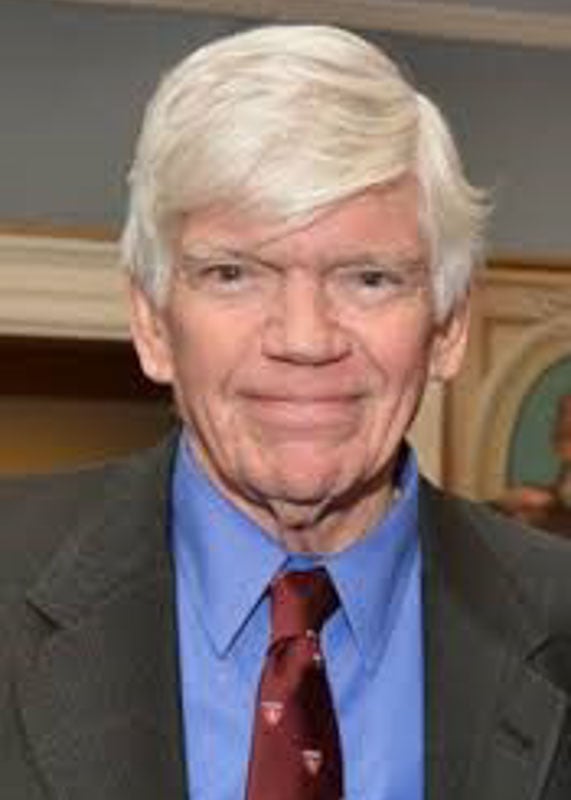
Endocrine Society Past-President John T. Potts Jr., MD, DSc, Jackson Professor of Clinical Medicine Emeritus at Harvard Medical School, former Chair of the Department of Medicine and Physician-in-chief at Massachusetts General Hospital (MGH), passed away on August 12, 2026, at the age of 94.
A pioneer of calcium and bone biology, he was also one of academic medicine’s most innovative builders of people, programs, and institutions. His career linked fundamental discovery to clinical medicine with unusual continuity: from defining the structure and physiology of parathyroid hormone (PTH), to developing diagnostic assays, helping formulate consensus guidelines for the management of hyperparathyroidism, and laying the mechanistic groundwork for PTH-based treatment of osteoporosis.
The Endocrine Society recognized him with both the Ernst Oppenheimer Award and its highest honor, the Fred Conrad Koch Award. He served as President of the Society during 1987-1988, a period when its clinical and basic-science constituencies might have drifted apart; he was instrumental in preserving their shared intellectual home. His many other honors included the 2013 George M. Kober Medal of the Association of American Physicians, and election to the National Academy of Sciences, the National Academy of Medicine, and the American Academy of Arts and Sciences.
John grew up in Moorestown, N.J., in a family of florists. His mother imagined that he might become a physician, although John later recalled that he began without a sharply focused ambition. At La Salle College, he was drawn to English literature before ultimately choosing medicine. During his clinical rotations at the University of Pennsylvania School of Medicine, he cared for a patient with hyperparathyroidism and was prompted to better understand the mechanisms of disease. After graduating in 1957 and being elected to Alpha Omega Alpha, John came to the MGH for internship and residency, entering a department still deeply shaped by Fuller Albright’s model of extracting physiology from the close observation of patients.
After residency, John moved to the National Institutes of Health to “learn to do science seriously.” Of note, he worked on the problem he had encountered as a medical student. Under the guidance of the future Nobel laureate, Christian Anfinsen, he mastered protein chemistry. He then joined forces with Gerald Aurbach, combining protein chemistry with physiology to purify and characterize PTH – “a rather humble molecule,” as John described it, since it was named for being next to the thyroid gland. With collaborators, they determined the amino acid sequence of PTH, later memorialized by a giant poster that hung for years in the MGH Endocrine Unit. With Berson and Yalow, Potts and Aurbach developed a radioimmunoassay for PTH — it revealed that falling serum calcium stimulates, and rising calcium suppresses, PTH. These experiments established PTH as the key mediator of calcium homeostasis.
John returned to MGH in 1968 as Chief of the Endocrine Unit. There he built a group that repeatedly adopted the next transformative technology. He sent young physician-scientists, including Joel Habener, William Chin, and Henry Kronenberg, and many others, to leading basic-science laboratories at Harvard and MIT, where they learned the emerging tools of recombinant DNA and molecular biology. The resulting collaborations contributed to cloning PTH and, later, the PTH/PTHrP receptor. With Gino Segre and others, John developed increasingly sensitive and specific immunoradiometric assays for PTH, improving the diagnosis of primary hyperparathyroidism and helping distinguish it from humoral hypercalcemia of malignancy.
John led with a style that he called distributed governance: He recruited exceptional people, gave them room to build, and created a culture of respect and collaboration. He cultivated an environment in which colleagues celebrated one another’s excellence rather than being threatened by it. “If you celebrate young people around you,” he observed, “they feel like they can grow.”
In 1981, John succeeded Alexander Leaf as Chair of Medicine and Physician-in-Chief at MGH, positions he held until 1996. He protected time for his research group throughout his chairmanship and led an NIH-funded program project grant for decades. At the same time, he expanded the institution’s research enterprise, helped bring molecular biology to MGH, and fostered the development of MGH East in Charlestown. That expansion enabled the growth of the MGH Cancer Center, the Cardiovascular Research Institute, and other major programs. He later served as Director of Research from 1996 to 2004.
John led with a style that he called distributed governance: He recruited exceptional people, gave them room to build, and created a culture of respect and collaboration. He cultivated an environment in which colleagues celebrated one another’s excellence rather than being threatened by it. “If you celebrate young people around you,” he observed, “they feel like they can grow.” He was an early advocate for recruiting and advancing physicians from groups underrepresented in medicine, formed a Minority Recruitment Committee in the department, and supported the Biomedical Science Careers Program. He also created the MGH Society of Research Fellows, through which he helped young physician-scientists navigate the uncertain early years of their careers. Many members of this group went on to influential careers and leadership positions in academic medicine and industry.
For John, mentorship was a primary responsibility. His approach was generous, personal, and free of ego. He possessed an uncanny ability to remember the precise details of an individual’s science, career, and family. When illness or personal tragedy arose, he drew on his broad network to connect colleagues with specialists and then continued to follow their progress. In one remarkable instance, he called a colleague nearly every evening for a year to check on them. His concern did not end when an immediate problem had been addressed; he remained present through illness, grief, and difficult career transitions. This personal concern, combined with his remarkable ability to listen, became the foundation for his lifelong friendships and his success in helping so many attain positions of leadership.
At the Kober Medal ceremony in 2013, he described the mentor’s task as listening closely enough to understand what a younger colleague wanted, rather than imposing the mentor’s own preference. While the John T. Potts Jr., MD, Faculty Mentoring Award at MGH and the conference room bearing his name are fitting institutional reminders, his true legacy is the network of scientists and leaders who still practice the values he instilled.
John’s warmth and hospitality extended beyond mentoring, laboratories, and committee rooms. He and his wife, Susanne, shared wide-ranging interests in art, architecture, music, tennis, philosophy, and social causes, as well as a love of entertaining. For their first date, John invited Susanne to a concert, only to discover that it conflicted with an important NIH lecture. After some negotiation, she accompanied him to the lecture instead. Despite that inauspicious beginning – and a lecture both found quite boring – their relationship flourished. Susanne was his equal partner in creating a sense of community. Their hospitality began with small gatherings of the nascent Endocrine Unit in the 1960s and expanded, with John’s institutional responsibilities, to encompass the Department of Medicine. Their dinners brought young and senior physicians together to discuss medicine, science, politics, and life; the larger holiday parties gave generations of trainees and faculty a memorable sense of belonging. To those fortunate enough to participate, the Potts home in Newton felt like their home. Susanne’s calm and steady support, which John acknowledged with gratitude, sustained a household that welcomed the demands and pleasures of academic medicine. John was a devoted father to John, Martha, and Stephan and a proud grandfather. Family was a source of great pride and sustenance for him.
Endocrinology has lost a pioneer, MGH has lost one of its great institutional stewards, and generations of physicians and scientists have lost a mentor and friend. His spirit endures through the people he touched.
John knew how to recognize the next important question, how to assemble people with complementary skills, and how to translate scientific possibility into better care. Most of all, he made people feel that their ideas and futures mattered. John started his clinical training at MGH, was cared for there at the end of his life, and he left an indelible mark on the culture of the institution. Endocrinology has lost a pioneer, MGH has lost one of its great institutional stewards, and generations of physicians and scientists have lost a mentor and friend. His spirit endures through the people he touched.
Jameson, Crowley, and Kronenberg are all past presidents of the Endocrine Society.
Jameson is the president of the University of Pennsylvania and former Dean of the Perelman School of Medicine at the University of Pennsylvania; Crowley is the Daniel K. Podolsky Professor Emeritus,Harvard Medical School and The Massachusetts General Hospital, Boston, Mass.; and Kronenberg is professor of medicine at Harvard Medical School and former chief of the Endocrine Unit at Massachusetts General Hospital.