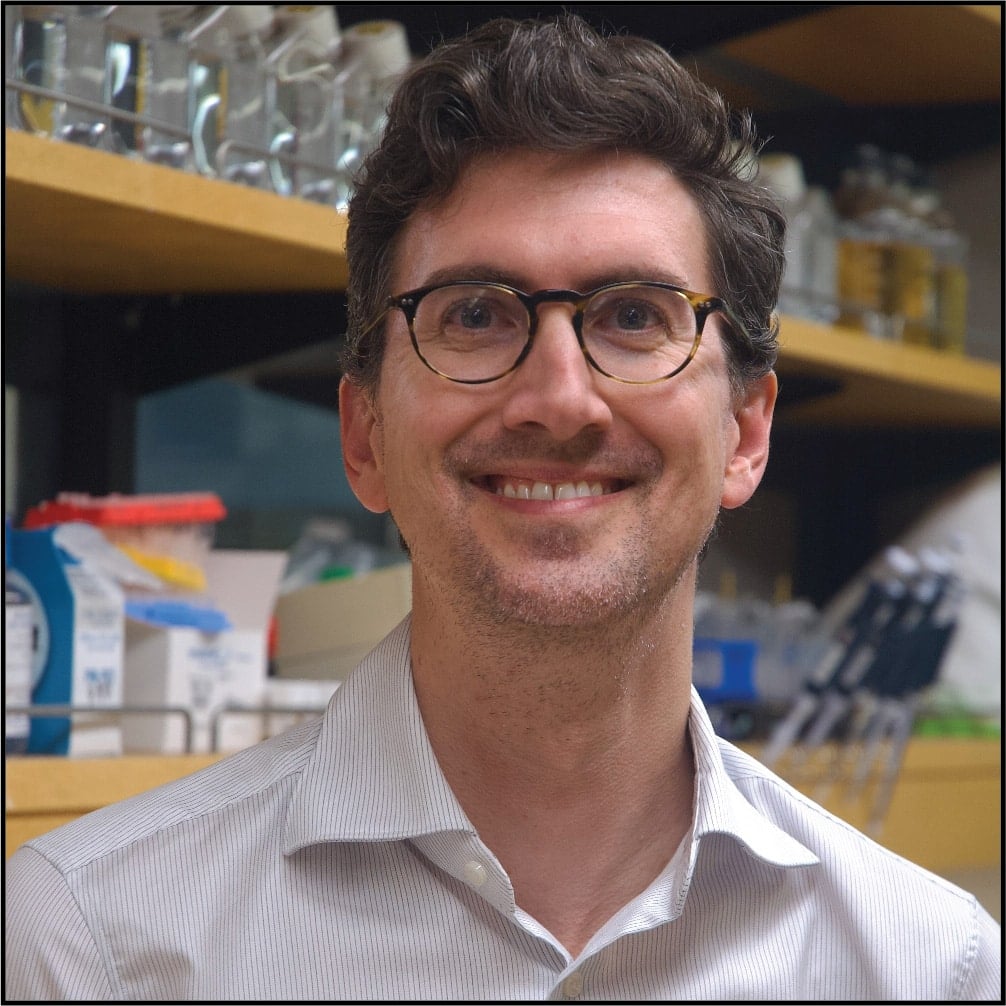
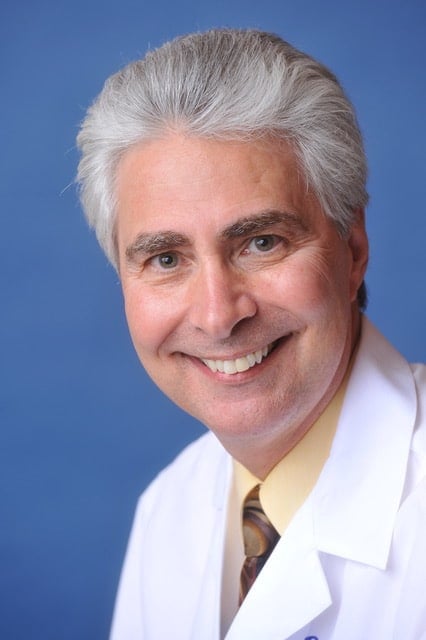
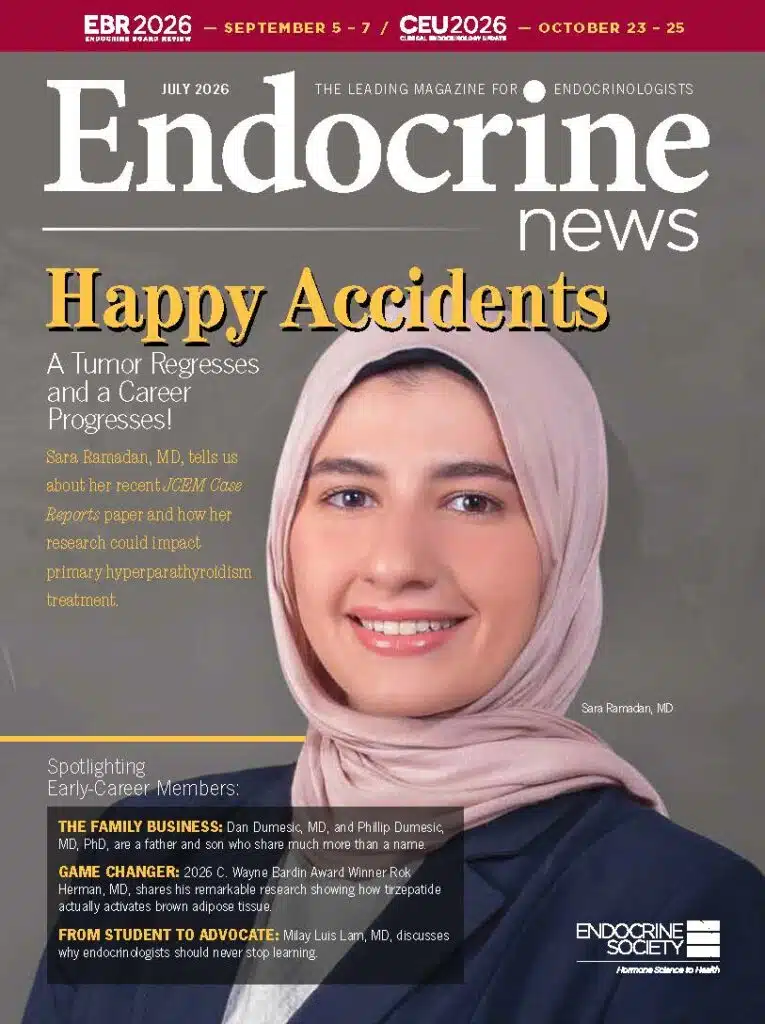
It is definitely “like father, like son” in the Dumesic home: Phillip Dumesic, MD, PhD, (above, left) whose lab studies gene expression at the University of California – San Francisco, followed his father, Dan Dumesic, MD (above, right) an expert in PCOS (now PMOS) at UCLA, into the field. They discuss their research, dad’s influence on son, and how their research actually converges at the adipocyte.
ENDO 2026 promised to be remarkable in many respects, but here’s one we do not often see: work by a father and son featured at the same meeting, separate research programs that turn out to be two chapters of the same story.
Daniel Dumesic, MD, of the David Geffen School of Medicine at the University of California in Los Angeles (UCLA), himself a long-time attendee, will accompany Michelle M. Song, a medical student researcher from his lab and recipient of an Endocrine Society travel award to present her work on biological pathways underlying the triglyceride glucose-body mass index in normal-weight women with polycystic ovary syndrome (PCOS).
His son, Phillip Dumesic, MD, PhD, an assistant professor at UCSF’s Diabetes Center, is co-chairing a symposium honoring the legacy of the late David Mangelsdorf, PhD, from the University of Texas Southwestern Medical Center in Dallas, who pioneered the field of orphan nuclear receptors and discovered key cellular signaling pathways in many diseases. Mangelsdorf had been awarded the Endocrine Society’s Edwin B. Astwood Award for Outstanding Research in Basic Science just months before he died last August.
Phillip and Dan Dumesic sat down with Endocrine News before the meeting to talk about the throughlines in their work and their careers.
What’s In a Name?
Coincidentally, the condition Dan has studied for decades was renamed just days before the conversation took place. PCOS is now, by international consensus, called polyendocrine metabolic ovarian syndrome (PMOS). This is not the first time the name of this confounding condition has changed. It was first described as Stein-Leventhal syndrome in the 1930s before becoming PCOS and was also known as hyperandrogenic chronic anovulation in some quarters. Each renaming has reflected the evolution in understanding about the syndrome. “I always think of the line from Shakespeare, ‘a rose by any other name . . .’ The names change, but the physiology does not,” says Dan.
PMOS is among the most common endocrine disorders in reproductive-aged women, according to the Endocrine Society, affecting one in eight women globally. Its hallmarks include overproduction of male hormones, menstrual irregularity, and multiple small ovarian follicles arrested in development. Its long-term cardiometabolic consequences can include elevated risks of type 2 diabetes, metabolic syndrome, cardiovascular disease, and hepatic steatosis.
“Endocrinology loomed large because more than a lot of other medical specialties, it has this long-standing connection with molecular biology — things like the cloning of the insulin gene, work on nuclear hormone receptors. There has always been a fruitful connection between modern molecular biology and investigation of the endocrine system. The field felt like a good fit for my scientific approach and for my interest in gene regulation.” – Phillip Dumesic, MD, PhD, assistant professor, UCSF Diabetes Center, San Francisco, Calif.
The syndrome is heterogeneous, which is partly why it often goes undiagnosed and untreated. The reproductive subtype is characterized by higher luteinizing hormone (LH), sex hormone–binding hormone (SHBG), testosterone and anti-mullerian hormone levels with lower body mass index (BMI) and insulin levels, whereas the metabolic subtype is associated with lower LH, SHBG and high-density lipoprotein levels with higher glucose, insulin, triglyceride (TG), and low-density lipoprotein levels, and more serious downstream complications. Patients with PMOS tend to shift from having reproductive to metabolic characteristics as they age.
The new name is intended to capture both its endocrine complexity and its metabolic reach. “The term polycystic ovary implies the presence of pathological ovarian cysts, which are not a feature of the condition,” write the authors of The Lancet article announcing the change. “This misnomer contributes to misunderstandings among patients, clinicians, policy makers, and the public. PCOS encompasses diverse endocrine, metabolic, reproductive, psychological, and dermatological features. The current name reflects only one organ and fails to capture the disorder’s multisystem nature.”
The Consequences of “Market Integration” on Metabolic Disease
Dan’s recent work has been to reframe what PMOS fundamentally is: an evolutionary adaptation that has outlived the environment it was designed for. In November 2025, Dan and colleagues (evolutionary biologist Bernard Crespi of Simon Fraser University and longtime collaborators Vasantha Padmanabhan of the University of Michigan, Ann Arbor, and David Abbott of the University of Wisconsin, Madison, Wisconsin National Primate Research Center) published “The Endocrinological Basis for Polycystic Ovary Syndrome: An Evolutionary Perspective” in Endocrinology. It posits that the characteristic features of PMOS were advantages in the context of the harsh ecological conditions that characterized ancient human history, including intermittent food scarcity and high physical activity. Hyperandrogenism, insulin resistance, and preferential abdominal fat accumulation would have conferred survival advantages by maintaining glucose homeostasis for the brain, promoting fat storage during food scarcity, supporting immune function to protect against infectious disease, and enhancing physical endurance for sustained foraging and hunting.
In fact, studies of modern subsistence-level societies show that women average more than 100 minutes of moderate to vigorous physical activity per day, at least five times the Centers for Disease Control and Prevention recommended levels, with obesity rates below 5%. On the other hand, reduced physical activity, readily available energy-dense foods, and the resulting weight gain transform what was once adaptive into pathology. Populations undergoing the transition from subsistence to Westernized lifestyles (e.g., Turkana pastoralists in Tanzania and Tsimane hunter-gatherers in Bolivia) document the onset of metabolic disease as a direct consequence of what Dan refers to as “market integration” — adoption of a Westernized lifestyle.
Dan and Phillip Dumesic at ENDO 2025 in San Francisco, Calif.
The syndrome’s ancestral costs were oligo-anovulation and resulting reduced fecundability, which may not have been experienced as “costs” per se, and instead functioned as a mechanism for spacing pregnancies and reducing the risk of maternal mortality. In addition, androgen excess in women with PMOS may have protected them against fracture risk when lower-limb trauma was a significant cause of death, while simultaneously promoting muscle strength to enhance hunting and defense abilities. Female athletes show elevated PMOS prevalence, suggesting its continued relevance to physical performance.
The evolutionary model also explains the intergenerational dimension. In today’s obesogenic environment, the metabolic alterations of a pregnant woman with PMOS are transmitted transplacentally to a female fetus with genetic susceptibility, promoting lifelong epigenetic changes in gene expression, fetal hyperinsulinemia, and altered ovarian follicle development in utero. The daughter, in other words, is at increased risk of developing PMOS before she is born. The cycle perpetuates itself. “We’re trying to break it,” says Dan.
To dig into the molecular side of the story, Gregorio Chazenbalk, PhD, a scientist collaborating with Dan, studied subcutaneous abdominal tissue from normal-weight women with PCOS and found that its adipose stem cells showed accelerated lipid accumulation during adipocyte maturation in vitro that correlated with circulating androgen levels and insulin sensitivity in vivo. When Dan and Chazenbalk administered the anti-androgen flutamide orally to these women for six months, their percent abdominal fat mass was decreased and the accelerated lipid accumulation during adipocyte maturation in vitro was partially attenuated, suggesting the phenomenon was at least partly androgen dependent.
A Proactive Approach to PMOS
These observations are the foundation on which the evolutionary argument was eventually built. If adipocyte maturation was already running ahead of schedule in healthy lean women with PMOS, then the weight gain and metabolic disease that followed were a biological predisposition. The metabolic consequences of that weight gain are considerable. For example, “Polycystic Ovary Syndrome Is a Risk Factor for Type 2 Diabetes: Results From a Long-Term Prospective Study,” published in Diabetes in 2012, found that the age-standardized prevalence of type 2 diabetes at the end of 17-year follow-up of 255 women with PCOS was 39.3%, compared to 5.8% in the general Italian female population of similar age — or nearly seven times higher. The likelihood of developing diabetes increased significantly with baseline BMI, fasting glucose, and glucose response to an oral glucose load; it decreased with higher SHBG levels at follow-up, consistent with the role of androgen excess in potentiating metabolic risk.
The clinical implications are clear: “Once the weight gain occurs,” says Dan, “it’s harder to take it off than to prevent it from occurring in the first place.” Indeed, he has spent decades arguing for prevention. This means identifying PMOS before weight gain marks its metabolic acceleration. The challenge is that some of the classical diagnostic features are unreliable in adolescents, who commonly have many ovarian follicles as well as menstrual irregularity. Sustained testosterone overproduction in the context of ongoing menstrual irregularity, however, particularly in a girl with a family history of PMOS, may be a red flag that warrants watchfulness and early intervention.
This has drawn Dan toward pediatric endocrinology. “Simple weight loss recommendations made to women of advanced maternal age as they enter IVF, when metabolic disease is already present, are insufficient to improve outcomes,” he says. “We have to reach out to a younger population of women.” Lifestyle modification through exercise and diet remain the primary strategy. Song’s work is a piece of this larger argument. Her data, drawn from normal-weight PMOS women recruited from the general UCLA community, rather than a clinical population selected for metabolic dysfunction, confirm previous studies that similar women who maintain a normal BMI do well with IVF, unlike those with obesity, in whom metabolic factors predict reduced pregnancy outcome. The distinction matters clinically, because screening tools developed for PMOS broadly may apply differently to the normal-weight subgroup, and may lead to unnecessary intervention or misplaced pessimism about reproductive outcomes.
A Rose by Any Other Name . . .
Phillip Dumesic did not set out to study what his father studies. He arrived at Stanford as an undergraduate interested in cancer biology and worked in Paul Khavari’s lab on MAP kinase signaling in skin cancer. He completed his MD-PhD in UCSF’s Medical Scientist Training Program, where his graduate work in Hiten Madhani’s laboratory addressed the molecular mechanisms by which gene silencing is achieved: how RNA interference, repressive chromatin, and DNA methylation work together to turn genes off, and how specificity is achieved within these overlapping systems. Additional work in Geeta Narlikar’s laboratory deepened his understanding of chromatin regulation.
The pivot came during his postdoctoral fellowship with Bruce Spiegelman, whose lab at the Dana-Farber Cancer Institute and Harvard Medical School is dedicated to the study of metabolic biology. Phillip joined the lab to study how regulated mRNA translation contributes to the physiologic control of mitochondrial biogenesis and oxidative metabolism: how cells, at the level of gene expression control, decide how to transform and use chemical energy. “Endocrinology loomed large,” explains Phillip, “because more than a lot of other medical specialties, it has this long-standing connection with molecular biology — things like the cloning of the insulin gene, work on nuclear hormone receptors. There has always been a fruitful connection between modern molecular biology and investigation of the endocrine system. The field felt like a good fit for my scientific approach and for my interest in gene regulation.”
When he returned to UCSF as an assistant professor in 2024, setting up his own laboratory in the Diabetes Center, he brought that dual fluency with him. The lab’s focus is on the molecular mechanisms by which proteins regulate which genes are active in a cell and when. But the questions it is asking are metabolic: How do cells decide how to use chemical energy? What goes wrong when that decision-making is disrupted? In addition to obesity, the lab is increasingly interested in cancer-associated cachexia.
“In the current climate,” he says, “it has just gotten harder and harder to secure funding and sustainably run a basic science enterprise. More and more people go into their silos. Everyone is so busy. Right as I’m starting my lab, when I’m most hungry for connections, it can be tough to make them.” The Endocrine Society, fortunately, provides a community of people working at the intersection of molecular biology and physiology who take both seriously. A mentor at Berkeley had urged him to invest in the Endocrine Society specifically, making the argument that gene expression researchers needed to stay connected to physiology to understand what hormones and systemic signals are telling cells to do. Co-chairing “Pioneering Metabolism: The Mangelsdorf Legacy and Beyond,” at ENDO is an honor and a reflection of what the Endocrine Society has meant to Phillip as an early-career investigator, he says.
…Would Smell as Sweet
When Phillip talks about his father’s influence on his career, what came through was how his father worked. “I vividly remember my father at home in his study in the evenings, working on papers or talks,” says Phillip. “I’d hear bits of his language through the door as he worked to get the wording just perfect. It was always that style of precise thinking that I was trying to recapitulate.”
Dan, for his part, was careful to say that he and his wife, Iva, had simply tried to support Phillip. “We always stressed to enjoy what you’re doing professionally, no matter where it takes you.” But they were, of course, thrilled with the directions Phillip has pursued. “I think what I’m most proud of is just seeing Phillip grow as an individual. That’s been a wonderful thing to watch.”
“In terms of the common denominator between our work, the genes, the physiology, the basic science that drives fat metabolism, stem cell differentiation to muscle cells versus fat cells, and their function — these are all molecular tools that Phillip is now working with. Not only is he involved with metabolism, but as he mentioned, also sarcopenia and muscle physiology. In my mind, it really started through Gregorio’s work with us.” – Dan Dumesic, MD, David Geffen School of Medicine, University of California in Los Angeles (UCLA)
As for what comes next for Phillip, he says, “Right now we’re focused on growing our enterprise. We have two junior specialists, right out of college and interested in PhDs, and one undergraduate from Berkeley. We’re excited to grow at the level of PhD students and postdocs. We also welcome medical fellows from UCSF’s Endocrinology program into the lab. Our big goal this year is just getting our name out there — attending conferences, giving talks, telling people what we do, and growing the team.”
And for Dan? “I guess the idea would be to hand off the baton to my son,” he says. Clearly moved by Phillip’s description of hearing him work as a child, Dan pinpointed when one such incident might have occurred: “One of my earliest Endocrine Society abstract presentations was in 1989. It was probably sometime afterwards when Phillip was listening through the door.” What makes the Dumesic story especially scientifically interesting (as well as personally charming) is that the handoff Dan is describing is not metaphorical. Their work connects in synergistic ways.
Proud parents Dan and Iva Dumesic flank son, Phillip, at his 2006 graduation from Stanford.
Says Dan: “In terms of the common denominator between our work, the genes, the physiology, the basic science that drives fat metabolism, stem cell differentiation to muscle cells versus fat cells, and their function — these are all molecular tools that Phillip is now working with. Not only is he involved with metabolism, but as he mentioned, also sarcopenia and muscle physiology. In my mind, it really started through Gregorio’s work with us.”
Phillip agrees: “My own home base has been in how individual cells are making these decisions. For instance, my dad just mentioned the decision of how to synthesize and store lipid in a fat cell. What my lab aspires to in the medium and long term is to fully integrate that with systemic metabolic control — the rest of the body. We started on the reductionist side. Our path going forward is to learn from people like my dad how to take our work up to the level of physiology; the entire body; and, ultimately, human health.”
Join the Global Movement Advancing Endocrine Science and Medicine
Become a part of a community of 18,000-plus endocrine investigators and clinicians who conduct research and provide quality patient care in more than 100 countries. Advance your career and the field of endocrinology through our many educational, leadership and advocacy opportunities.