

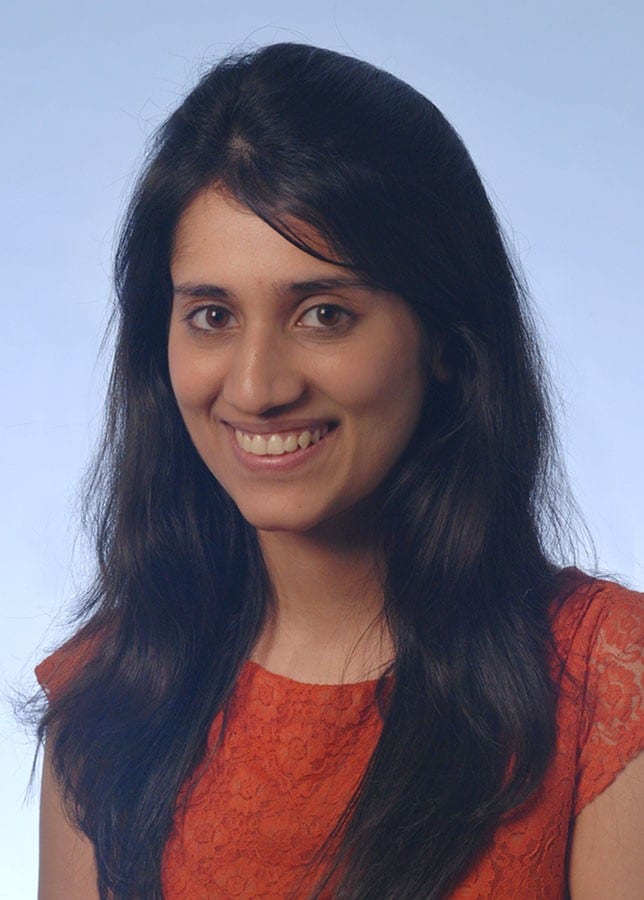
Zeb I. Saeed, MD, a member of the steering committee for the Endocrine Society’s Early Career Special Interest Group (SIG), shares with clinicians three patient-centric principles to treating overweight and obesity.
As endocrinologists, we enter clinical practice having been well trained in the physiology and pharmacological management of obesity, what the BMI cutoffs are, and what the trial data show. However, we are far less prepared for the human experience of managing obesity in patients, many of whom have spent decades being blamed for their body size (and worse, even blaming themselves) and how to help them reframe that story.
Over my last five years of practicing weight management, one thing has become increasingly clear to me: How we frame obesity care matters just as much as what medications we prescribe. The words we choose, the goals we emphasize, and the assumptions we carry going into the patient’s room shape their engagement, trust, and long-term success. With that in mind, I want to offer three practical person-centered principles that I truly believe in and abide by in my approach to obesity care.
1. Go Beyond the Scale: Focus on Non-Scale Goals and Victories
One of the most meaningful changes I made in my own practice was moving past the weight/BMI as the primary goal and instead focusing on what truly matters to people: their physical and psychological health and quality of life. When a patient shares a weight goal, I always pause and ask why. Often and if not always, the answer has little to do with the number itself and much more to do with what they hope will change: more energy, decreasing food noise, improving mobility, improving certain food-related habits, reducing cardiometabolic risk, or simply feeling more like themselves again.
These patient-defined, non-scale victories (NSVs) along with improvements in weight-related comorbidities (diabetes, hypertension, etc.) are the outcomes that truly define success. Taking the time to elicit these shared goals, putting them in your visit note, and revisiting them longitudinally shifts the focus from short-term weight change to meaningful, sustained improvement in health and life. It makes progress feels tangible even when the scale plateaus (which it may inevitably do so) and care becomes collaborative rather than transactional. Most importantly, it signals to our patients that their lived experience matters, that we are treating the whole person, not just a number. And in doing so, it makes our jobs as clinicians much more fulfilling too!
2. Remove the Blame
Unfortunately, years of societal messaging has led many people to still believe that weight is purely a matter of willpower, discipline, or personal failure. By the time they seek help, so many patients are already carrying an enormous amount of guilt and shame. We have all heard our patients say that they just need to “try harder,” or “if only I had more willpower” even though most have spent years already trying that.
Unfortunately, years of societal messaging has led many people to still believe that weight is purely a matter of willpower, discipline, or personal failure. By the time they seek help, so many patients are already carrying an enormous amount of guilt and shame. We have all heard our patients say that they just need to “try harder,” or “if only I had more willpower” even though most have spent years already trying that.
One of the most powerful things we can do as weight management clinicians is to help our patient unlearn this narrative. We now understand that obesity, just like any other chronic medical condition, is strongly influenced by genetics, epigenetics, neurohormonal regulation, and environmental factors. Satiety, food intake (the “willpower”) and energy balance are biologically driven processes, not moral ones. It can be so liberating for our patients to hear this: I always see such visible relief (often with tears) when I tell my patients that being overweight or having obesity does not reflect a personal failure or that they are broken! I do want to emphasize that this reframing is not about removing accountability. It essentially replaces shame with understanding and creates space for patients to engage in their care without self-blame. In other words, when patients stop fighting themselves, they are able to partner in their care and move forward with better resolve.
3. Obesity is a Chronic Disease: Not a “Quick Fix”
One of the most common misconceptions I hear from patients, perhaps due to the portrayal in social media, is the belief that weight loss is something people with obesity need to “kick-start with meds” and then can stop anti-obesity medications successfully. The most important thing that I do before prescribing any pharmacotherapy for overweight and obesity is address and correct this assumption. Early on, I discuss with patients that obesity is a chronic, relapsing medical condition much like hypertension or hypothyroidism. We would never tell a patient with chronic hypertension, “Let’s treat you with an ACE inhibitor for a few months, and then you should be able to manage on your own if you just try harder.” Then why would we do that for obesity management? Framing obesity through a chronic disease lens before starting any anti-obesity medications is essential. It allows patients to understand why ongoing treatment is needed and why discontinuation will lead weight regain biologically, as consistently demonstrated in clinical trials (STEP-1 trial extension and SURMOUNT-4).
When we move beyond the scale, empower patients to release themselves from blame, and counsel them to approach obesity as a chronic, biologically driven condition that it is, we not only practice better medicine, but we also create space for mutual trust and long-term change.
This reframing also normalizes the use of medication as part of long-term disease management rather than a shortcut or personal failure. I will note that some patients may not agree initially with this perspective. In such instances, I have found it helpful to have patients reflect on their prior experiences with weight loss such as meal replacements, structured programs, commercial diets and recognize the pattern there: weight loss followed by regain. Not because they failed, but because biology pushed back. Having a shared framework of understanding of obesity also results in more realistic expectations from patients who are less likely to internalize setbacks as failures but as part of the disease process.
As endocrinologists taking care of people living with overweight and obesity, we all have the unique opportunity and responsibility to shape how obesity care is delivered for years to come; both on an individual level but also at a broader cultural and societal level. When we move beyond the scale, empower patients to release themselves from blame, and counsel them to approach obesity as a chronic, biologically driven condition that it is, we not only practice better medicine, but we also create space for mutual trust and long-term change.
Saeed is an adult endocrinologist at Brigham and Women’s Hospital and an instructor of medicine at Harvard Medical School, where she began a new role in January 2025 as principal clinical experience (PCE) core faculty in the Medicine Core I Clerkship. Before joining Brigham and Women’s Hospital, she was an assistant professor of medicine at Indiana University. During her time at Indiana University, she served as an associate clerkship director for the Internal Medicine Clerkship for four years. Additionally, she was the appointed key clinical educator for the Division of Endocrinology and the associate program director for endocrinology fellowship. She has led multiple workshops at the Academic Internal Medicine Week and is deeply passionate about undergraduate medical education. Her particular interests include improving precision education and rethinking methods of longitudinal assessment in medical students to support learner growth and success.
 Loading ...