Tooth or Consequences: TyShawn Harris Discusses the Intriguing Link Between Endocrinology and Dentistry
By Glenda Fauntleroy Shaw
Dec 2025
Early-career Endocrine Society member and dental student TyShawn Harris became fascinated with endocrinology after working with Stanley Andrisse, PhD, in his laboratory at Howard University. He talks to Endocrine News about his ongoing research and the remarkable connection between endocrinology, diabetes, and dentistry.
When TyShawn Harris began dental school at Howard University, he never expected his studies to intersect with endocrinology. But a course with a well-known researcher sparked new ideas and opened doors that have reshaped his journey.
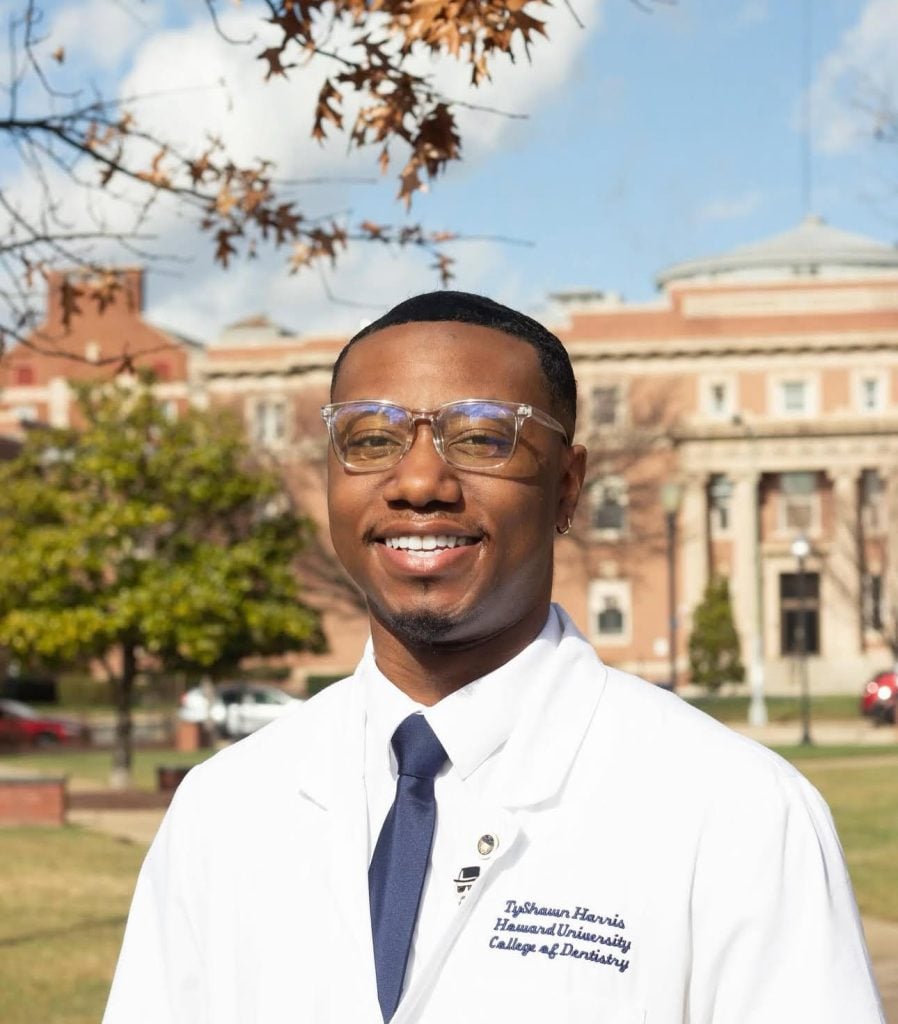
Harris grew up in Queens, N.Y., and went on to earn a bachelor’s degree in sociology from Queens College. After completing a post-baccalaureate program at the University of North Carolina at Greensboro, where he was first introduced to dentistry, he set his sights on dental school. At Howard University College of Dentistry, a first-year class taught by Stanley Andrisse, PhD, an endocrine scientist and professor at Howard’s College of Medicine, sparked a new interest that would eventually take him to ENDO 2025.
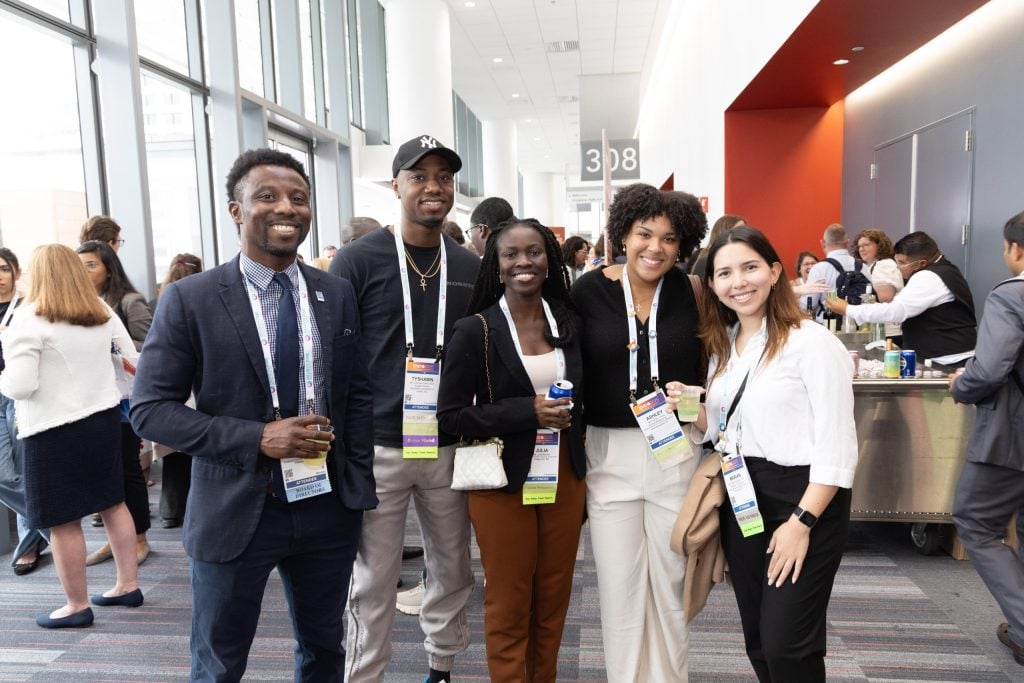
TyShawn Harris (second from left) in the midst of the ENDO 2025 crowds with (l to r): Stanley Andrisse, PhD, MBA; Julia Biantey, Ashley Jones, and Marian Guzman.
Endocrine News spoke with Harris to learn more about how he first connected his dentistry studies to endocrinology and where his goals will lead him next.
Endocrine News: How did you first become involved with Dr. Andrisse’s lab team?
Harris: As a first-year dentist student at Howard, you must take physiology to learn about the physiology of the human body. Dr. Andrisse was our endocrinology course professor, so for that block he taught us all about hormones, and I didn’t know there was much of a relationship between endocrinology and dentistry. Also, he was one of the first Black professors I’d ever had, so that was great. Then I later learned that he and I had similar pasts. I know people know Dr. Andrisse got into trouble when he was young, and so did I. I became intrigued with his program, From Prison Cells to PhD, which helps formerly incarcerated individuals gain an education. I was one of those who was once incarcerated but was able to break out of the legal system. And now I’m going to be a doctor in 1½ years. To give a little background, when I was 17 and a two-sport student athlete, I made a poor decision that led to legal consequences. As a result, I withdrew from school and returned home. The incident was covered by the news and spread on social media, which was very difficult and humbling. Although it was one of the hardest times of my life, it forced me to reflect deeply on who I was and who I wanted to become. With the help of my strong supporting cast, I was able to ultimately return to school and get back on the right track. That experience shaped me into a more mature, accountable, and resilient person, and I genuinely don’t think I’d be who I am today without it.”
So, in Dr. Andrisse’s course, I learned about the connection between dentistry and the endocrine system, especially diabetes, which is so common in minority communities. I knew then that I wanted to work with him, so I applied to work in his lab. He’s become my mentor, and we have conducted research and collaborated on a few good ideas so far.
EN: Having a professor like Dr. Andrisse who, first looks like you, and then learning that you both have succeeded beyond mistakes you made as youths must be so inspirational. What type of research did you do in his lab that connects dentistry to endocrinology?
Harris: Yes, having a professor like Dr. Andrisse has been incredibly inspiring. Learning about how he turned past challenges into motivation for success has pushed me to do the same. I actually had the opportunity to conduct research in his lab, and we recently presented our findings at ENDO 2025.
Our study focused on how high-fat and high-fructose diets contribute to insulin resistance and obesity, partly through the activation of a liver enzyme called protein kinase C epsilon (PKCε). We investigated how deleting PKCε specifically in the liver affects insulin signaling in mice fed a high-fructose diet. What we found was those mice lacking PKCε showed improved insulin sensitivity, meaning their bodies responded better to insulin. This suggests that targeting PKCε could be a potential therapeutic strategy for diabetes and other metabolic diseases.
“Diabetes and oral health are closely linked — when blood glucose is poorly controlled, it increases the risk of periodontal (gum) disease, delayed wound healing, dry mouth, and oral infections. For example, if a diabetic patient needs a tooth extraction, they might experience prolonged bleeding or slower recovery. Conversely, chronic periodontal inflammation can make it harder to control blood sugar levels, creating a cycle that worsens both conditions.” — TyShawn Harris, first year dental student, Howard University, Washington D.C.
The connection to dentistry is actually very direct. Diabetes and oral health are closely linked — when blood glucose is poorly controlled, it increases the risk of periodontal (gum) disease, delayed wound healing, dry mouth, and oral infections. For example, if a diabetic patient needs a tooth extraction, they might experience prolonged bleeding or slower recovery. Conversely, chronic periodontal inflammation can make it harder to control blood sugar levels, creating a cycle that worsens both conditions.
So, the work we’re doing in Dr. Andrisse’s lab helps deepen the understanding of metabolic dysfunctions like insulin resistance, and that knowledge directly informs how we manage oral health in patients with diabetes.
EN: Do you think a lot of patients know this connection of how the endocrine system can affect their dental health?
Harris: Honestly, I don’t think most patients — or even some healthcare professionals — fully understand how much the endocrine system affects oral health. When I was at ENDO, I came across a medication at a vendor booth that listed “increased risk of dental cavities” as a side effect. I asked the representative why that was, and even after making a few calls, no one could explain it. That really stood out to me and showed how often this connection is overlooked. It’s an area that needs more awareness and education, both for patients and providers.
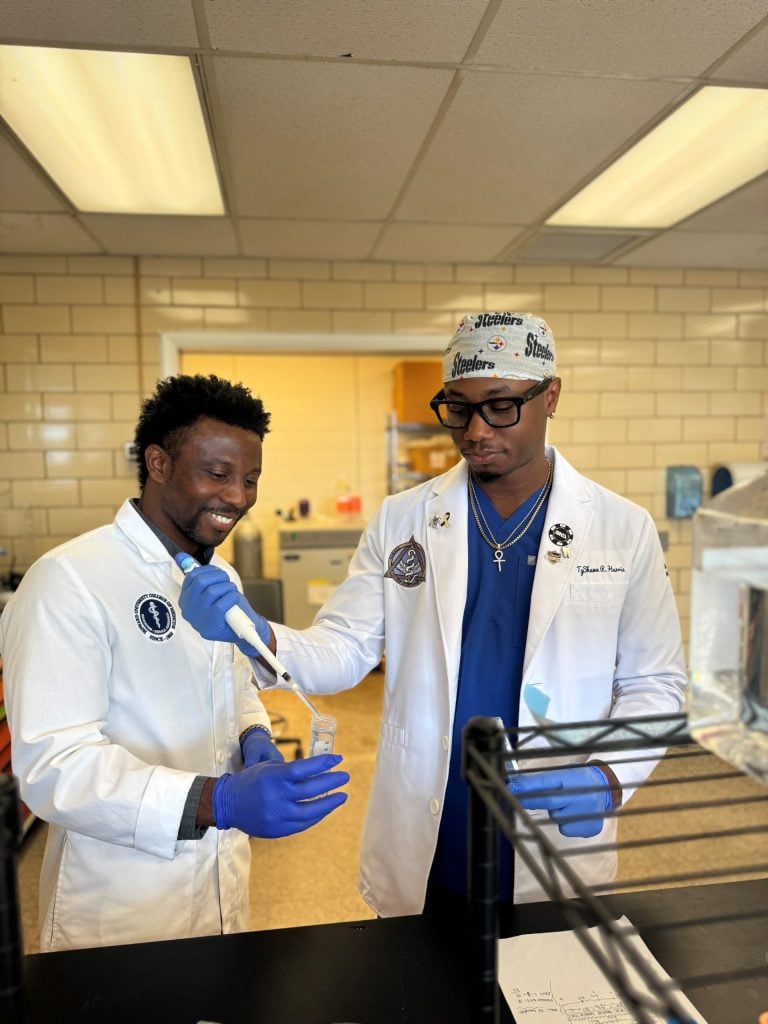
Stanley Andrisse, PhD, MBA, (left) and TyShawn Harris in the lab at Howard University, working to further our understanding of how oral health is linked to diabetes.
EN: What are your long-term plans after graduation?
Harris: Once I graduate, I plan to complete a residency — either a general practice residency or, if I decide to specialize, possibly in endodontics, since I’ve developed a strong interest in that area. I want to gain more hands-on experience and deepen my understanding before making that decision. After residency, I’d like to work in private practice to really learn the business side of dentistry — things like patient management, operations, and the day-to-day responsibilities of running a practice.
“I want to continue doing research that explores the connection between diabetes, endocrinology, and dentistry. My work in Dr. Andrisse’s lab showed me how metabolic health and oral health are deeply intertwined, and I want to keep contributing to that growing body of knowledge.” — TyShawn Harris, first year dental student, Howard University, Washington D.C.
At the same time, I want to continue doing research that explores the connection between diabetes, endocrinology, and dentistry. My work in Dr. Andrisse’s lab showed me how metabolic health and oral health are deeply intertwined, and I want to keep contributing to that growing body of knowledge.
Ultimately, my goal is to open my own dental practice in a low-income community. I want to provide high-quality care to individuals who might not otherwise have access to it and use my platform to help bridge the gap in oral health disparities.
Shaw is a freelance writer based in Carmel, Ind. She is a regular contributor to Endocrine News and writes the monthly Laboratory Notes column.
When physician-scientist Yoshitomo Hoshino, MD, PhD, heard the news of receiving this year’s Bardin Award, he was grateful for the opportunity to present his research at ENDO 2025, the world’s most prestigious endocrinology conference. He tells Endocrine News more about his award-winning abstract, how studying bone disease became his life’s work, and his future research…
Recipient of the Endocrine Society’s 2025 Roy O. Greep Award for Outstanding Research, Barbara Kahn, MD, discovered very early on that pursuing basic science could be just as rewarding as treating patients with chronic illnesses. She tells Endocrine News about her career journey, why she relishes working with so many enthusiastic junior scientists, and the…


 Loading ...