The Human Side of Endocrinology: From Learner to Advocate
By Milay Luis Lam, MD
Inspired by a recent EXCEL meeting this spring at the Endocrine Society offices in Washington, D.C., Milay Luis Lam, MD, shares her thoughts on why it is so important for endocrinologists to maintain their humanity. Even though she attended the meeting as faculty rather than as a trainee, she shares why endocrinologists should never stop learning.
As I sit in my office reflecting on the past few days, I find myself asking a simple yet profound question: What does it mean to be human in medicine?
I have just returned from the EXCEL (Excellence in Clinical Endocrinology Leadership) meeting — this time not as a trainee, but as faculty. That shift alone carries weight. For years, I attended meetings eager to absorb knowledge, to learn from those ahead of me. Now, I find myself in the position of teaching, mentoring, and guiding others. And yet, the most striking realization is this: We never truly stop being learners.
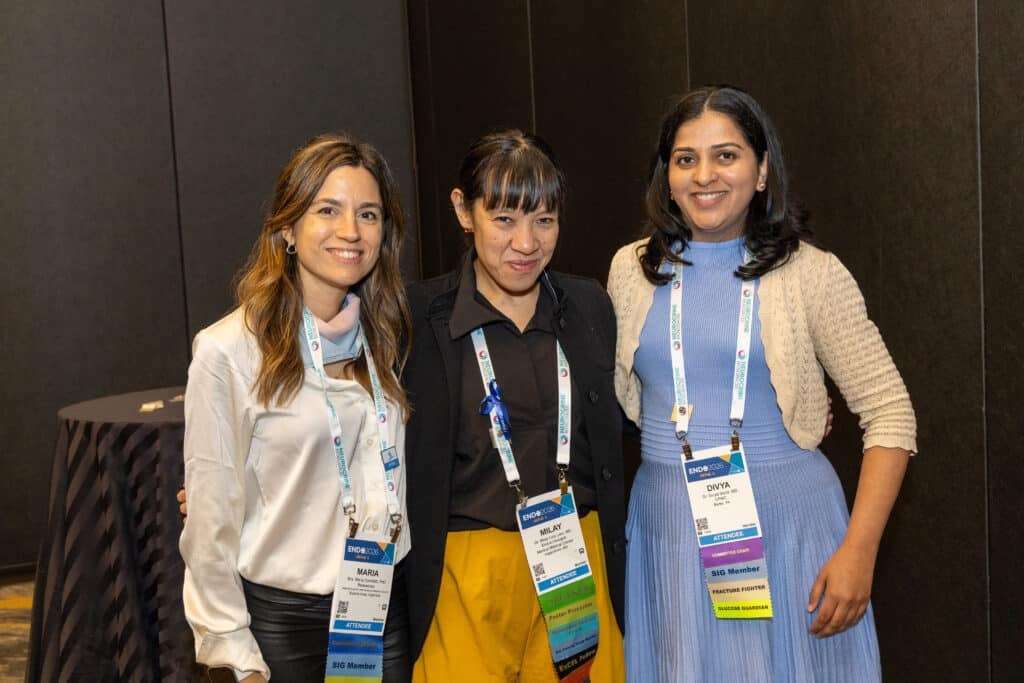
Lam (center) at the All SIG Reception at ENDO 2026 in Chicago, Ill., with Maria Camilleti, PhD (left) and Divya Sistla, MD (right).
Organizations like the Endocrine Society have provided more than academic growth — they have created spaces for reflection, connection, and purpose. Each meeting leaves me with a renewed sense of gratitude, not only for the opportunities I’ve been given, but for the responsibility that comes with them.
Avoiding Quiet Dehumanization
Endocrinology is often thought of as a field of numbers — hormone levels, lab values, protocols. But behind every value is a person. And yet, in our daily interactions, how often do we forget that?
In a fragmented healthcare system, it can become easy to “pass along” difficult cases or shift responsibility, sometimes losing sight of the shared goal: patient care. Advocacy, then, extends beyond patients; it includes advocating for collaboration, for respect across disciplines, and for systems that support rather than divide us.
Patients sometimes see physicians as belonging to another world — detached, distant, almost “less human.” At the same time, physicians can fall into the trap of viewing patients through a purely clinical lens, reducing complex lives into diagnoses. This quiet dehumanization can go both ways, shaped by expectations, past experiences, and systemic pressures.
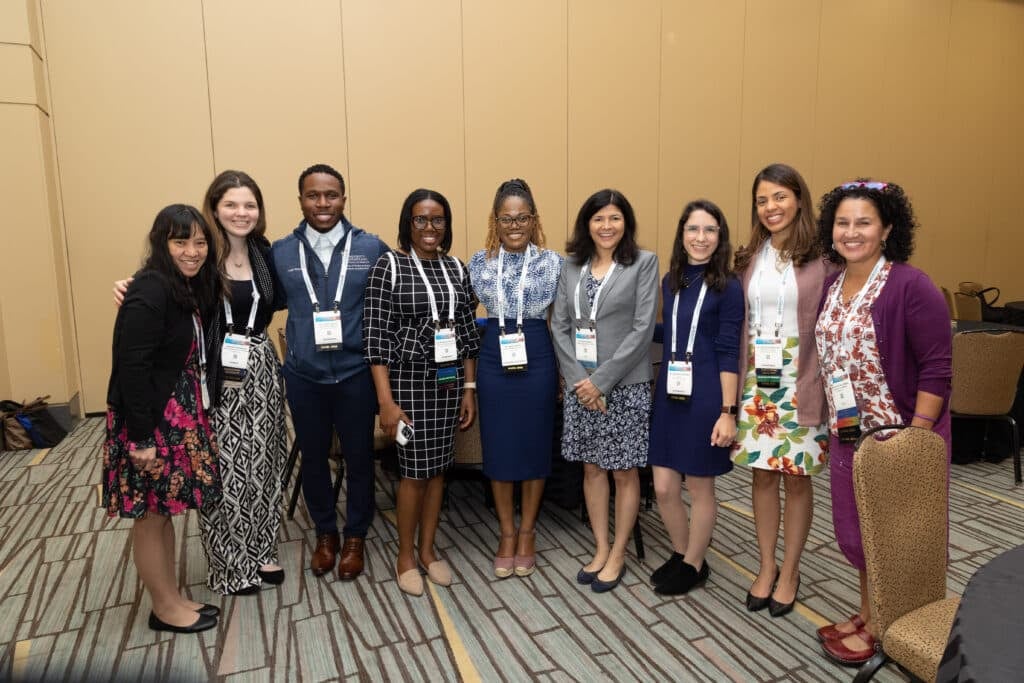
Lam (far left) with attendees at the FLARE ExCEL Luncheon that took place at ENDO 2023 in Chicago, Ill. Left to right: Adriana Rodriquez, MD; Joseph Monye, MD; Nwamaka Akabogu, MD; Anota Akofu, MD; Rocio Pereira, MD; Carolina Hurtado, MD; Lisette Rodriguez, MD; and Alicia Diaz-Thomas, MD.
Layered on top of this are cultural differences that influence how illness is perceived, how trust is built, and how care is delivered. What may seem like noncompliance may in fact be misunderstanding. What appears as resistance may be rooted in fear, access, or lived experience. Recognizing these nuances is not optional — it is essential to truly practicing medicine.
Embracing Humanity
There is also the reality of how we, as providers, interact with one another. In a fragmented healthcare system, it can become easy to “pass along” difficult cases or shift responsibility, sometimes losing sight of the shared goal: patient care. Advocacy, then, extends beyond patients; it includes advocating for collaboration, for respect across disciplines, and for systems that support rather than divide us.
Endocrinology is often thought of as a field of numbers — hormone levels, lab values, protocols. But behind every value is a person. And yet, in our daily interactions, how often do we forget that?
Returning from this meeting, I am reminded that being an endocrinologist is not just about mastering physiology. It is about embracing humanity: in our patients, our colleagues, and ourselves. It is about recognizing that growth is continuous, that teaching and learning are inseparable, and that advocacy is a responsibility we carry at every stage of our careers.
Perhaps the question is not whether we stop learning, but whether we remain open enough to let those lessons change us.
Lam is division chief and medical director, Meritus Endocrinology, Meritus Medical Center, Hagerstown, Md.
Join the Global Movement Advancing Endocrine Science and Medicine
Become a part of a community of 18,000-plus endocrine investigators and clinicians who conduct research and provide quality patient care in more than 100 countries. Advance your career and the field of endocrinology through our many educational, leadership and advocacy opportunities.