

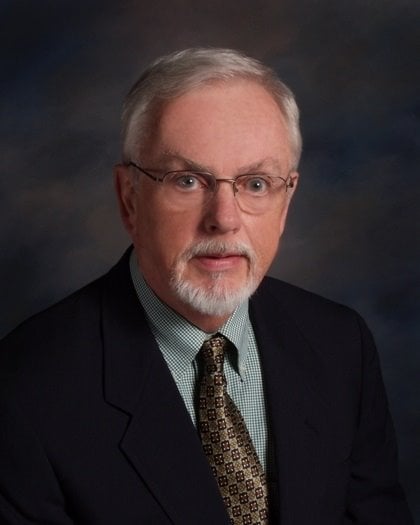
When Endocrine Society Past-President Bert W. O’Malley, MD, passed away, all corners of the world of endocrinology mourned. Past student and longtime friend Donald P. McDonnell, PhD, looks back on the life and career of a true endocrinology legend.
Bert W. O’Malley, MD, Distinguished Professor of Molecular and Cellular Biology and Chancelor at Baylor College of Medicine, Houston, Texas, passed away on November 11, 2025, at 88 years of age.
He was a wonderful person, a great family man, an extraordinary scientist, and a very proud Irishman. He served as President of the Endocrine Society (1984) and in collaboration with Tony Means he founded the flagship journal Molecular Endocrinology, which was one of the most influential journals in the field of endocrinology for nearly 20 years. His contributions to the Society were recognized by his receipt of the Ernst Oppenheimer Award (1977), Women in Endocrinology Mentor Award (2009), Robert H. Williams Distinguished Leadership Award (2010), Outstanding Innovation Award (2015), and the 1988 Fred Conrad Koch Award.
Bert was born and raised in Pittsburgh, Pa., and graduated cum laude with a degree in psychology and chemistry from the University of Pittsburgh where he also obtained his MD in 1963. He subsequently moved to Durham, N.C., to complete his internship in internal medicine at Duke University under the mentorship of Eugene Stead. In 1965, he was recruited as a clinical associate/fellow to the endocrine branch at the National Cancer Institute (NCI).
Bert quickly rose through the ranks at the National Institutes of Health (NIH) and for a while served as a laboratory chief. However, in 1969 he and several colleagues moved to Vanderbilt University, to establish the Center for Reproductive Hormone Action, where he served as the founding director. His last move was in 1973 to Baylor College of Medicine (BCM) in Houston, Texas, where he built the Department of Cell Biology (now called the Department Molecular and Cellular Biology) which has been a powerhouse of endocrine research for the past 52 years. He served as the chair of this department for 45 years before taking on the position as chancellor of the Medical School in 2018, a leadership position that he held until his passing.
Innovative Ideas and Countercurrent Hypotheses
Throughout his career Bert emphasized the importance of fundamental research and how it enabled the rational discovery of practice changing medicines and procedures. Time and again his innovative ideas and countercurrent hypotheses were met with skepticism and outright disbelief. But a brief overview of his scientific accomplishments and how they advanced the field of hormone action/molecular endocrinology reveals that he was nothing short of a genius, whose visionary ideas took a while for most of us to appreciate.
Bert’s interest in hormone action can be traced back to his time during medical school when he worked with James B. Field to probe the mechanisms by which thyroid-stimulating hormone (TSH) regulated glucose oxidation in a thyroid explant model. This work resulted in his first primary authored publication in 1963. However, his specific interest in steroid hormone action really started when he moved to the NCI to work with Stanely Korenman and Mortimer Lipsett. Korenman had developed the chick oviduct as a model to explore the mechanism(s) by which estrogens and progestins increase the growth and function of the chick oviduct.
Time and again his innovative ideas and countercurrent hypotheses were met with skepticism and outright disbelief. But a brief overview of his scientific accomplishments and how they advanced the field of hormone action/molecular endocrinology reveals that he was nothing short of a genius, whose visionary ideas took a while for most of us to appreciate.
This was a remarkable model that Bert employed for over 30 years allowing him to establish the linearity of the relationship between hormone exposure, an increase in the number of specific ovalbumin mRNA transcripts and increased ovalbumin protein expression in the oviduct. This work, performed in collaboration with Tony Means, Jeff Rosen, John Comstock, Steve Harris, and Gary Rosenfeld, was described in two landmark papers (Proc. Natl. Acad. Sci. (1972) and Biochemistry (1975)) which together represent one of the most important findings in our field and that which essentially started the field of molecular endocrinology. Subsequent work in the following years allowed Bert, in collaboration with Bill Schrader, Nancy Weigel, Ming Tsai, Sophia Tsai, and others to define the biochemical basis for the gene-specific transcriptional activity of estrogen and progestin receptors.
Bert was an early adopter of recombinant DNA technologies, and his group was among the first to join the “receptor cloning frenzy” in the early 1980s. This exciting initiative, led by Orla Conneely, resulted in the isolation of the cDNAs for several members of the nuclear receptor superfamily. These enabling reagents (cDNAs encoding full length receptors) allowed the reconstitution of hormone dependent transcription systems in heterologous cells which Bert’s group exploited to define the structure-function relationships of several nuclear receptors and to establish facile assays to study, at scale, the pharmacology of endogenous ligands and compounds/drugs which impacted receptor activity.The results from these studies instructed the development of mechanism-based screens for receptor-modifying drugs.
Ligand-Independent Receptor Activation
In the 1990s, he described the process of “ligand-independent” receptor activation demonstrating that steroid receptors could be activated absent a canonical ligand through direct phosphorylation of the receptor (or associated proteins). As with a lot of Bert’s ideas, this one was initially received with a high level of skepticism as it was at odds with the established models of hormone action that we were comfortable with at that time. Not surprisingly, he was correct and ligand-independent receptor action is now an important component of contemporary models of hormone action. It has had far reaching implications with respect to how steroid hormone receptor activity is regulated during development and in the maintenance of reproductive function.
However, this finding had specific importance in cancer where it helped to redirect efforts to develop new therapeutics for patients with breast cancer that functioned by eliminating estrogen receptor (ER) expression as opposed to developing classical competitive antagonists. The recent development and approval of a new class of estrogen receptor (ER) modulators, Selective Estrogen Receptor Degraders (SERDs), one of the most important advances in the past 20 years in the management of breast cancer, can trace their roots to this fundamental observation of “ligand-independent” receptor activation.
A Lasting Legacy of Discovery
The discovery of receptor-associated transcriptional coregulators (coactivators and corepressors) is one of the most consequential discoveries made by Bert and his research team. This large family of proteins, by some estimates exceeding 200 in number, interact directly or indirectly with nuclear receptors and enable their actions to be coordinated with multiple different signaling pathways in cells. In more than 300 papers published on this topic since the identification of the first coactivator, Steroid Receptor Coactivator 1 (SRC1), Bert demonstrated the importance of coregulators in every aspect of disease and organismal physiology. Unperturbed by the difficulty of identifying drugs to regulate these “unconventional targets” and ignoring the widely held opinion that such an effort would be futile, he, in collaboration with his colleague David Lonard, established a drug discovery initiative at BCM which has resulted in the identification of drug-like molecules, which can either activate or repress the activity of specific transcriptional coregulators. A new biotechnology company, Oxia, was recently formed to bring these new drugs to the clinic.
He provided an outstanding training environment and challenged his mentees to be innovative, careful, and mission focused. His work ethic was legendary, his mind was never at rest, and his infectious enthusiasm for science was very motivating…
While exploring the biology of coregulators in immune cells, he made the important observation that genetic depletion of the coregulator SRC3 in a specific subset of immune cells (regulatory T-cells (Tregs)), altered their properties such that their autologous transfer into tumor-bearing hosts resulted in substantial (with emphasis) antitumor activity. As significant was the observation that these engineered Tregs cells confer a long lasting immunity to tumor rechallenge in mice. The findings were remarkable and, not surprisingly, the PNAS paper describing this work was awarded the prestigious Cozzarelli Prize. Recently, Bert proposed that, similar to what was observed in mice disruption of SRC3 expression in human Tregs would enable the development of a curative immunotherapy for certain solid tumors. To ensure his idea would be tested, he founded and secured substantial funding for a second “coactivator” company, CoRegen, the focus of which is to bring this potential new therapy to the clinic. The translation of Bert’s fundamental research into practice-changing medical interventions will be his lasting legacy.
Not surprisingly, Bert was recognized for his exceptionally important accomplishments being an elected member of the National Academy of Science (1992), the National Academy of Medicine (1993), and the National Academy of Inventors (2019). In 2007 he was presented with the National Medal of Science by President George W. Bush. He was also a recipient of the Komen Brinker Award (2001), the Pasarow Award in Cancer Research (2006) and the Horowitz Prize (2018) among many others.
He received numerous honorary doctorates from different institutions all over the world. His receipt of his parchment from the National University of Ireland was especially treasured.
A Mentor to Hundreds
Beyond his science, Bert will be remembered for his dedicated mentorship of over 300 scientists, most of whom have remained in science holding leadership positions in academia and industry. Given his strong Irish roots and regular visits to Ireland, it is not surprising that over 30 Irish graduate students and postdoctoral fellows elected to move to the United States to work under his mentorship. He provided an outstanding training environment and challenged his mentees to be innovative, careful, and mission focused. His work ethic was legendary, his mind was never at rest, and his infectious enthusiasm for science was very motivating; something I really appreciated as a graduate student working in his laboratory. He and Sally, his wife of 65 years, made sure that all the trainees also learned how to enjoy themselves! Most will remember the legendary St. Patrick’s Day parties hosted at the O’Malley home.
The field has lost the “(grand) father” of Molecular Endocrinology but the impact of his research for over 60 years will endure. Thank you, Bert, for everything you have done for the field of endocrinology (RIP).
McDonnell is the Glaxo-Wellcome Professor of MCB, Department of Pharmacology and Cancer Biology, Duke University School of Medicine, Durham, N.C.

 Loading ...