

Endocrine scientists around the world can now access dkNET, a research portal established by the National Institute of Diabetes and Digestive and Kidney Diseases, which provides endocrine researchers and clinicians with cross-disciplinary access to critical new information. Endocrine News talks with emeritus Endocrine Society member and longtime researcher Robert Margolis, PhD, about how this new avenue will improve scientists’ ability to reach fellow researchers around the world.
Ten years ago, the National Institute of Diabetes and Digestive and Kidney Diseases (NIDDK) launched a database called dkNET to better serve the needs of clinicians and researchers in those spaces, created to address the challenge of connecting researchers in metabolic and digestive diseases to research resources through community databases and web portals, creating a search engine for data.
Since then, dkNET has progressively enlarged and updated information available to investigators centered on the NIDDK community. dkNET maintains and communicates resources to include data Science, the Resource Information Network, authentication reports, and data management for investigators at all levels to access with the goal of enhancing the ability to create added value in their research.
“At its core, dkNET is a community research resource portal designed to assist users in finding resources relevant to their research through tools, services, and support, as they face new mandates for sustainable and reproducible research,” says Ronald Margolis, PhD, visiting scholar at the University of California San Diego and consultant on dkNET. “In this way dkNET serves as a hub for the NIDDK community.”
Margolis was the senior advisor for molecular endocrinology at NIDDK for 28 years. He initiated a project in 2002 to coalesce data being developed at NIDDK into one place so it could be transmitted to everyone. “And 2002, this was embryonic,” Margolis says. “Really, it was a glean in my eye.”
The Advent of AI
Since dkNET’s launch, we’ve seen the rise of artificial intelligence (AI), which, while it does have its problems, has been shown to predict gestational diabetes, extend time in range and reduce hypoglycemia events in patients with type 1 diabetes, improve detection of fractures in patients with osteoporosis, reduce unnecessary thyroid surgeries by better detecting benign nodules, and predict how patients with acromegaly respond to first-generation somatostatin receptor ligands.
Margolis, an emeritus Endocrine Society member who first joined in 1981, tells Endocrine News that AI is already making an impact on diabetes research. “In basic and translational science, AI is helping us analyze large and complex datasets, identify previously unrecognized biological patterns, generate new hypotheses, and predict drug–target interactions,” Margolis says.
“At its core, dkNET is a community research resource portal designed to assist users in finding resources relevant to their research through tools, services, and support, as they face new mandates for sustainable and reproducible research. In this way dkNET serves as a hub for the NIDDK community.” — Ronald Margolis, PhD, visiting scholar, University of California San Diego, San Diego, California
Margolis and the dkNET team say that AI will fundamentally reshape diabetes research — by integrating genetics, immune profiles, metabolomics, imaging, and wearable data, AI will enable much earlier identification of people at risk for diabetes and help define disease subtypes and early biological triggers. “AI-enabled laboratories and automated robotic platforms will accelerate data analysis, hypothesis generation, and high-throughput drug discovery,” Margolis says. “AI-guided clinical trial design will also help identify the right patient populations, speeding the development of new therapies and biomarkers.”
“These tools are also improving how we prioritize therapeutic candidates for downstream validation, making discovery more efficient and data driven,” Margolis continues. “On the clinical side, AI is advancing diabetes management through better interpretation of CGM data, more sophisticated automated insulin-dosing algorithms, and FDA-cleared deep-learning systems for early detection of diabetic retinopathy. These applications are already enhancing patient monitoring, supporting clinical decision-making, and improving outcomes. Overall, AI is becoming an integral part of how we study diabetes and how we care for people living with the disease.”
Finding New Hypotheses
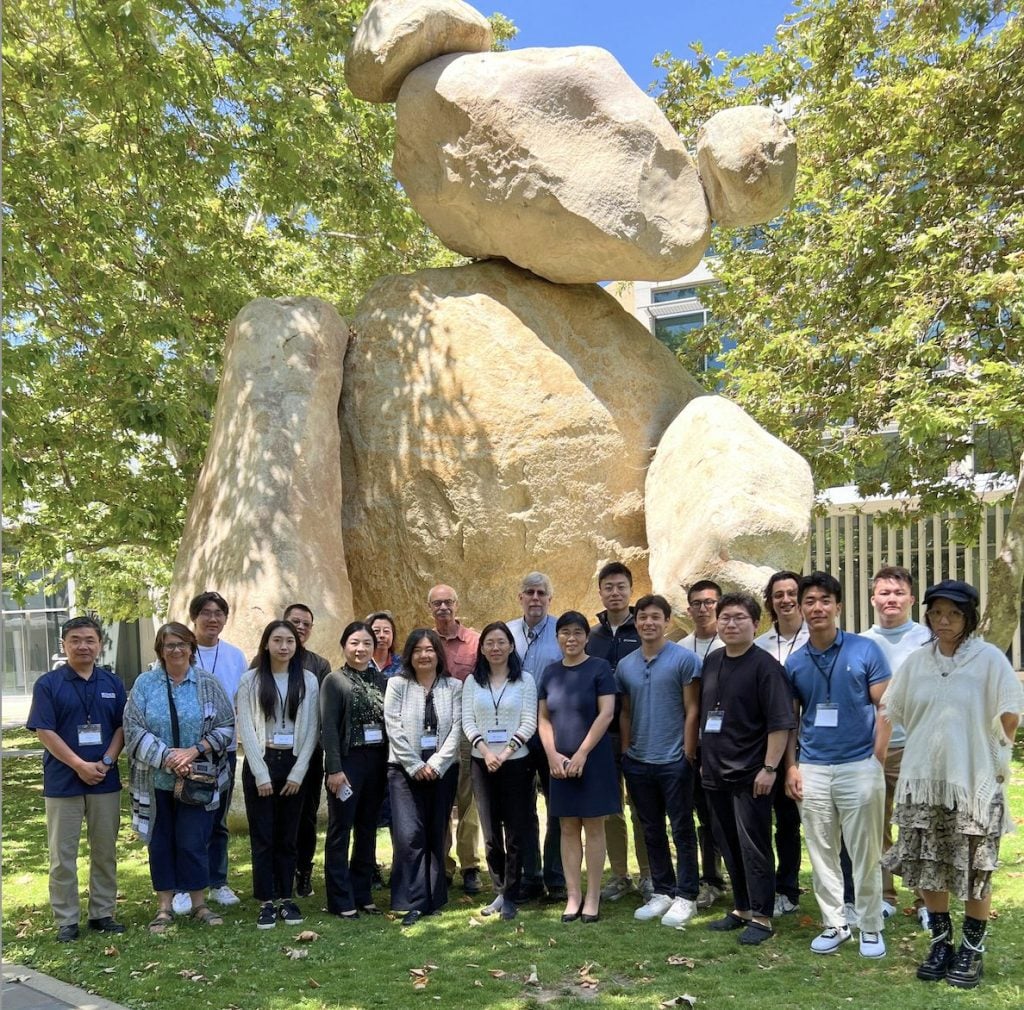
dkNET holds summer “bootcamps” for data science and bioinformatics for students and fellows with an emphasis on diabetes, endocrinology and metabolic diseases, which enables students at early and formative stages of their careers to understand how the data science resources inherent in dkNET can help to inform their research and foster greater progress toward their goals.
The students use a new computational core that provides AI and machine learning (ML) resources to assist researchers in developing hypotheses and utilizing emerging AI/ML concepts and tools. “With the addition of the computational core, students in the bootcamp use a specialized collaboration platform, Texera, to learn data science, AI, and ML,” Margolis says. “Exposure at early and formative stages in career development helps students to harness these tools to enhance their own research. The goal is to catalyze a deeper understanding of the questions they are posing. Through open-source collaboration they can design novel approaches to important questions.”
Margolis explains that the computation is important, allowing simultaneous collaboration online by investigators who are going to pose questions to a dataset and have the AI help them to identify the data and sort through it. “If you have a genome set, let’s say a single-cell RNA sequencing set, there’s a lot of data in there,” he says. “What you want is going to be a small fraction of it. To sort through it could require enormous amounts of computation time, where AI can potentially cut that down and give you at least predictions of where you can look. And in so doing, it can help you to identify new hypotheses. Then through the rest of dkNET, it can help you to formulate that hypothesis and really work through what you need to do to test it.”
A Link Across Disciplines
Even ten years ago, dkNET saw the value of not only its database, but community news and social networking as well. “An important capability built into dkNET is the ability to connect researchers within and across disciplines,” Margolis says. “We hope that by providing tools, data, webinars, social media channels and newsletters, researchers in the NIDDK community can increase the impact of their research.”
“AI-enabled laboratories and automated robotic platforms will accelerate data analysis, hypothesis generation, and high-throughput drug discovery. AI-guided clinical trial design will also help identify the right patient populations, speeding the development of new therapies and biomarkers.” — Ronald Margolis, PhD, visiting scholar, University of California San Diego, San Diego, California
Margolis says that he hopes anyone researching metabolic and digestive diseases will be energized by the knowledge that there is a portal with real and relevant content that can help them in their efforts to maximize their investigations. “dkNET provides a single-entry point to a wealth of information, data, services, and community-wide knowledge with pathways to enhance connectivity to colleagues and others interested in their work,” he says.
Bagley is the senior editor of Endocrine News. In the December issue, he wrote about how Endocrine Society journals work to maintain the highest integrity possible.

 Loading ...