Minding the Gaps: What Happens When Pediatric Patients with Pituitary Tumors Become Adults?
By Kelly Horvath
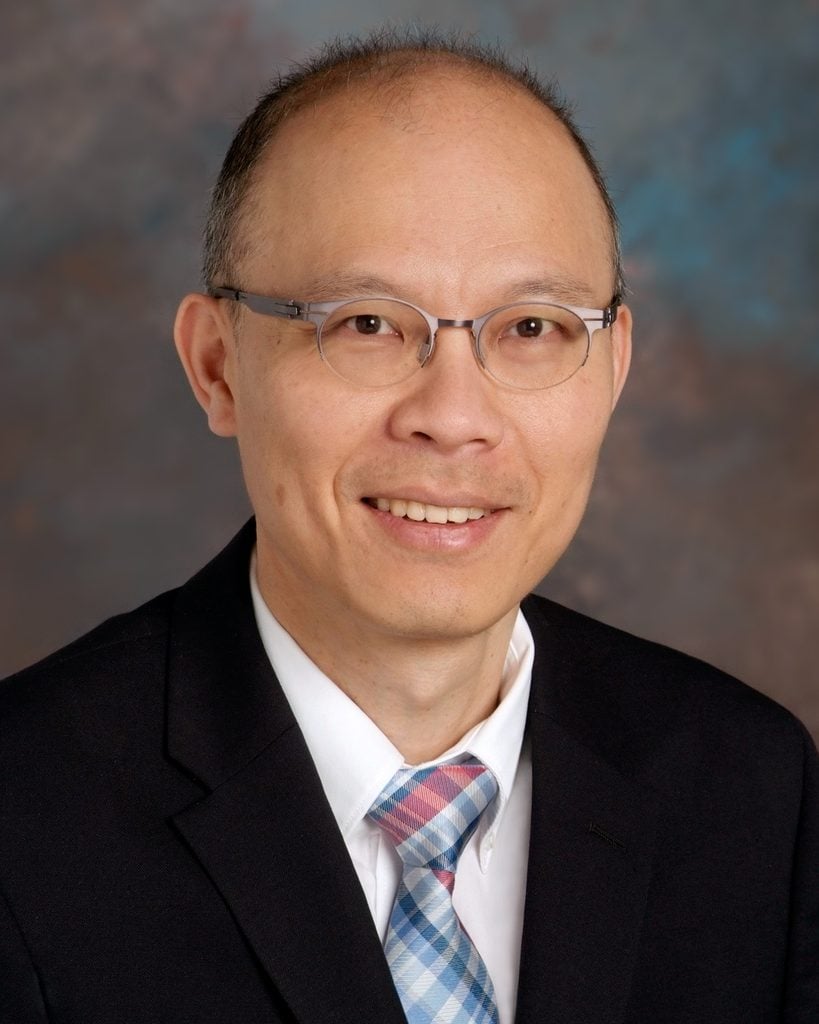
Endocrine News speaks to Kevin C. J. Yuen, MD, FRCP, FEAA (above, left) about his ENDO 2026 Meet-the-Professor session titled “Pituitary Tumor Survivorship: Transitioning from Pediatric to Adult Endocrine Care” in which he detailed the often-complicated shift for these patients and their clinicians. Challenging though it can be, he says guidance is available, but it is vital for patients, parents, and clinicians to start early.
The October issue of Endocrine News focuses on pediatric endocrine health, and this article highlights the often-overlooked challenge of transitioning young patients into adult care services.
Kevin C. J. Yuen, MD, FRCP, FEAA, medical director of the Barrow Neurological Institute and professor of medicine at the University of Arizona College of Medicine and the Creighton University School of Medicine in Phoenix, Ariz., spoke about this issue at ENDO 2026 in June. His Meet-the-Professor session titled “Pituitary Tumor Survivorship: Transitioning from Pediatric to Adult Endocrine Care” framed the problem as one that is potentially remediable and possibly even preventable once the field is better aware that it even exists. Raising awareness, in fact, was his chief objective.
Vulnerable Window
Yuen began by characterizing how fraught the situation really is. Once patients who originally presented with pediatric pituitary tumors (PPTs) grow out of the pediatric clinic, they will need to seek adult endocrine care services to continue their care. However, little structure currently exists to guide them through this “vulnerable” transition period. Compounding this lack of a coordinated pathway is that this period coincides with some of the most physically and emotionally turbulent years of a young patient’s life, which makes it a uniquely challenging time to also be navigating a handoff between care teams. “This is such an important period,” he says. “It spans the end of puberty and the attainment of peak bone mass, so it’s a time during which major developmental, psychosocial, physical, and medical changes are occurring. Transitioning these patients into adult services therefore often can be extremely challenging. Furthermore, these patients are also developing new life skills and everything from independent living and going to college, to social changes and exposure to alcohol and recreational drugs, to dealing with insurance changes.”
Yet another challenging facet arises from the PPTs themselves. The “children are not just small adults” mantra holds true here as in anywhere in healthcare. In children, pituitary tumors are often larger and more aggressive than in adults. As children are still developing, PPTs can impact growth, sexuality, fertility, bone quality, cardiovascular health, and metabolism. Fewer approved therapies are available for the pediatric population, for whom medical therapy simultaneously may have less efficacy. Unlike in adults (usually), PPTs may be components of genetic syndromes, which further increases treatment complexity.
“Transitioning a rare condition from pediatric to adult colleagues, in a person who is simultaneously going through growth, puberty, fertility, and lifestyle changes, adds to the challenge of making sure these patients are actually captured by the system,” Yuen says. “If they’re never truly established with an adult physician, they can get lost to follow-up, then present years later in adulthood with all sorts of health problems.” – Kevin C. J. Yuen, MD, FRCP, FEAA, medical director, Barrow Neurological Institute; professor of medicine, University of Arizona College of Medicine and the Creighton University School of Medicine, Phoenix, Ariz.
That is still not all. PPTs like craniopharyngiomas and pituitary adenomas are uncommon in children, making finding an adult endocrinologist with experience managing them difficult. “Transitioning a rare condition from pediatric to adult colleagues, in a person who is simultaneously going through growth, puberty, fertility, and lifestyle changes, adds to the challenge of making sure these patients are actually captured by the system,” Yuen says. “If they’re never truly established with an adult physician, they can get lost to follow-up, then present years later in adulthood with all sorts of health problems.”
These comorbidities are not only a significant health burden that frequently impairs their quality of life, but they can also unfairly complicate the transition to adult care. Significant hormone deficiencies resulting from PPT treatment (e.g., surgery, radiation), for example, require complex lifelong management. Other resulting comorbidities like neurocognitive dysfunction, visual impairment, and psychiatric disorders reduce daily functioning. This double-edged sword means that uninterrupted care is essential.
Addressing the Care Gap
Yuen traced his own interest in the topic back to working alongside pediatric colleagues and realizing firsthand that a care gap for these patients exists. “I started wondering what happens to them when they leave home and go into gainful employment or college, as by now, they would be ‘too old’ to be seen in a pediatric clinic,” he says. “Where do they go? No straightforward answer seemed to be forthcoming.”
Yuen researched frameworks for how a health system might address the gap, such as the widely endorsed “The 6 Core Elements of Health Care Transition (Got Transition 2.0),” developed jointly by the American Academy of Pediatrics, the American Academy of Family Physicians, and the American College of Physicians. The six core elements comprise Transition policy, Transition tracking and monitoring, Transition readiness assessment, Transition planning, Transfer of care, and Transfer completion.
The UK’s “Ready Steady Go” program, a National Health Service initiative, incorporates one of the validated assessment tools stipulated in core element 3. “It’s a more systematic way of tracking these patients and providing them with counseling and support as they go through the journey, which should start very early, around age 11,” explains Yuen. After introduction at age 11 to 12, the patient progresses stepwise through the stages (Ready ® Steady ® Go) until reaching “Hello,” their establishment with an adult care clinic.
Although this model has a lot to offer, it is not a ready-made solution for the United States, where fragmented payers, healthcare systems, and institutional geography complicate a “one-size-fits-all” approach. “I’m using it to highlight how another healthcare system has approached this problem, and to show how this problem can be tackled,” says Yuen. “Whether it’s implementable here, or how, is a matter of debate, because different healthcare systems have different payers and different pathways.”
Yuen also describes how insurance coverage and geographical challenges routinely force compromise on treatment choices, a dynamic he said is not unique to this population but is especially consequential for it. “As a physician, you provide the best, most evidence-based advice to the patient, and recommend the most optimal treatment, and then if insurance doesn’t cover it, you make the best of the situation to get the second- or third-best option to the patient because of circumstances outside your control. Furthermore, some institutions may not have a dedicated neuroendocrinologist, so inevitably some of these patients, for example, pediatric brain tumor survivors, end up transitioning to a general endocrinologist at a different institution. Or the children’s hospital and the endocrinologist’s office are far apart from each other, or the patient lives far away from either, which makes follow-up challenging.”
Optimizing the Transition
Yuen was pleased with the robust attendance his ENDO 2026 talk engendered, and his audience had lots of questions, a testament to how important raising awareness really is. Even something as fundamental as which physician — pediatric or adult — does what at the point of transition remains genuinely unresolved, says Yuen. “There were questions about whose responsibility growth hormone testing falls under, for example. Is the pediatrician supposed to take the lead in ordering the tests, or is it the pediatrician’s job to refer the patient to the adult endocrinologist and have them order it?”
This is not an issue to be taken lightly. For example, growth hormone therapy might not end once a child reaches their final height; instead, further testing may be needed in the transition period. Citing a European audit finding that about 70% of patients experienced a growth hormone treatment interruption of more than two years during this period, Yuen further explains, “A lot of these patients were treated as children specifically for growth reasons, which, when stopped, gives way to other issues that take over as the patient enters adulthood: bone, muscle, heart disease, quality of life.”
Yuen closed his talk on a hopeful note: Although this issue is particularly thorny and no single approach can address it, certain principles can be applied universally, like the importance of early discussion, intervention, patient empowerment, and long-term surveillance with a multidisciplinary team. For patients with craniopharyngiomas and resulting hypothalamic obesity, for example, early intervention is critical. “If they’re starting to gain weight as a young adult, that is likely going to continue into adulthood; it doesn’t reverse on its own, so it’s important to address it early, in this vulnerable period, to try to establish good eating and lifestyle habits,” explains Yuen.
“As a physician, you provide the best, most evidence-based advice to the patient, and recommend the most optimal treatment, and then if insurance doesn’t cover it, you make the best of the situation to get the second- or third-best option to the patient because of circumstances outside your control.” – Kevin C. J. Yuen, MD, FRCP, FEAA, medical director, Barrow Neurological Institute; professor of medicine, University of Arizona College of Medicine and the Creighton University School of Medicine, Phoenix, Ariz.
The onus to get this enduring process started tends to fall on the pediatrician, because they encounter the patients first. Yuen’s advice? Start early. “Plant the seed early with patients that endocrine treatment may be lifelong, bring the adult endocrinologist in early in the process, and explain the transition process early so they’re not caught unaware when the time comes.”
With so much associated complexity, though, the how-to must be individualized. “You have to assess what works and what doesn’t in your own practice or institution,” says Yuen. Fortunately, awareness of the issue is growing, especially thanks to talks like his at ENDO, as is awareness of what guidance can help make a positive difference in the lives of these patients.
Horvath is a freelance writer based in Baltimore, Md. In the August issue, she wrote “Realizing the Promise: Artificial Intelligence in Endocrinology” based on theENDO 2026session, “Artificial Intelligence in Endocrinology: Practical Uses, Lessons Learned, and What Comes Next.”
Join the Global Movement Advancing Endocrine Science and Medicine
Become a part of a community of 18,000-plus endocrine investigators and clinicians who conduct research and provide quality patient care in more than 100 countries. Advance your career and the field of endocrinology through our many educational, leadership and advocacy opportunities.