

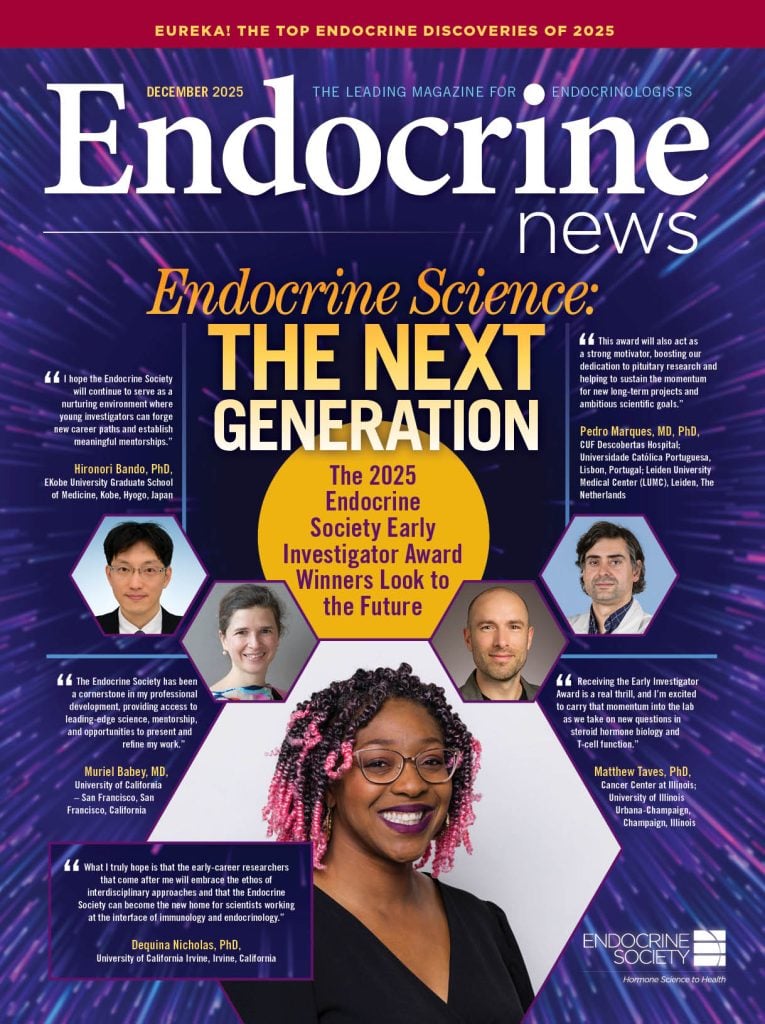
For the eleventh year running, Endocrine News talks to editors from Endocrine Society publications to unearth the most impressive breakthroughs in endocrine science and research for 2025. From GLP-1s, adrenal treatments, and acromegaly breakthroughs to obesity, diabetes, and cutting-edge research in reproductive medicine, 2025 was a banner year for endocrine research and researchers!
For more than a decade, Endocrine News talks to editors from Endocrine Society publications to unearth the top endocrine discoveries of the past year. These studies, as selected by Endocrine Society journal editors-in-chief as well as deputy editors, represent what they consider the top endocrinology studies published in 2025.
This year’s selections span the breadth of endocrinology, from advances in treating endocrine tumors to groundbreaking insights into the hypothalamus’s role in metabolic regulation to addressing critical issues in diabetes care (and so much more), while also confronting urgent questions of health equity. These discoveries collectively promise to revolutionize patient care through more precise, personalized treatment strategies and to deepen our understanding of the endocrine system’s molecular intricacies and its far-reaching effects on human health. Add to these the spotlight on the real-world challenges of delivering equitable, effective care, and these advances will ultimately leading to better outcomes across a broad spectrum of endocrine disorders.
From the Editor of Endocrine Reviews
Endocrine Reviews Editor-in-Chief Ashley Grossman, FMedSci, emeritus professor of endocrinology, University of Oxford; senior research fellow, Green Templeton College; consultant NET endocrinologist, Royal Free London; professor of neuroendocrinology, Barts and the London School of Medicine; and consultant endocrinologist at the London Clinic Centre for Endocrinology, in the UK, chose six Journal of Clinical Endocrinology & Metabolism papers that concern somatotroph tumors causing acromegaly, medullary thyroid carcinoma, and parathyroid carcinoma, as endocrine tumors are his specialty.
“In terms of acromegaly, the most fascinating data come from an explanation of the paradoxical biochemical response in some patients with acromegaly, a rise in serum growth hormone (GH) rather than a fall in response to a glucose challenge,” Grossman says. In healthy people, GH falls to very low levels after a glucose tolerance test, but in most patients with acromegaly only a partial fall occurs. As Mette H. Jensen and colleagues show in “GIP receptor antagonism eliminates paradoxical growth hormone secretion in some patients with acromegaly,” published in February, however, the serum GH actually rises in a subset of patients with acromegaly due to the ectopic expression of glucose-dependent insulinotropic polypeptide (GIP) receptors. In other words, explains Grossman, “in four out of seven of these patients, the paradoxical response was abolished by GIP receptor blockade.”
A second paper, “The preoperative GH response to oral glucose load predicts a low risk of recurrence in acromegaly,” by Marco Losa, et al. and published in April, also looks at the paradoxical response. “Losa and colleagues have now shown that where this paradoxical response is seen, in approximately a third of patients, recurrence after surgery is very infrequent compared to patients not showing the paradoxical response,” Grossman says. “This suggests that such tumors are a distinct biological subgroup, and future research should explore the specific molecular characterization of these tumors.”
Two additional papers look at the pharmacologic aspect of treating acromegaly. Explains Grossman: “In terms of medical therapy, the mainstay of treatment for acromegaly has for long been somatostatin analogues, octreotide LAR, and lanreotide autogel, given by monthly injection. A new long-acting analogue based on liquid crystal technology, CAM2029, was shown by Diego Ferone and coauthors to be highly effective, and indicating that self- or partner-injection can be used, as for lanreotide autogel.” That study, “Octreotide subcutaneous depot for acromegaly: A randomized, double-blind, placebo-controlled phase 3 trial, ACROINNOVA 1” published in May.
“But a more innovative approach has been the use of oral octreotide,” Grossman continues. “This has been developed as a formulation with a transepithelial enhancer, but paltusotine is a non-octreotide molecule effective as once-daily administration, taken first thing in the morning before breakfast, similar to thyroxine dosing.” This latter paper is “Acromegaly disease control maintained after switching from injected somatostatin receptor ligands to oral paltusotine” and published in December 2024, by Mônica R. Gadelha and colleagues. “These exciting developments should offer patients more choice,” Grossman says.
Medullary thyroid cancer (MTC) is a rare tumor developing from thyroid C cells, not infrequently associated with a germline mutation of the RET oncogene in multiple endocrine neoplasia (MEN)2, MEN3, and familial MTC. Asks Grossman: “While surgery is all-important, many metastatic tumors can be indolent over many years; if progressive, tyrosine kinase inhibitors — especially the highly RET-selective selpercatinib and pralsetinib — can be very effective. But ‘how progressive is progressive’? When should we be more active in therapy?” He found some of the answers he was looking for in “Tumor volume doubling time of less than 1 year is associated with a higher risk of death from medullary thyroid cancer,” by Noha Behairy, et al. from June. This study of 51 patients showed that three baseline and three follow-up scans calculate tumor doubling-time accurately, with a one-year doubling time predicting increased mortality, and genetic cases showing less progression. “Calcitonin can be a surrogate marker but is less sensitive (albeit more convenient). This should help plan the need for interventions more accurately,” Grossman says.
Grossman’s final choice is “A comparative genomic analysis of parathyroid adenomas and carcinomas harboring heterozygous germline CDC73 mutations,” by Yulong Li, William F. Simonds, and Haobin Chen from January. “Parathyroid carcinoma is rare but especially occurs in parathyroid-jaw tumor syndrome, with a germline mutation of CDC73, but with very incomplete penetrance for either a parathyroid adenoma or a carcinoma,” Grossman explains. “Now, in a group of 12 tumors, the authors show that both adenomas and carcinomas in this syndrome show biallelic loss or mutation of CDC73, with the carcinomas showing other molecular aberrations; this complete loss of CDC73 activity is a necessary but not sufficient cause for parathyroid carcinoma in these patients, but with other changes leading to a cancer phenotype.”
From the Deputy Editor of Endocrine Reviews
E. Dale Abel, MD, PhD, William S. Adams Distinguished Professor of Medicine and chair and executive medical director of the Department of Medicine at the David Geffen School of Medicine and UCLA Health in Los Angeles, chose five papers that spotlight the incredibly complex role of the hypothalamus. “The hypothalamus represents a small area at the base of the brain that plays an outsized role in endocrine regulation and homeostasis,” he says. “It represents a node for the integration of many systemic and neural signals that regulate appetite and feeding behavior.
Starting with one from Endocrine Reviews from May 2024 by Hoong-Wei Gan, Manuela Cerbone, and Mehul Tulsidas Dattani, “Appetite- and Weight-Regulating Neuroendocrine Circuitry in Hypothalamic Obesity,” says Abel, “provided a comprehensive overview of the complex interacting pathways by which the hypothalamus receives numerous peripheral hormonal signals from the gut and adipose tissue, such as leptin, ghrelin, glucagon-like peptide 1 (GLP1), and others and integrate these to regulate feeding behavior, energy expenditure, and body weight. The review is timely, as a number of primary reports shed exciting new insights into the role of the hypothalamus in regulating novel aspects of metabolic homeostasis including fatty liver disease.”
Abel’s next paper, “Obesity disrupts the pituitary-hepatic UPR communication leading to NAFLD progression,” homes in on this mechanism. Published in Cell Metabolism in July 2024 and written by Qingwen Qian and colleagues, it “described a novel mechanism by which activation of the integrated stress response pathway, known as endoplasmic reticulum (ER) stress, in the hypothalamus is induced by obesity-related inflammation,” Abel says. “Importantly this phenomenon contributed to the development of nonalcoholic fatty liver disease (NFLD) via mechanisms involving the hypothalamic and pituitary regulation of thyroid hormone. This work is also significant in light of recent U.S. Food and Drug Administration (FDA) approval of the thyroid hormone beta agonist resmetirom, for the treatment of fatty liver disease” (see Thyroid hormone receptor-β analogues for the treatment of metabolic dysfunction-associated steatohepatitis [MASH],” published in February 2020 in the Journal of Hepatology by Vlad Ratziu, Thomas S. Scanlan, and Eveline Bruinstroop).
“Finally,” Abel continues, “two landmark trials of GLP1 receptor agonists (GLP1-RAs) were published in the New England Journal of Medicine. GLP-1 acts in part via hypothalamic pathways to regulate food intake, energy intake, gut motility, and body weight.” A.J. Sanyal, et al.’s “Phase 3 Trial of Semaglutide in Metabolic Dysfunction-Associated Steatohepatitis” from June, “indicated significant efficacy of the GLP1-RA semaglutide in treating fatty liver disease, where it led to resolution of steatohepatitis without worsening of fibrosis in 63% of treated participants relative to 34% in the placebo group.”
“The second trial demonstrated a dramatic effect of tirzepatide, a dual GIP and GLP-1RA, revealing a 10-fold reduction in the progression from prediabetes to type 2 diabetes, relative to placebo, in individuals with obesity who were treated with tirzepatide,” Abel says. “Tirzepatide for Obesity Treatment and Diabetes Prevention” was published in March by Ania M. Jastreboff and colleagues.
“Hormones and therapeutics that act in part via the hypothalamus have made tremendous waves in the past year, underscoring the importance of endocrine regulation in the pathophysiology and treatment of prevalent metabolic disorders such as obesity, diabetes, and fatty liver disease,” Abel concludes.
From the Editor of Endocrinology
Editor-in-Chief Zane B. Andrews, PhD, from the Department of Physiology at Monash University in Melbourne, Australia and deputy head of the Metabolism, Diabetes, and Obesity Program at the Monash Biomedicine Discovery Institute selected five main papers from Endocrinology.
First up is “Role of Serotonin on Gene Expression and Physiology in Human Cytotrophoblasts and Placenta,” from Nolwenn S. Morris and coauthors from September. “Serotonin is usually associated with the control of mood in the brain, but in this study maternal serotonin promoted placental and fetal development,” Andrews says.
Andrews also especially liked Mai Otsuka, et al.’s paper “Neuromedin U Deficiency Disrupts Daily Testosterone Fluctuation and Reduces Wheel-Running Activity in Rats” from the August issue. Says Andrews: “Neuromedin U (NMU) has a role in energy metabolism; in this study, the authors show a novel function for NMU to enhance exercise (running wheel activity) via testosterone.”
“Tenascin-C Potentiates Wnt Signaling in Thyroid Cancer,” from Heather A. Hartmann and colleagues in March made Andrews’ list because is showed that the secreted extracellular matrix protein tenascin-C (TNC) increased tumor burden in a model of thyroid cancer. “This discovery could help identify novel biomarkers and new therapies,” he says.
From Ji Soo Yoon, Daniel Gamu, William T. Gibson, and Francis C, Lynn comes “NPAS4 Depletion in POMC Neurons Protects From Obesity and Alters the Feeding-regulated Transcriptome in Male Mice” published in July. Andrews says, “Proopiomelanocortin (POMC) neurons reduce appetite and increase energy expenditure, and POMC gene deletion causes obesity in humans and animal models. This study identified a molecular target that is required to efficiently activate POMC neurons and control appetite.”
Finally, from May, “Lipotoxicity Induces β-cell Small Extracellular Vesicle–Mediated β-cell Dysfunction in Male Mice,” is by Abhishek Roy, et al. “The study shows that lipotoxicity, commonly linked to obesity and type 2 diabetes, increases the release to small extracellular vesicles (sEVs) causing impaired function of pancreatic insulin–producing cells and exacerbating type 2 diabetes. These findings highlight potential avenues for therapeutic interventions targeting sEV-mediated pathways to preserve β-cell health in metabolic disorders,” Andrews says.
From the Deputy Editor of Endocrinology
Gail S. Prins, PhD, the Michael Reese Endowed Professor in the Departments of Urology, Physiology and Biophysics, and Pathology at the University of Illinois at Chicago (UIC) as well as co-director of the Prostate Cancer Research Program at the UIC Cancer Center reviewed several top candidate papers, settling on two from her journal. “Polychlorinated Biphenyls Alter Estrogen Receptor β-mediated Epigenetic Regulation, Promoting Endometriosis,” by Yuri Park et al. just published in November, and “Mice Lacking the Fructose Transporter Glut5 Exhibit Excessive Androgens and Reduced Sperm Motility,” by Aikaterini Kallianioti et al. published in February.
From the Editor of the Journal of the Endocrine Society
For Journal of the Endocrine Society Editor-in-Chief Zeynep Madak-Erdogan, PhD, associate professor of nutrition; Sylvia D. Stroup Scholar at the University of Illinois Urbana-Champaign, “Direct sensing of dietary ω-6 linoleic acid through FABP5-mTORC1 signaling” was a favorite. This paper from Science by Nikos Koundouros and colleagues published in March. “The team uncovered a mechanism that is directly linking dietary intake of omega-6 fatty acids to breast cancer progression,” Madak-Erdogan says. “The study presents major implications for personalized nutrition in cancer treatment.”
From the Deputy Editor of Journal of the Endocrine Society
Stephen R. Hammes, MD, PhD, Louis S. Wolk Distinguished Professor of Medicine; chief, Division of Endocrinology and Metabolism; and executive vice chair, Department of Medicine at the University of Rochester School of Medicine and Dentistry in NY, chose two papers from JES.
“Determining Insulin Pump Candidacy: The Disconnect Between Clinical Care Guidelines and Clinical Practice,” by Estelle Everett, et al. from July, earned his appreciation for demonstrating that the clinical care guidelines for insulin pump candidacy do not always align with the reality of clinical practice. The authors surveyed 299 endocrinologists about how they determine who will get an insulin pump and whether they were aware of the current guidelines. About half of the respondents were aware of the guidelines but not following them, instead relying on their own judgment. “I think this article points out two things,” Hammes says. “First, that a large percentage of physicians are not using the guidelines to make their decisions despite knowing about them, suggesting that we need to do a better job of educating diabetologists regarding the guidelines. However, to me, this also points out that perhaps the guidelines are not based on reality — meaning, it may not be so easy in the real world of insurance issues, unequal social determinants of health, education, etc., to follow these ‘ideal’ guidelines.”
Hammes’ second choice is “The Association of Bone-related Biomarkers With Incident Hip Fracture: A Nested Case-control Study,” by Sara J. Cromer, Elaine W. Yu, Elisabetta Patorno, Gary C. Curhan, and Julie M. Paik from September. “Here the authors look at bone turnover markers as an independent predictor of fracture risk. This seems simple enough, but some people are still measuring bone turnover markers in untreated people with osteoporosis to determine whether to treat,” Hammes explains. “In fact, this article confirms what most bone experts already knew — checking them is not necessary and should not be part of the decision-making process of whether to treat or not.”
From the Editor of The Journal of Clinical Endocrinology & Metabolism
Editor-in-Chief of JCEM, Paul M. Stewart, MD, FRCP, FMedSci, executive dean and professor at the University of Leeds School of Medicine in the United Kingdom, selected three papers from JCEM, which as he pointed out, was not an easy task given that JCEM publishes more than 500 articles a year. But, using altimetrics, he narrowed down that vast pool to focus on publications that have generated the most interest and attention.
“Adrenalectomy Reduces the Risk of Vertebral Fractures in Patients With Mild Autonomous Cortisol Secretion,” by Valentina Morelli and coauthors published in April and comprises two separate studies. Stewart says: “Firstly, a retrospective analysis of 53 patients with adrenal incidentaloma in the setting of hypercortisolism that failed to suppress to below 1.8 µg/dL following a 1-mg overnight dexamethasone suppression test (note I am deliberately avoiding the term ‘mild autonomous cortisol secretion’ or MACS): 31 patients received surgery, 22 did not and were followed conservatively. Secondly a more robust (albeit small study) prospectively randomized patients to either adrenalectomy (n=21) or conservative treatment (n=28). In both studies, bone mineral density (BMD) didn’t really change across treated and conservative groups, but there were significant reductions in the incidence of new vertebral fractures in surgically treated groups in both studies.” He further notes that the diagnosis and management of these patients remains challenging: “more so the unresolved issue of whether dysregulated cortisol secretion plays any pathogenetic role in what could easily be age-related comorbidities. These data are tantalizing, but larger prospective randomized studies powered to provide data on markers of bone formation/resorption and BMD are required.”
From April, “Characterizing Disparities in Access to Surgery for Pituitary Adenomas: A National Cancer Database Analysis,” by Miguel Angel Jimenez, et al., likewise garnered a lot of attention and represents a call to action. “One of the most shameful facts we all face as clinicians is the unacceptable disparity in health outcomes of our patients,” Stewart says. “Studies from the UK have shown life expectancy gaps of up to 19 years between patients from the most and least deprived areas. Social determinants of health, systematic and unconscious bias, and healthcare access are all underpinning factors and tough obstacles to overcome. Endocrinology is not spared, and in this thorough analysis of access of 58,000 patients with pituitary adenomas to surgery in centers of excellence in the U.S., the same racial and socioeconomic outcome data emerge, with significantly worse outcomes in Black and Hispanic patients and in those of lower socioeconomic groups. Some of these determinants are hard to crack and perhaps beyond the control of the practicing endocrinologist. But it is within our power to abolish any racial bias in our own practices,” he concludes.
Finally, from Richard C. Frank, et al. and published in May, comes “Pancreatic Cancer Screening in New-onset and Deteriorating Diabetes: Preliminary Results From the PANDOME Study.” “The majority of endocrinologists will be well aware of the link between pancreatic cancer and new onset diabetes mellitus,” Stewart says. “Cancer rates are six- to eight-fold higher in patients with new-onset diabetes (NOD). This elegant study — reported as early outcomes of the PAncreatic cancer screening in New-onset and DeteriOrating diabetes MEllitus (PANDOME) study — details the follow-up of the first 109 enrolled patients (all over 50 years of age) with either NOD or deteriorating diabetes control. Although numbers are small, pancreatic cancer was detected in one patient with deteriorating diabetes with suspicions findings in three others. The study will run its course, but endocrinologists should be vigilant and have a low threshold for referring patients with deteriorating diabetes for further pancreatic cancer screening.”
From the Deputy Editors of JCEM
Raghu G. Mirmira, MD, PhD, professor of medicine; vice chair for research director, Translational Research Center at the University of Chicago, Chicago, Ill., likewise highlights three JCEM papers that caught his eye.
“Obesity Is Associated with Hyperandrogenemia in a Nationally Representative Sample of US Girls Aged 6 to 18 Years” from May, written by Su Hee Kim and colleagues, used nationally representative U.S. data to show that girls with obesity have consistently higher free testosterone levels across childhood and adolescence compared with healthy-weight peers. “The relationship was independent of age, puberty, and race, suggesting an intrinsic endocrine effect of obesity rather than developmental confounding,” Mirmira says. “These findings are important because they demonstrate that androgen excess begins early in life in the context of obesity, establishing a potential mechanistic link to later reproductive and metabolic disorders such as polycystic ovary syndrome. The work is impactful in reframing pediatric obesity as not only a metabolic but also an endocrine condition that alters the hormonal milieu well before adulthood, highlighting a window for early detection and preventive strategies,” he concludes.
“Effect of Time-Restricted Eating on β-Cell Function in Adults With Type 2 Diabetes” from May evaluated the effects of time-restricted eating (TRE) on metabolic function in 39 adults with early type 2 diabetes. Coauthors Caroline Kaercher Kramer, Bernard Zinman, Denice S. Feig, and Ravi Retnakaran found that TRE led to a 14% improvement in β-cell function and a 14% reduction in hepatic insulin resistance over six weeks, compared with a standard lifestyle. Participants also experienced a modest HbA1c reduction (−0.32%) and decreases in body weight (−3.9%) and waist circumference (−3.8 cm), despite similar fasting glucose levels. “These results indicate that adjusting meal timing alone can meaningfully enhance both insulin secretory capacity and insulin sensitivity in early diabetes,” Mirmira says. “The findings are impactful because they suggest that circadian alignment through TRE may restore β-cell responsiveness and metabolic efficiency independent of medication.”
Mirmira’s third pick, “Genetic Risk and Transition Through Preclinical Stages of Type 1 Diabetes,” from July, “demonstrates that genetic risk continues to shape disease progression even after autoimmunity has begun in type 1 diabetes.” Using a large TrialNet cohort, Andrea K. Steck, et al. showed that individuals with higher composite genetic risk scores, especially those carrying HLA class II and DR4 haplotypes, were more likely to progress through successive preclinical stages toward overt diabetes. “The findings are important,” Mirmira says, “because they move beyond simple disease susceptibility to define how genetics influences disease tempo. This has potential impacts for precision prevention — allowing clinicians and researchers to stratify at-risk individuals not only by likelihood of disease but by the expected rate of progression, which could guide enrollment and timing in prevention trials and inform personalized surveillance strategies.”
Elizabeth N. Pearce MD, MSc, Boston University School of Medicine, Section of Endocrinology, Diabetes, and Nutrition, in Mass., also selected three JCEM papers, two on thyroid dysfunction (her specialty area) and a third on bone with the highest altimetric score.
Pearce selected “Effects of low-dose methotrexate with methimazole in patients with Graves’ disease: results of a randomized clinical trial” from July 2024 by Pu Xie and colleagues because it potentially simplifies the treatment for Graves disease. “In this clinical trial, 144 patients with newly diagnosed Graves’ hyperthyroidism were randomized to treatment with methimazole alone vs. methimazole in combination with methotrexate 10 mg weekly. The methotrexate-treated group had a more rapid decline in thyroid-stimulating hormone receptor antibody titers and were more likely to be able to discontinue methimazole treatment at 12 to 18 months. There were no methotrexate-associated serious adverse events. This was limited by a small sample size, short duration of follow-up, and a lack of blinding. However, this is novel and I think warrants a larger trial to see if this result can be replicated. Although there are multiple targeted Graves’ drugs currently in the pipeline, methotrexate is inexpensive and already available,” she notes.
“Treatment Preferences in Patients With Hypothyroidism,” from February, a systematic review and meta-analysis of randomized controlled trials (RCTs), earned her nod by comparing the three available thyroid treatments for adults with hypothyroidism (levothyroxine alone, LT3/LT4 combination therapy, and desiccated thyroid extract). “Fabyan Esberard de Lima Beltrão and coauthors found that patients with hypothyroidism preferred combination therapy (LT3/LT4 or desiccated thyroid) over levothyroxine monotherapy by a considerable margin (52% compared to 24%),” Pearce says. “The reason for this is not entirely clear, but these data suggest that it may be reasonable to offer a therapeutic trial of combination therapy in patients who feel unwell on levothyroxine alone. An ongoing RCT being conducted in the Netherlands aims to more definitively evaluate whether combination therapy improves fatigue in those who feel unwell on levothyroxine monotherapy, but results from this trial are not anticipated for several years.”
Lastly, “Efficacy and Safety of TransCon PTH in Adults With Hypoparathyroidism: 52-Week Results From the Phase 3 PaTHway Trial,” by Bart L. Clarke, et al. from April, was a phase 3, multicenter RCT assessing the effects of palopegteriparatide (TransCon PTH) versus placebo extension in 78 adults with hypoparathyroidism. Says Pearce: “Results of a 26-week, double-blind, placebo-controlled period had previously been reported; this paper described results of an open-label extension at week 52. At week 52, 81% of subjects met a composite efficacy endpoint, 95% were able to stop conventional therapy, and none required active vitamin D. In addition, there were appropriate decreases in bone densitometry and 24-hour calcium excretion and improved quality of life. Longer-term study will still be needed and is planned.”
From the Editor of JCEM Case Reports
William F. Young, Jr., MD, MSc, professor of medicine in the Mayo Clinic College of Medicine and Science in Rochester, Minn., chose five papers from JCEM Case Reports.
In “Percutaneous Radiofrequency Ablation After Incomplete Adrenalectomy in a Lateralized Case of Primary Aldosteronism,” from October, “Pierre-Antonin Rigon and colleagues remind all clinicians that complete unilateral adrenalectomy is mandatory to a successful operation in patients with primary aldosteronism,” Young explains. “They also show that when an incomplete unilateral adrenalectomy is performed, there still may be an opportunity for cure with CT-guided percutaneous radiofrequency ablation.”
In “Successful Surgical Removal of GH-secreting Adenoma in Early Childhood: Long-term Follow-up into Adulthood,” also from October, “Baha M. Arafah reports on a remarkable case of successful resection of a GH-secreting adenoma in a prepubertal female with detailed clinical and biochemical data documenting partial GH deficiency postoperatively along with height and bone age measurements throughout adolescence and into adulthood,” Young says. “Arafah highlights that his case raised questions about the conundrum of the therapeutic use of GH in children who develop isolated partial deficiency of the hormone after successful treatment of gigantism.”
From August, “Unanticipated Adverse Events With Tirzepatide: Three Cases Underscoring the Importance of Postmarketing Monitoring” by Maria Colorado, Jose Gomez Miranda, and Carlos E. Arias-Morales, leaves no one guessing. Says Young: “Colorado and colleagues remind us of the importance of reporting on medication-related side effects of endocrine medications following FDA approval. They report on tirzepatide, a novel dual GIP/GLP-1RA, that was associated with palpitations, musculoskeletal pain, and headaches.”
“Gebeyaw Addis Bezie and colleagues caution that thyroid storm can be precipitated by thyroid fine-needle aspiration FNA),” Young says. “They advise that clinicians should exercise caution when performing FNA in patients with thyrotoxicosis.” “Thyroid Storm Precipitated by Fine-needle Aspiration” published in August.
Young’s last pick was “Functional Suppression of a Prolactinoma by a Dopamine-Secreting Paraganglioma,” from April. “Fox and colleagues report the endogenous treatment of a prolactin (PRL)-secreting tumor by a dopamine (DA)-secreting paraganglioma (PGL) in a 52-year-old man who presented with cerebrospinal fluid (CSF) rhinorrhea and was found to have an invasive, 4.2-cm pituitary mass with mild hyperprolactinemia,” he explains. “Additional imaging discovered a mediastinal mass suspicious for a thoracic PGL. Biochemical screening demonstrated marked elevation of plasma and urinary DA. Following PGL resection, DA levels normalized, but PRL rose seven-fold, suggesting an endogenous dopamine agonist–like effect from the PGL to suppress pituitary PRL hypersecretion.”
From the Deputy Editor of JCEM Case Reports
Adina Turcu, MD, MS, assistant professor of internal medicine at the University of Michigan, in Ann Arbor, takes this chance to promote the “Primary Aldosteronism: An Endocrine Society Clinical Practice Guideline,” published in August, which presents a major shift towards universal screening in all patients with hypertension. “Primary aldosteronism (PA) has been in the spotlight across all Endocrine Society journals in 2025,” Turcu says. “In previous years, mounting evidence has shifted the paradigm of a long-presumed rare disease to the most common cause of endocrine hypertension and established PA as an independent risk for cardiovascular morbidity. These major background developments have propelled Gail K. Adler et al. to recommend PA screening in all individuals with hypertension, encouraging personalized treatment of hypertension in early stages.”
Turcu then turns her focus to how case reports/case series can teach valuable lessons that spark future studies. “A series of exciting new therapies for adrenal disorders have emerged in recent years,” she says, “and these medications are increasingly used in clinical practice. For example, separate publications in JCEM and JCEM Case Reports indicate that osilodrostat, an 11β-hydroxylase (CYP11B1) inhibitor approved for treating Cushing syndrome, has the potential to cause prolonged adrenal insufficiency and adrenal gland shrinkage. In most cases, treating adrenal insufficiency is much simpler than treating hypercortisolism.”
“Osilodrostat-associated Adrenal Gland Shrinkage: A Case Series of Patients With ACTH-dependent Cushing’s Syndrome,” by Elena V. Varlamov, Brian J. Park, and Maria Fleseriu, published in the October issue of JCEM, and “Prolonged Adrenal Insufficiency After Failed Cryoablation and Osilodrostat for Cushing Syndrome in Nodular Adrenal Disease,” by Colleen Veloski, Amanda Sturgeon, and Julie Hallanger Johnson, published in JCEM Case Reports in June. “Signals emerging from such case reports are likely to spark future, large-scale clinical studies and mechanistic research, investigating a potential medical cure of Cushing syndrome,” Turcu says.
Horvath is a freelance writer based in Baltimore, Md. This is her ELEVENTH outing as the author of the annual Eureka! feature for Endocrine News.
 Loading ...