At ENDO 2026, taking place June 13 – 16 in Chicago, “Beyond Basic DXA” is set to challenge how clinicians think about bone health assessment.
Angela M. Cheung, MD, PhD, a professor of medicine at the University Health Network and the University of Toronto, will lead “Beyond Basic DXA” on Day 4 (Monday, June 15), a session designed for bone and mineral metabolism specialists ready to move past standard bone density measurements.
Her presentation will explore how dual-energy X-ray absorptiometry (DXA) can be expanded with advanced tools such as trabecular bone score (TBS), offering deeper insight into fracture risk, body composition, and early metabolic bone disease.
Cheung’s research interests are in metabolic bone disease, atypical femoral fractures and rare bone diseases. She obtained her MD degree from Johns Hopkins University School of Medicine and her PhD degree from Harvard University. Cheung brings extensive expertise to the topic, including currently holding a Tier 1 Canada Research Chair in Musculoskeletal and Postmenopausal Health and her role as a contributing author to Canada’s 2023 clinical practice guidelines on osteoporosis management and fracture prevention. Those guidelines highlight the scale of the challenge: More than 2 million people in her home of Canada are living with osteoporosis, a condition linked to fractures that drive increased mortality, diminished quality of life, and loss of independence. Globally, the burden of osteoporosis and related bone diseases continues to rise, underscoring the need for more precise diagnostic strategies.
Endocrine News spoke with Cheung ahead of her session to preview what attendees can expect and why advancing beyond “basic” DXA is becoming essential in modern endocrine care.
Endocrine News: What will be your presentation’s main message to the ENDO audience?
Cheung: I hope the audience will understand that there are other clinical tools using DXA. DXA scans are not limited to hip and spine bone density scans. Other tools and scan types are also helpful in clinical care, such as trabecular bone score (TBS) for assessment of bone health, full femur imaging (FFI) for the detection of incomplete atypical femur fracture, and total body scan for body composition.
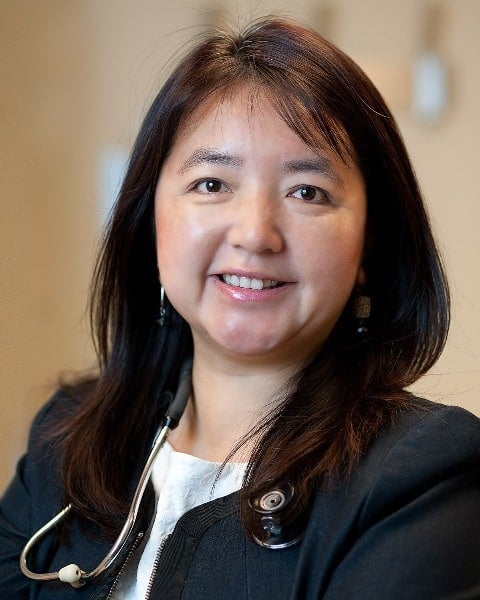
Angela M. Cheung, MD, PhD
There are technical limitations of traditional DXA scans. For example, Asians in general have smaller bone size compared to white population. DXA is a two-dimensional projection of bone (rather than three-dimensional measurement), so the bone density of Asians can be falsely low because of bone size.
The session’s key learning objectives are:
Manage patients at risk of fractures by using the TBS to refine 10-year fracture risk estimates.
Explain what FFI is used for and when to use it for detecting incomplete atypical femoral fractures (AFFs).
Illustrate how total body composition scans with DXA can be used for patients with sarcopenia.
EN: What are the key limitations of traditional DXA scans that your research is trying to address?
Cheung: There are technical limitations of traditional DXA scans. For example, Asians in general have smaller bone size compared to white population. DXA is a two-dimensional projection of bone (rather than three-dimensional measurement), so the bone density of Asians can be falsely low because of bone size.
EN: How do you see these advancements changing clinical practice or guidelines in the future?
Cheung: I do see these tools/scan types being adopted into clinical practice and guidelines in the next 5-10 years.
EN: What are most looking forward to as a presenter and attendee atENDO 2026?
Cheung: I regularly attend the ENDO conference. I specialize in bone, so I look forward to learning updates on topics other than bone.
—Shaw is a freelance writer based in Carmel, IND. She is a regular contributor to Endocrine News and writes the monthly Laboratory Notes column.
Join the Global Movement Advancing Endocrine Science and Medicine
Become a part of a community of 18,000-plus endocrine investigators and clinicians who conduct research and provide quality patient care in more than 100 countries. Advance your career and the field of endocrinology through our many educational, leadership and advocacy opportunities.