

Children born to mothers who had COVID-19 during pregnancy may be more likely to develop obesity, according to a new study published in the Endocrine Society’s Journal of Clinical Endocrinology & Metabolism.
More than 100 million COVID-19 cases have been reported in the United States since 2019, and there is limited information on the long-term health effects of the infection. Pregnant women make up 9% of reproductive-aged women with COVID-19, and millions of babies will be exposed to maternal infection during fetal development over the next five years.
“Our findings suggest that children exposed in utero to maternal COVID-19 have an altered growth pattern in early life that may increase their risk of obesity, diabetes and cardiovascular disease over time,” says Lindsay T. Fourman, MD, of Massachusetts General Hospital in Boston, Mass. “There is still a lot of research needed to understand the effects of COVID-19 on pregnant women and their children.”
The researchers studied ~150 infants born to mothers who had COVID-19 during pregnancy and found they had lower birth weight followed by greater weight gain in the first year of life as compared to ~130 babies whose mothers did not have prenatal infection. These changes have been associated with an increased risk for obesity, diabetes, and cardiovascular disease in childhood and beyond.
“Our findings emphasize the importance of long-term follow-up of children exposed in utero to maternal COVID-19 infection, as well as widespread implementation of COVID-19 prevention strategies among pregnant individuals,” says Andrea G. Edlow, MD, of Massachusetts General Hospital. “Larger studies with longer follow-up duration are needed to confirm these associations.”
The other authors of this study are Mollie W. Ockene, Samuel C. Russo, Hang Lee, Takara L. Stanley, Ingrid L. Ma, Mabel Toribio, Lydia L. Shook, and Steven K. Grinspoon of Massachusetts General Hospital and Harvard Medical School; and Carmen Monthé-Drèze of Brigham and Women’s Hospital and Harvard Medical School in Boston, Mass.
The study received funding from the National Heart, Lung, and Blood Institute, the National Institute of Diabetes and Digestive and Kidney Diseases, the Eunice Kennedy Shriver National Institute of Child Health and Human Development, the Nutrition Obesity Research Center at Harvard, the Boston Area Diabetes Endocrinology Research Center, the National Institute of Allergy and Infectious Diseases, the American Heart Association, and the Simons Foundation.
The manuscript, “Accelerated Longitudinal Weight Gain Among Infants with In Utero COVID-19 Exposure,” was published online, ahead of print.
You may also like
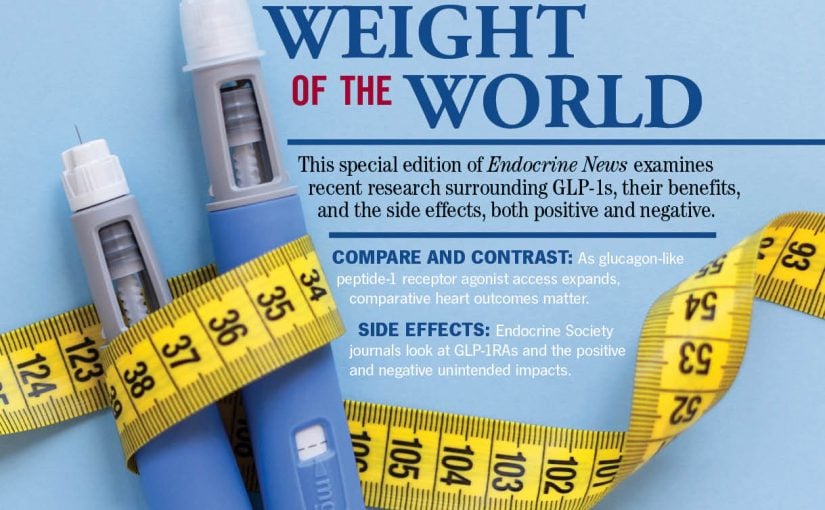
Side Effects: Endocrine Society Journals Look at GLP-1RAs and the Positive and Negative Unintended Impacts
As the use of glucagon-like peptide-1 receptor agonists (GLP-1RAs) expands, so too does our knowledge of just what all these medications can do. GLP-1RAs have now been shown to reduce consumption of alcohol and drugs, even treating addictions to gambling and sex, but these medications can also potentially lead to rare but fatal complications of…
New Research Challenges Fears of Semaglutide-Linked Thyroid Cancer Risk
The “black box” warning on the popular diabetes and weight loss drug semaglutide may be shifting from a cautionary black to a reassuring grey. A landmark study published in The Journal of Clinical Endocrinology & Metabolism reveals that semaglutide does not promote thyroid cancer; instead, it may suppress tumor growth by “reprogramming” the immune system…
Find more in
 Loading ...