Zeb I. Saeed, MD, a member of the steering committee for the Endocrine Society’s Early Career Special Interest Group (SIG), shares with clinicians three patient-centric principles to treating overweight and obesity. As endocrinologists, we enter clinical practice having been well trained in the physiology and pharmacological management of obesity, what the BMI cutoffs are, and...
A recent JCEM paper has indicted obesity as the possible cause of yet another disease – vascular-related dementia. Targeting obesity and hypertension with medications and other weight-loss interventions could prevent developing dementia. In a 2007 paper published in Obesity Reviews, the late Sir David Haslam wrote that the origins of obesity can be traced back...
The Endocrine Society recently held a virtual Science Writers Conference dedicated to the current landscape and future horizons of GLP-1 therapies, examining new oral formulations and dual and triple agonists. Endocrine News caught up with the two experts who spoke at the conference — Priya Jaisinghani, MD, DABOM and Mehmet Furkan Burak, MD – to...
A new obesity measure championed by authors of a recent Journal of Clinical Endocrinology & Metabolism paper could move the needle in managing obesity in patients, aligning better with public health priorities and improving patient care overall by integrating obesity recognition into routine clinical practice across specialties. Despite growing awareness of obesity as a chronic...
Recent studies from Endocrine Society journals have shown that GLP-1 RAs are not only successful in reducing obesity, but they have positive impacts on a range of other conditions. From improving taste sensitivity and positive results in a pediatric patient with several comorbidities to being an effective treatment in patients with a variety of psychiatric...
A significant retrospective cohort study has revealed that even mild levels of glucose intolerance during pregnancy are associated with a higher risk of obesity in children as they reach adolescence. The research, published in The Journal of Clinical Endocrinology & Metabolism, suggests that the in utero environment may play a more critical role in long-term...
As the use of glucagon-like peptide-1 receptor agonists (GLP-1RAs) expands, so too does our knowledge of just what all these medications can do. GLP-1RAs have now been shown to reduce consumption of alcohol and drugs, even treating addictions to gambling and sex, but these medications can also potentially lead to rare but fatal complications of...
The “black box” warning on the popular diabetes and weight loss drug semaglutide may be shifting from a cautionary black to a reassuring grey. A landmark study published in The Journal of Clinical Endocrinology & Metabolism reveals that semaglutide does not promote thyroid cancer; instead, it may suppress tumor growth by “reprogramming” the immune system...


 A new obesity measure championed by authors of a recent Journal of Clinical Endocrinology & Metabolism paper could move the needle in managing obesity in patients, aligning better with public health priorities and improving patient care overall by integrating obesity recognition into routine clinical practice across specialties. Despite growing awareness of obesity as a chronic...
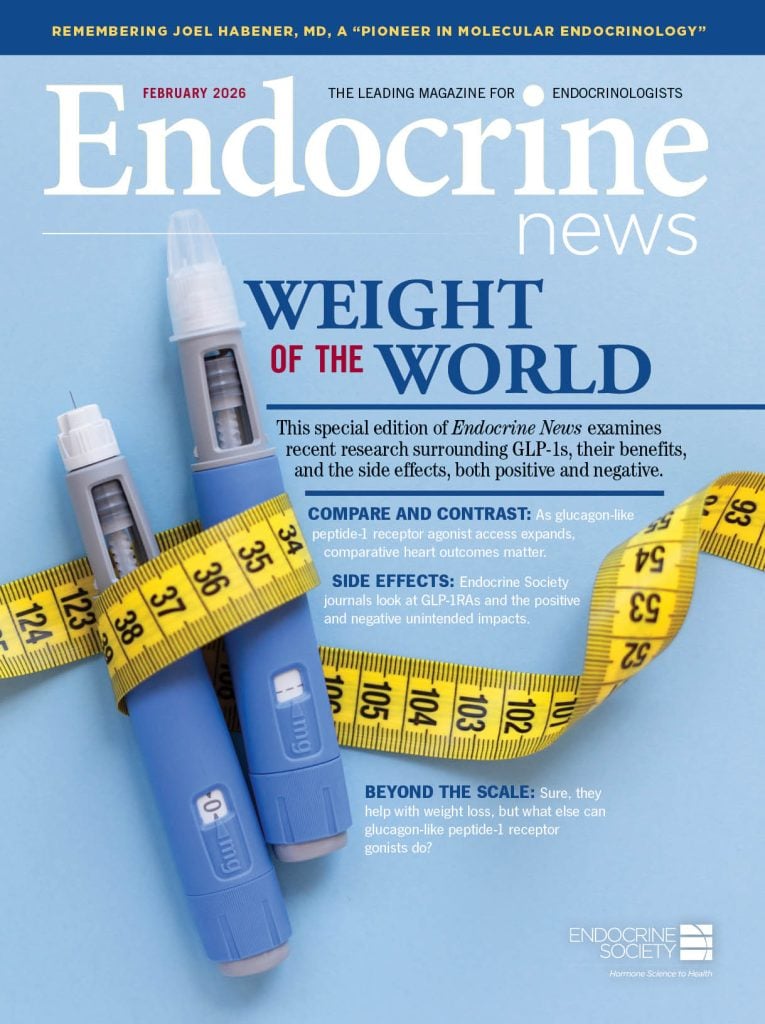 As the use of glucagon-like peptide-1 receptor agonists (GLP-1RAs) expands, so too does our knowledge of just what all these medications can do. GLP-1RAs have now been shown to reduce consumption of alcohol and drugs, even treating addictions to gambling and sex, but these medications can also potentially lead to rare but fatal complications of...