Breaking Point: Weight Loss Therapies and the Musculoskeletal Stakes
By Kelly Horvath
ENDO 2026 attendees who catch the session, “Weight Loss: Friend or Foe for Bone & Muscle?” will be in for a treat as three experts weigh in on the impact of various weight loss therapies on muscle and bone. Pharmacological, surgical, and even lifestyle impacts will be discussed and debated in this Sunday morning symposium.
On Sunday, June 14, ENDO 2026 will feature “Weight Loss: Friend or Foe for Bone & Muscle?,” a session that complements the menopause session happening a day earlier (and also featured in this issue). The Sunday session will characterize the effects of different methods of weight loss on musculoskeletal health in people living with obesity and discuss current management approaches including lifestyle and pharmacologic treatments. Of the three presenters, two will discuss the role of glucagon-like peptide-1 receptor agonists (GLP-1RAs) in this dynamic, and one will cover how bariatric surgery fits in.
Fractured Picture
From the start, each presenter is quick to point out that the pathophysiology underlying the deleterious effects of weight loss on musculoskeletal health — bone in particular — is not yet fully elucidated but is certainly multifactorial. Clifford J. Rosen, MD, director and principal investigator for the Rosen Musculoskeletal Laboratory Clinical & Translational Medicine, Maine Medical Center Research Institute and Professor of Medicine at Tufts University School of Medicine in Scarborough, Maine, for example,explains that, “We don’t understand the mechanisms of bone loss from the GLP-1 RAs but weight loss alone causes bone to change and thin. There might be other mechanisms as well for GLP-1 RAs.” Zhenqhi Liu, MD, professor of medicine and past chief of the Division of Endocrinology and Metabolism, University of Virginia, in Charlottesville, Va., agrees: “Weight loss, whether lifestyle- or pharmacologically induced, creates a negative energy balance that drives not only fat loss but also reductions in fat-free (or lean) body mass and bone mineral density (BMD). Mechanistically, lower nutrient intake, reduced mechanical loading, reduced anabolic signaling, and relative increases in catabolic pathways all contribute.”
“Weight loss, whether lifestyle- or pharmacologically induced, creates a negative energy balance that drives not only fat loss but also reductions in fat-free (or lean) body mass and bone mineral density (BMD). Mechanistically, lower nutrient intake, reduced mechanical loading, reduced anabolic signaling, and relative increases in catabolic pathways all contribute.” — Zhenqhi Liu, MD, professor of medicine and past chief. Division of Endocrinology and Metabolism, University of Virginia, Charlottesville, Va.
Although all patients living with obesity who begin an incretin regimen are at risk of musculoskeletal health impairment, and consequent risk of fracture, populations with lower baseline BMD and muscle mass are at disproportionately increased risk. “The most vulnerable people for bone loss are postmenopausal women,” says Rosen. Liu adds to this that older adults, patients experiencing rapid or substantial weight loss, and those with inadequate protein intake or low physical activity are also at higher risk. Liu furthermore suggests that some of the leading theories on why this happens include that, “incretin-based therapies may further modulate muscle and bone health through effects on nutrient intake, gut–muscle signaling, blood vessel–muscle crosstalk, muscle–bone coupling, and possibly direct receptor-mediated pathways,” while remaining incompletely defined.
The clinical picture is similar for patients who have undergone bariatric surgery, explains Elaine W. Yu, MD, MMSc associate professor, Massachusetts General Hospital, in Boston, but with a couple of bariatric surgery–specific mechanisms. “I think of the components that impact bone health in three categories,” she says. Mechanical unloading of the skeleton, as Liu also mentioned, is a prime culprit, insofar as higher weight loads more onto bone and therefore may be osteoprotective. “Unloading the skeleton,” says Yu, “whether because patients are sedentary, immobilized, or in this case losing weight, will inevitably lead to bone loss.”
A second mechanism is malabsorption, which varies depending on the type of bariatric surgery. The two most common types, sleeve gastrectomy and Roux-en-Y gastric bypass, both result in some degree of nutrient malabsorption, including the calcium and vitamin D critical for bone health.
The third mechanism is hormonal. “Many of the hormonal shifts that occur after bariatric surgery mediate the beneficial impact of bariatric surgery on weight, but some of those changing hormones can have a direct impact on bone health,” says Yu. Among these include changes in gastrointestinal hormones, including potentially GLP-1, as well as other adipocytic and neurohormonal pathways. “More research is needed to better define these bone–gut–brain interactions.”
Skeletal Guidance
The incomplete mechanistic picture is compounded by a lack of formal guidance. “Currently there are no standards,” says Rosen. Liu frames it this way: the current approach is “largely supportive and preventive,” combining weight-loss therapy with resistance exercise, adequate protein intake, and optimization of calcium and vitamin D, but he acknowledges that this is extrapolated from general obesity, sarcopenia, and osteoporosis care principles rather than derived from evidence specific to incretin-based therapies.
Yu describes a similar framework for her bariatric surgery patients but with some additional nuance. Exercise is a first line of defense; she explains: “studies have demonstrated that rigorous exercise regimens can at least partially prevent the bone loss seen after surgery, although they don’t fully prevent it.” Calcium and vitamin D supplementation is also strongly recommended, often at doses higher than those used for standard postmenopausal osteoporosis. “Making sure patients get adequate calcium and vitamin D, and monitoring related laboratory values to ensure sufficiency, is really important,” she says.
“We don’t understand the mechanisms of bone loss from the GLP-1 RAs but weight loss alone causes bone to change and thin. There might be other mechanisms as well for GLP-1 RAs.” —Clifford J. Rosen, MD, director and principal investigator, Rosen Musculoskeletal Laboratory Clinical & Translational Medicine, Maine Medical Center Research Institute; professor of medicine, Tufts University School of Medicine, Scarborough, Maine
For those patient groups at elevated baseline risk, however, lifestyle measures alone fall short. In those cases, says Yu, pharmacologic intervention may be warranted, including with such antiresorptive agents as bisphosphonates or denosumab. Rosen notes that exercise and protein supplementation are currently being tested as targeted interventions, although data remain limited.
The controversies embedded in this de facto approach are significant. Liu identifies the core problem: “It is not based on standardized or evidence-based in the context of modern, highly effective incretin therapies.” Open questions persist about optimal protein intake, the type and intensity of exercise required, and whether pharmacologic adjuncts should be routinely considered as well as how aggressively clinicians should monitor body composition rather than focusing on weight alone.
Counting Losses
Perhaps the most clinically significant controversy is whether the bone loss associated with obesity treatment is an expected, proportionate response to weight loss or something more concerning. High body mass index correlates with high BMD (likely due to mechanical loading, as mentioned), and patients with obesity have historically shown lower rates of certain fractures, including, importantly, hip fractures. From this perspective, some clinicians have argued that a degree of bone loss is justified — in other words, physiologic and proportionate.
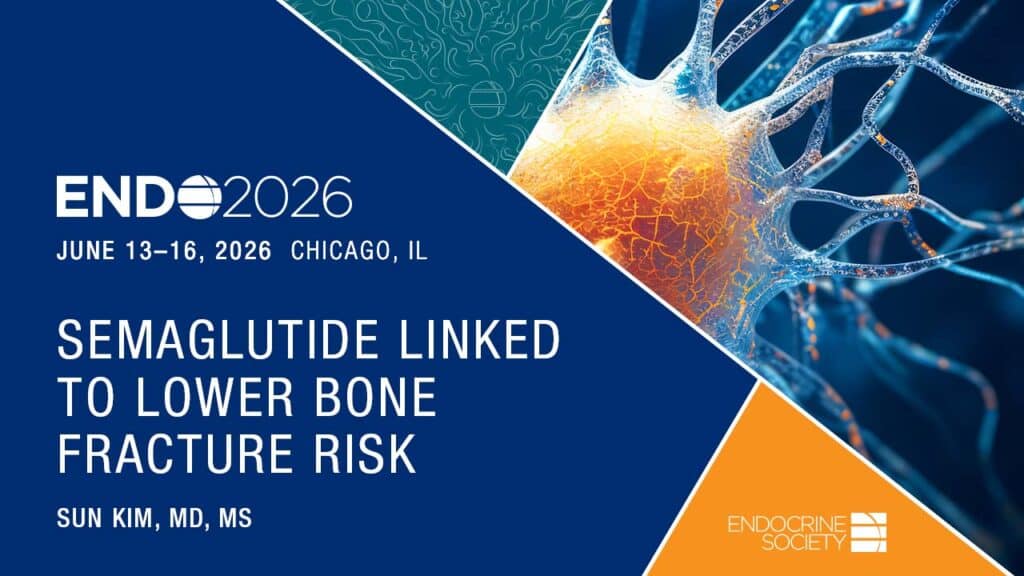
That’s not always the full story, according to Yu. “The amount of bone loss we see exceeds what you would expect for the amount of weight loss.” Large epidemiologic studies have demonstrated significant increases in fracture risk, including wrist; pelvic; and, most concerning, a twofold increase in hip fractures. “So, it does appear to be pathologic,” she says. “That’s probably the biggest controversy of clinical significance here.”
Building a Better Matrix: Prevention, Investigation, and Vigilance
Given these uncertainties, the field is moving in two parallel directions: studying novel interventions and refining the threshold for when to intervene. On the investigational front, Liu points to several active areas of inquiry, including combining incretin agents with anabolic or anticatabolic therapies like resistance-training protocols, higher-protein dietary regimens, and pharmacologic agents. Whether multi-agonist incretin therapies differentially affect lean mass and skeletal health compared with GLP-1 RA monotherapy, as alluded to earlier, is also being explored.
On the preventive side, Yu advocates for lowering the threshold for pharmacologic intervention in high-risk patients. For standard osteoporosis, the conventional T-score cutoff for initiating therapy is −2.5. For bariatric surgery patients, particularly those at risk for rapid postoperative bone loss, Yu recommends adjusting that T-score threshold to −2.0 “with an eye toward preventing the bone loss that would occur after surgery,” she explains. This more aggressive approach is also supported by published guidelines from the European Calcified Tissue Society.
“Studies have demonstrated that rigorous exercise regimens can at least partially prevent the bone loss seen after [bariatric] surgery, although they don’t fully prevent it. Making sure patients get adequate calcium and vitamin D, and monitoring related laboratory values to ensure sufficiency, is really important.” — Elaine W. Yu, MD, MMSc, associate professor, Massachusetts General Hospital, Boston
What unites all three presenters, despite their different areas of focus, is a call for a shift in clinical mindset. “We need to move beyond weight-centric metrics,” says Liu, “and better understand and proactively address the effects of these therapies on muscle and bone health.” Yu echoes this while adding an important counterpoint: bone loss and fracture risk should not dissuade patients or clinicians from pursuing weight-loss interventions that are, in many cases, dramatically beneficial or even lifesaving. “At the same time,” she says, “we need to be cognizant of these potential side effects and do our best to mitigate the negative consequences.”
In addition to their clinical concerns, the three presenters share genuine enthusiasm for the work ahead and, more imminently, for ENDO itself. Liu looks forward to engaging with colleagues across clinical, translational, and basic science disciplines and hopes the meeting will seed collaborations that push the field toward more mechanistic and interventional studies. Yu, whose subspecialty keeps her day-to-day work focused on bone and osteoporosis, treasures ENDO precisely because it pulls her back into the full breadth of endocrinology. “It’s a wonderful mix of both clinically useful information and cutting-edge research,” she says, and she hopes for a robust turnout. Rosen, meanwhile, will arrive with something extra to celebrate: 40 years in the Endocrine Society. The challenges surrounding musculoskeletal health in the setting of weight loss may persist, but this particular session will make sure attendees are on solid footing.
Horvath is a freelance writer based in Baltimore, Md. In the April issue, she wrote about recent journal studies that highlighted adrenal research.
Join the Global Movement Advancing Endocrine Science and Medicine
Become a part of a community of 18,000-plus endocrine investigators and clinicians who conduct research and provide quality patient care in more than 100 countries. Advance your career and the field of endocrinology through our many educational, leadership and advocacy opportunities.