

The Endocrine Society’s 2026 recipient of the Outstanding Clinical Investigator Laureate Award, Samuel Klein, MD, has spent the better part of the last 30 years researching why obesity affects people differently. He talks to Endocrine News about this perplexing dilemma and how he hopes his research could one day help solve this puzzle.
For more than three decades, Samuel Klein, MD, has pondered a seemingly simple question: why do some people with obesity develop serious metabolic disease while others remain remarkably healthy? The answers — grounded in meticulous human studies and translational science — have transformed how clinicians and researchers understand fat biology and metabolic risk. In recognition of these contributions, the Endocrine Society has named Klein one of its 2026 Laureates, awarding him the Outstanding Clinical Investigator Award.
Klein is the William H. Danforth Professor of Medicine and Nutritional Science at Washington University School of Medicine in St. Louis, Mo. He is also the director of the Center for Human Nutrition and the Division of Nutritional Science & Obesity Medicine. He earned his medical degree at Temple University and master’s degree in nutritional biochemistry and metabolism from the Massachusetts Institute of Technology. Klein completed a subsequent fellowship in gastroenterology at Mount Sinai Hospital in New York and has been a member of the Washington University School of Medicine faculty since 1994.
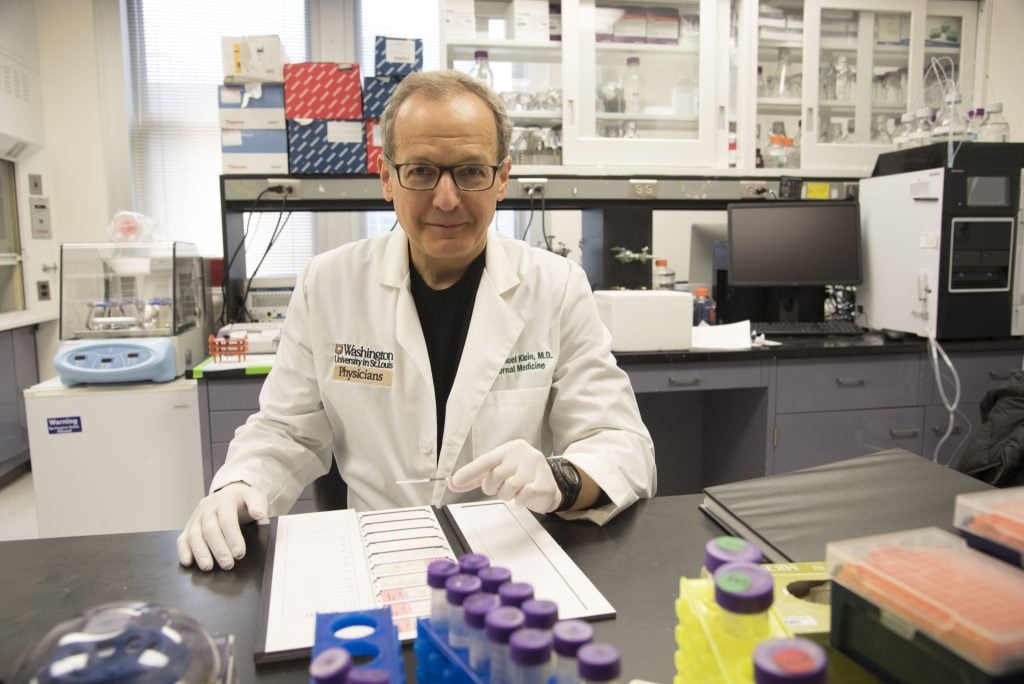
Throughout his career, Klein’s research efforts have also help unlock the mystery of how weight loss improves the metabolic problems caused by obesity.
“He is a unique physician-scientist who conducts studies in human subjects that are directed at understanding the pathogenesis and pathophysiology of obesity and diabetes in an effort to ultimately improve health and clinical care,” wrote Rexford S. Ahima, MD, PhD, director of Division of Endocrinology, Diabetes and Metabolism at Johns Hopkins University School of Medicine, in his nomination of Klein for the Laureate award.
Endocrine News asked Klein more about the short- and long-term impact of his research and the advice he gives to today’s aspiring investigators.
Endocrine News: What did the news of receiving the Laureate recognition mean to you, and how do you hope it might influence your future work or opportunities?
Klein: Receiving the Endocrine Society’s Outstanding Clinical Investigator Award is obviously a great honor. I want to acknowledge that this award recognizes the many contributions from research staff, trainees, and colleagues that made the work happen. The Laureate recognition of our work supports the importance of combining clinical and basic science techniques in studying multi-organ system biology in people to enhance our understanding of the pathogenesis of obesity-related metabolic diseases.
EN: What impact do you envision your work will have in the short and long term?
Klein: Obesity is typically associated with a constellation of metabolic abnormalities and diseases, including insulin resistance, prediabetes, type 2 diabetes, atherogenic dyslipidemia, and metabolic dysfunction associated steatotic liver disease, which are important risk factors for cardiovascular disease. However, there is considerable heterogeneity in these metabolic complications and some people with obesity are protected from many of the adverse metabolic effects of excess body fat and can be considered “metabolically healthy.”
“It is important to follow the data and not become personally invested in a particular hypothesis. Research is an exploration to find the truth. There is nothing wrong in being wrong, but it’s a mistake to remain locked into a position that is not supported by new data.” – Samuel Klein, MD, William H. Danforth Professor of Medicine and Nutritional Science, Washington University School of Medicine, St. Louis, Mo.
We hope that our work encourages the study of groups of people at the two ends of the metabolic heterogeneity spectrum (i.e., those with metabolically healthy and metabolically unhealthy obesity) because a better understanding of the mechanisms responsible for the ends of the spectrum will provide insights into the mechanisms that can cause or prevent obesity-related metabolic diseases and identify novel pathways for therapeutic intervention.
EN: What advice would you give to aspiring scientists just beginning their careers in research.
Klein: It is important to follow the data and not become personally invested in a particular hypothesis. Research is an exploration to find the truth. There is nothing wrong in being wrong, but it’s a mistake to remain locked into a position that is not supported by new data.
EN: If you could turn the calendar back to the start of your research career, what would you do differently?
Klein: I would have spent less time at work and more time developing hobbies that I could pursue in retirement.
EN: Science can be all-consuming. What’s your favorite way to unplug when you step away from the bench?
Klein: I like to escape with exercise and by reading true crime novels.
Shaw is a freelance contributor based in Carmel, Ind. She is a regular contributor to Endocrine News and writes the monthly Laboratory Notes column.
 Loading ...