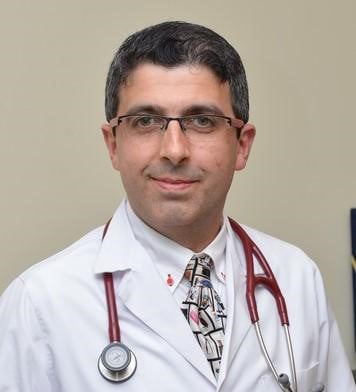
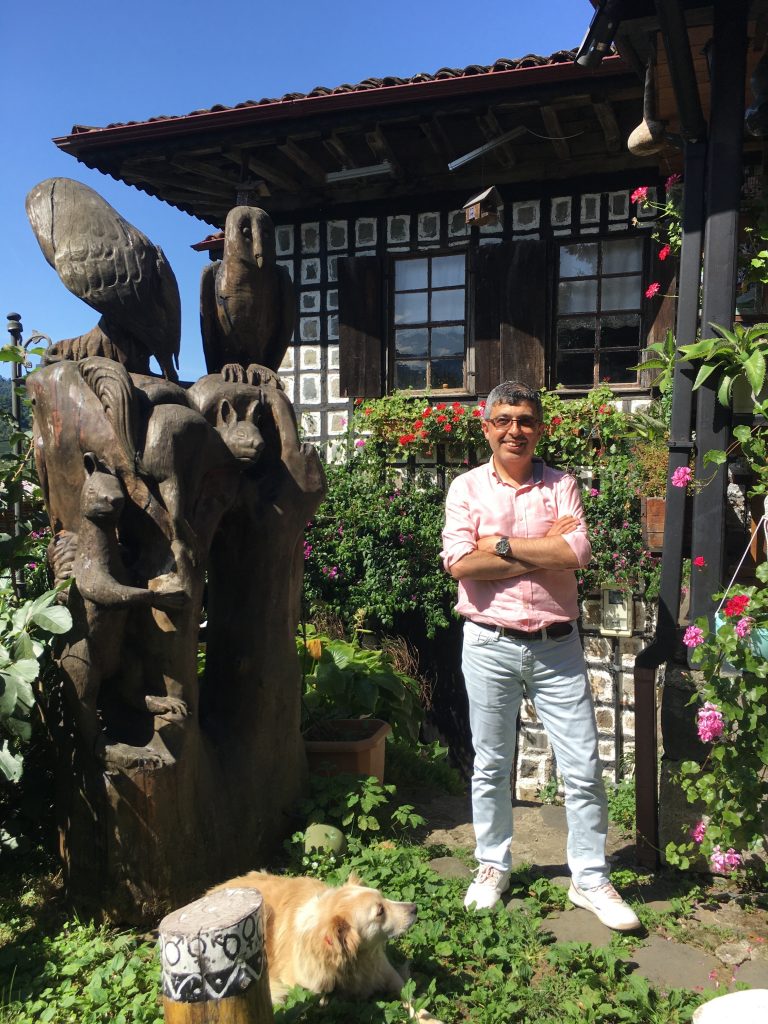
Kemal Agbaht, MD, is a clinician at Iskenderun Gelisim Hospital in Hatay, Turkey, where he treats a wide spectrum of endocrine disorders. He’s on the editorial board of The Journal of Clinical Endocrinology & Metabolism; he’s a husband and father. But when an earthquake literally rocks your world, your priorities must shift with the tectonic plates.
Today, February 6, marks one year since a devasting earthquake struck at the heart of Turkey, killing tens of thousands. Amidst the rubble and destruction, Endocrine Society member Kemal Agbaht, MD, persevered and continued to practice medicine against seemingly insurmountable odds. He shares his remarkable story exclusively with Endocrine News.
Here now is Agbaht’s firsthand account of the devastation and the weeks and months following.
On February 6, 2023, the residents of southcentral Turkey were rudely awakened by a 7.8-magnitude earthquake that violently struck at 4:17 in the morning. A second quake, nearly as strong hit later that afternoon.
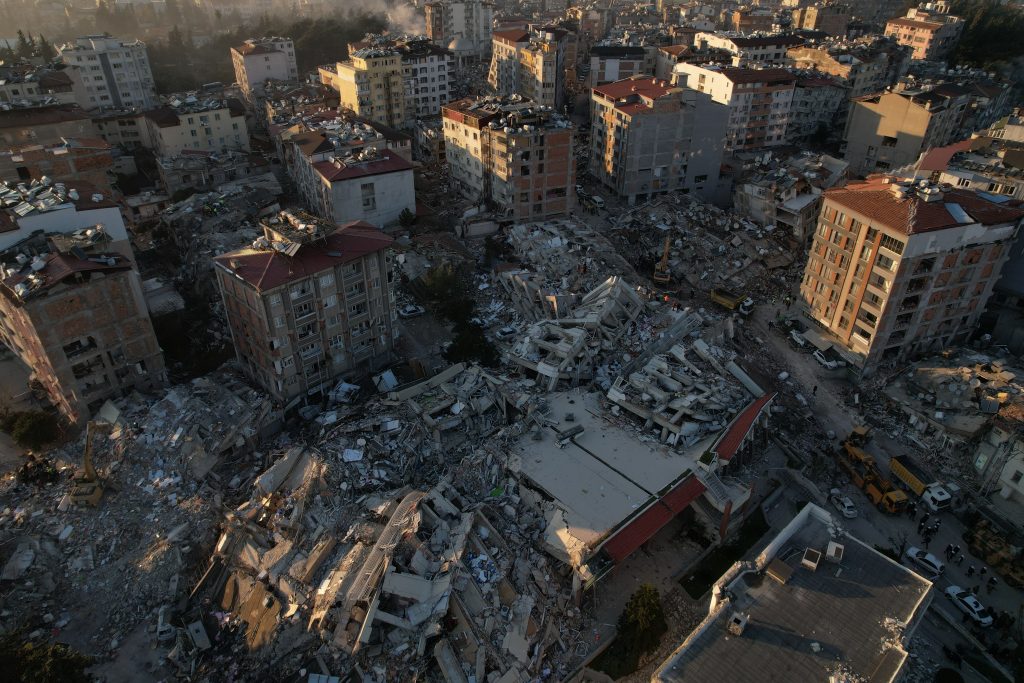
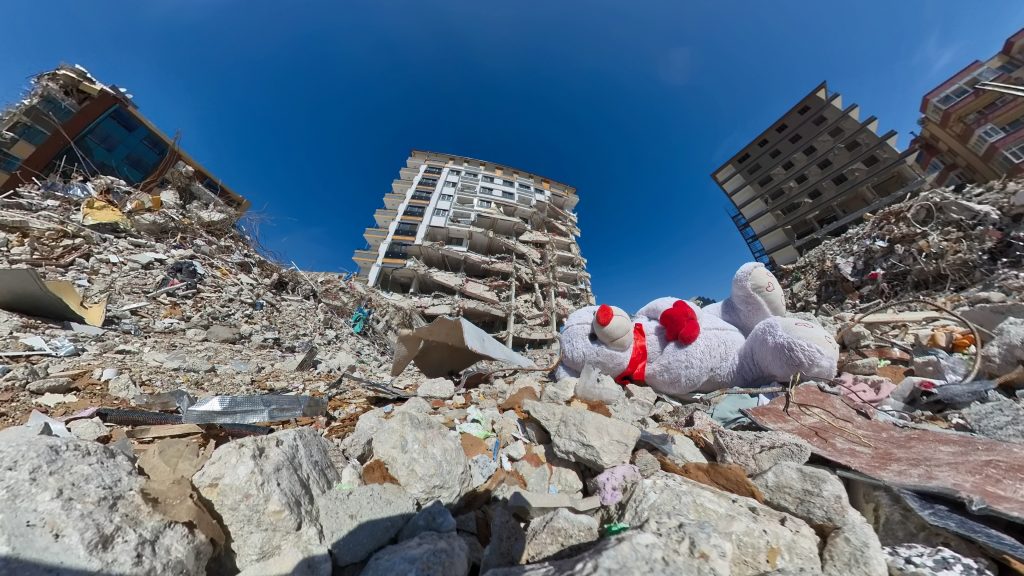
These tremors affected roughly 14 million people — essentially 16% of the country’s population — with a death toll of close to 60,000 in Turkey alone. And while the magnitude of these quakes was measured via the Richter Scale, the destruction was far more severe, registering as 11 out of 12 on the Mercalli Intensity Scale.
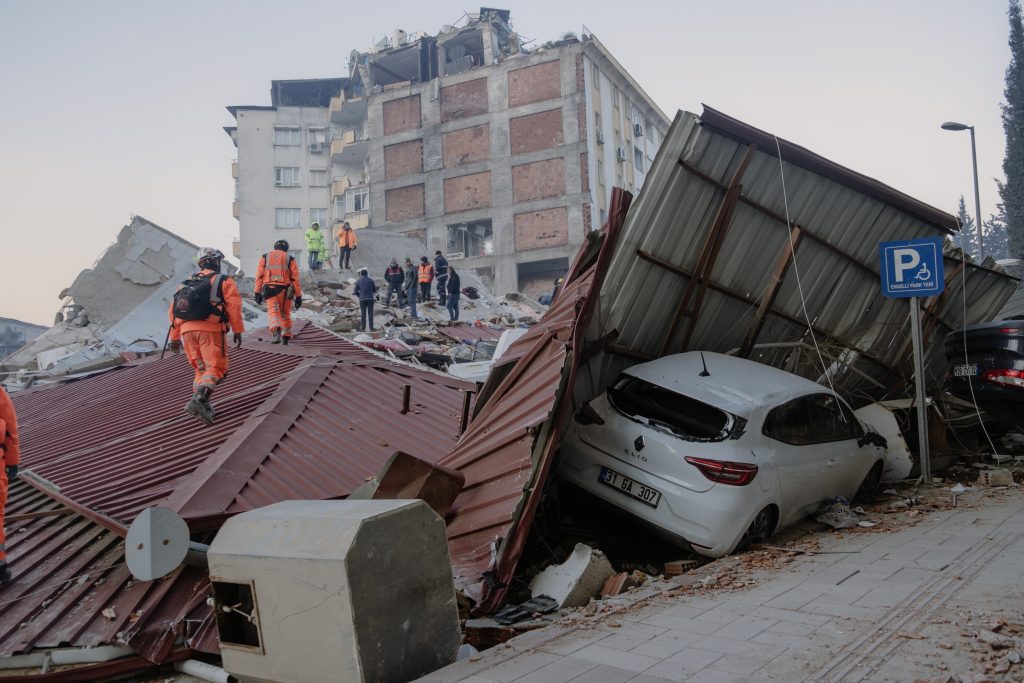
Half of those lives lost that day were in Hatay, Turkey, where I’ve been a practicing clinical endocrinologist since 2014, both living and working in the city center. Overall, around 90% of the buildings in this area either collapsed completely or were significantly damaged. After witnessing so much of the destruction and its aftermath, I wanted to share my story with my endocrinology colleagues around the world.
Day of the Earthquake
That night was pleasant enough with a light melody of rain outside. That melody was quickly overcome by a strange hum, shaking, and then a seemingly endless jolt of energy, which awakened my wife and me and scaring our young children.
Since we lived on the fifth floor, it felt as though this concussion was strengthening as we felt a wave move through our home. Items rained off the shelves and countertops. Cabinet doors swung open, emptying their contents in a cascade of breaking glass, disheveled clothing, and a cascade of items spilling from their perches. The living room wall crumbled and the kitchen countertop crumbled to the floor amid shards of glass.
What’s worse, the quake destroyed the city’s very foundation and disrupted the infrastructure. Water, electricity, WiFi were all gone. Luckily a nearby generator kicked on, which allowed us to evacuate our destroyed home more easily. However, once outside we were caught in a driving rain in our pajamas without socks, …or car keys.
After I helped my wife and children evacuate the building, I ran to the fifth floor again. I immediately closed the natural gas valves and waited for the shaking to stop. I entered the apartment carefully, resolutely lifting the huge wardrobe that was overturned, taking my pants, my wallet, the car key, the charging cable for the mobile phone. I put medicines in a backpack, turned off the electricity and left the apartment once again.
When I went down, I saw that the car was thankfully intact and got the children into the car. There were many cars broken down and/or under the debris. Because the buildings on the neighboring street were completely collapsed, the road was closed to vehicle traffic.
Finally, we were alive as a core-family and outside the buildings. My mother, my father, and some relatives were also alive and safe. My brother and his family lived 250 meters away, but they couldn’t have been evacuated, due to devastated triplex house they were living in. It was impossible to contact the emergency service, because it was out of order.
Now came the difficult task to rescue my brother and his family. and with two-hour efforts, this task was succeeded under the favor of finding a ladder elsewhere. An unforgottable memory about that task is when I asked one of the neighbours for a ladder, and he replied me that ‘No need to evacuate them, outside is already raining and cold. I have lost my son’. I just could say ‘my condolences to you.’
My father-in law and my mother-in-law were alive, but their house was completely collapsed. All of us were outside of our houses and far from the dangerous buildings. It was heavily raining and that week was probably the coldest of the year. We stayed in our cars until dawn.
Morning of the Disaster
Confident that my closest relatives were alive and safe, I decided to visit the hospital I had been working (Defne Hospital), although I had no patient hospitalized. My colleagues in the hospital from the skeleton crew claimed in the Whatsapp group that they needed help; the hospital had collapsed and the patients staying on the upper floors could not have been evacuated.
The hospital was just six kilometers away but there was too little fuel in the car to make it there, so I needed to buy some gasoline on my way. But it was impossible to find fuel due to explosion risk or to proceed due to great confusion and crowded traffic associated with cracks and blockages on the roads.
After four hours, I could not reach the hospital, and had to turn back. It was about noon by the time I was back with my family. First, we went to my father’s house, which has a garden and was about one kilometer away from our apartment. My father had prepared for himself a tiny cottage as a hobby house, made of iron-steel, in the garden of the family apartment — it had become very valuable. About 25 people (my 93-year-old grandmother, uncles, aunts, cousins, nephews, and some neighbors) were harboured within this cottage filled with chatwood. They had started a fire, boiling rainwater to brew tea, to take essential medicines, to cook something for the kids, and to support each other to be able to overcome the first hours of the probably the greatest fear of the millennium. So many lives lost, but our family was alive in such a disaster, thank goodness.
As we made our way to my father’s house, we saw that the windows of the markets and other workplaces were broken and forced into, and everything was plundered. There was no security. The security cameras were not working, because there was no electricity. In addition, water lines were destroyed — basic needs became unmet. Drinking water was impossible to find. Due to the lack of water, the mother cautioned her children to consume less water.
Afternoon of the Disaster
I parked my car in a safe place near the house, and we took my wife’s car to see my in-laws, who lived about eight kilometers away and were staying within their car. When we arrived, we were very happy to see that the mother-in-law and father-in-law survived the 45-year-old building collapsing, because we could not had talked to them on the phone. My father-in-law is 73 years old and was diagnosed with type 2 diabetes when he was 30 years old. I had been following up with him for 12 years as an endocrinologist; he was on an basal-bolus insulin regimen (insulin glargine U-300 once at night, and insulin aspart thrice daily), and oral antidiabetics for management of diabetes, on antihypertensives, hypolipidemics, vitamin B12, vitamin D, and alpha-lipoic acid supports.
He had neither micro- nor macrovascular complications, but he had sensorineural neuropathy. In 2018, he was diagnosed with urinary bladder cancer, and was cured with surgical management only. On the day of the disaster, he did not want to eat any thing, because of worries about her younger sister and her family, who were within the wreck of four-storey building that was completely collapsed, and there was no rescue team yet at all. Although he was educated for diabetes and insulin therapy, I reminded him not to inject insulin aspart, but not to forget the basal insulin, and to take antihypertensives. I spent the night with my family outside the buildings, within the car parking like other cars, and woke up there. There were frequent aftershocks during the night. Every now and then, I was starting the air conditioner, trying to heat the inside of the car.
First Week After the Disaster
The rain stopped on the second day. We went to my father’s hobby house again. In the toilet, which was built in the small garden where the cottage is located, we used bottles filled from rainwater for sanitation.
Just then, someone from the neighbors came to buy five winding-clothes. Since my uncle was a draper, he used to hold winding-clothes at home, for those who came to pick up such clothes in the early morning in the death events, but he was not used to such collective purchases. Soon, someone else came to buy four shrouds again. Then the shrouds were over, but the bad news continued to come one after another.
A large number of people, relatives, friends could not be heard from. A complete desperation and chaos had covered our lives. What happened was very similar to the ‘definition of doomsday’ we read before. Although the sun did not heat up, it allowed us as survivors to look around for relief efforts. Many buildings on the nearest street, 50 meters away from the father’s house, were destroyed. The screams could be heard from the wrecks. I photographed them amateurishly and asked for help from someones I could reach. However, the phone lines were not functioning. These photos were only able to reach the Whatsapp groups I sent a few hours later. By the way, there was no one in that area except the neighbors and residents of the neighborhood. Neither rescuers, nor ambulances, nor firefighters, nor any other government official.
After seeing the seriousness of the situation and learning about them, we went back to the father’s house, taking into account the children’s anxiety (they were six, eight, and 10 years old). We were hungry. We ate some food we saved from the house, all together as the big family.
But there was still a problem getting water; the aid had not yet started to reach there. Together with my brother-in-law, we went to a natural spring in the mountain and filled bottles with water. From there, we went to the ground floor of a storehouse to buy disposable plates, tools to save water. Just then there was a strong jolt and we threw ourselves out. When the shaking passed, we quickly took our receivables and set off on the way home. Everywhere was closed.
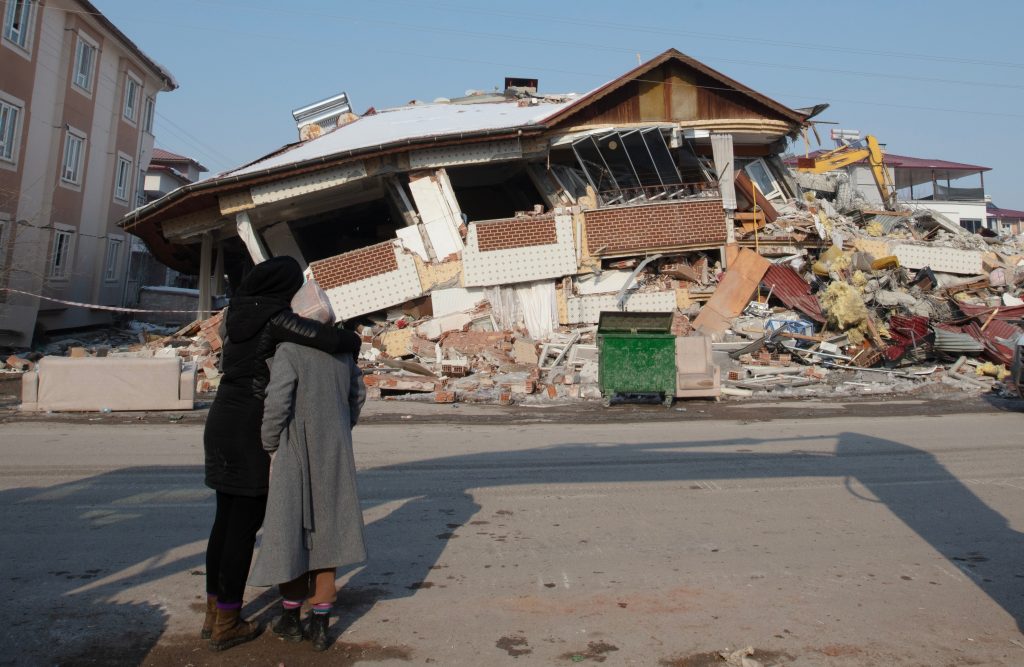
Nowhere could we visit a market, butcher, or bakery for basic needs — most of them were damaged, destroyed or looted and emptied. When we got home, we learned that my father-in-law’s sister, her husband, and their young daughter were under the wreckage in the same house and were waiting to be rescued, but no one survived. Just a few days prior, the daughter who was a young lawyer had visited us in our home and told us her childhood memories. My mother-in-law’s sister and her husband were under the wreckage, also. Furthermore, their 18-year-old grandchild, crawled out of the wreckage, but unfortunately died on the spot due to the large rubble falling from the neighboring apartment after leaving.
Everyone was panicked, the earthquakes continued, the children were scared. For this reason, we would alternately go to the fallen buildings, with the hope to be able to rescue our relatives, but this situation took hours, because the roads were closed due to the debris. The only open road was the ringroad, and on that road there were significant collapses on every bridge. Outside, we were collecting bush and snaps with the children, lighting a fire and warming up around.
We were trying to understand what was going on with the shock of the event. It was a bit like ‘Survivor Game’ for the kids. We were personally experiencing survival in poverty and difficulty, the lifestyle of people who lived a few centuries before us. When it got dark, the inky blackness subsumed, the fear of ongoing aftershocks was accompanied by security anxiety. There were five of us in the car at night, turning on the heater intermittently and shaking from time to time until first light.
The phone network had been allowing communication for a short time in the evening; we were sending our urgent and important messages at that time, usually our friends from other cities were sending messages stating that they were curious about us. Also, invitations/correspondence to scientific journals about refereeing reminded me that ordinary life continued somewhere.
On behalf of the Endocrine Society, [former chief membership officer] Rodneikka Scott conveyed a message stating whether I was alive. We received get well soon wishes on behalf of the community, assuring us that such a great disaster that impacted Turkey and Syria could affect the entire community, and the Society members and staff were thinking of us during that time. I couldn’t use social media at all. After a short time, the network was again disabled.
On the morning of the third day (Wednesday), when we went to the father’s house again, everyone stated that we were all homeless, that my father, uncles and grandmother, as well as my brothers and cousins were too difficult to conduct their lives under these conditions. They agreed that it was most appropriate to go out of the city for a while. And that day we said goodbye to everyone; everyone went to a separate city. It was very difficult and I must mention that it is one of the deepest feelings I have ever had. My relatives evacuated the city, but my wife and I had to stay. We went around once again for help. This time we saw that some people from the rescue teams had been transferred, but there were material shortages. When we asked the rescuers why they were late, they stated that the destruction was too much, that they had to intervene in the ruined buildings they saw from the entrance to the city. The first 72 hours were about to be filled, and we still had thousands and even tens of thousands of friends, relatives, lives under the rubble.
We stayed there for a while (eight days), took our funerals, buried them, bearing witness to this history of the Queen of the East.
In Regard to Patients with Endocrine Conditions
My spouse received the diagnosis of Hashimoto’s thyroiditis, when her first pregnancy ended in miscarriage. She had had subclinical hypothyroidism and thyroid autoantibodies positivity, examined after the miscarriage. Following levothyroxine replacement, we had three healthy kids. If she forgets taking her medicine for two to three days, her major complaint is constipation, which reminds her to take her medication. I always carry levothyroxine for her, in my bag. On that day, she remembered she had to take it. I also reminded her to drink some water.
The cold weather had provided the preservation of insulin, which was fortunate because there was no functioning refrigerator. After the five days without electricity, I transported the generator that had been used for pumping the under ground water in my hobby garden to my brother-in-law’s house — one of the a few undamaged buildings in the near around. On the fourth day, it was possible to find limited amounts of fuel in gas stations. This helped us to be able to activate the generator. With the help of the generator we could intermitantly operate the refrigator for a few hours each day and to conserve the vital drugs within it.
Some patients required to have access their drugs, but there was no possibility to find drugs everywhere. Some charities and volunteers brought some from other cities, and the task to distribute those drugs fell to me. Based on drug classes, for example, if a patient was on a DPP-IV inhibitor, another available DPP-IV inhibitor or sulfonylurea was available; in case of any ACEI, another ACEIs or ARBs, or even another antihypertensive was provided; any basal insulin with another one was considered substitutable in such dire circumstances. Such a solution aimed to help prevention of the acute metabolic decompensations and hypertensive emergencies.
The First Six Months
After the scary first week spent within the car at nights, we had to leave the city where we had acquired our own personalities, spent many of the times from the childhood, cumulated memories, to somewhere that we could meet our basic needs. The children could continue on their educations in school, and that may help normalizing.
We went to Mersin, a city 250 km away. We found a school for the kids. But it was difficult to find a new job elsewhere because there was a paucity in obtaining a tenure in clinical endocrinology. Since clinical endocrinology is a sub-specialty of internal medicine in Turkey, it was easier to obtain a tenure in the principal branch, but not in the subspecilty branch. I waited about a month for a tenure in clinical endocrinology in a private hospital, but it was not easy to be far from the patients of whom I have many details about their chronic diseases, medication histories, etc. The patients had to drive 500 km in roundtrip for their routine controls.
Furthermore, there was no platform to be able to solve problems specifically related to clinical endocrinology. Before completing the two-month probation period that was written in the conclusion of a contract, I cancelled my work agreement. I decided to go back to Hatay but, unfortunately, there was no hospital open in Hatay City Center where I could practice clinical endocrinology. In Iskenderun, a county 60 km away from the City Center, Gelişim Hospital was operating. I asked for a job there; however, the hospital did not have a tenure in endocrinology. Indeed, there was no endocrinologist in the whole city of Hatay, which had about 1.7 million people before February 6th. After corresponding with the Ministry of Health, the problem resolved after about 45 days — days I was unemployed. Starting a new life, although in a relatively close, but different place, that was also impacted from the disaster, was exciting.
About four months following the disaster, I had started the new job. In the first two months in this new job, the outpatient clinic witnessed very dramatic events. Almost every patient thanked God to see each other again. In one such a usual day, I arrived at the hospital, tasted our filter coffee, which we brew every day in the morning at my office, and let the first patient inside. She was born in the same year as my mother, was from Iskenderun, whom I followed due to various chronic diseases (type 2 diabetes, hypertension, dyslipidemia, atherosclerotic heart diseases, toxic nodular goiter, osteoporosis, heart failure) while I had been working in Defne Hospital, Antioch. She entered the room with her sister. They used to visit my office together. Before starting to talk about her medical history, this patient said, ‘Sir, I would like to hug you if you let me before. After the earthquake, we were so scared that we couldn’t reach you either, I swore, I’ll hug when I first see you again,’ and she hugged me. Her sister was in Istanbul during the earthquake; she did not experience the intensity of the earthquake, but her house was badly damaged in the earthquake and she was homeless.
Both of these patients are illiterate, and did not lose the follow-up files I gave them at the previous hospital. They kept those documents containing the drug follow-up card with the drugs they used written on, the old ECG results, laboratory examinations, nuclear medicine treatments they had previously received, the reports of radiological imaginations. In addition, they did not neglect to take the drugs they used with them. In this way, they helped me both to remember some medical information completely and access some information that was not transferred to the electronic records. I was very touched. When I re-evaluated with the laboratory results that afternoon, they said, ‘Sometimes we did not apply what you said before, we were doing what we knew, but now we will apply what you said uniformly. May God bless you. After the earthquake, we understood your value better’.
In the fight against chronic diseases, both the patient and the health service provider need knowledge, patience, determination, in order to manage them successfully. I always try to put them into action by thinking that knowledge, love and attention, especially empathy, are needed, and these are the issues that I request from the assistant staff basically. I think life becomes more enjoyable when we prefer to perform our work with these features and garnish them with being hard-working and niceness.
Endocrine News: What compelled you to try to drive to Defne Hospital once you knew your family was safe?
Kemal Agbaht: As physicians, our philosophy is to save lives, to help people overcome their troubles, even in terrible disasters. If a patient has been able to overcome their illness or their disease has been prevented from harming them, and this contributes to their self-perceived well-being; if we, as physicians, have contributed a little to this, it is the greatest source of happiness for us.
Once I knew my family was safe, I wanted to drive to my hospital, with the motivation I could help patients affected by the earthquake. Furthermore, my colleagues in the hospital claimed in the Whatsapp group that they needed help. The hospital collapsed and the patients on the upper floors (the hospital was eight-story building) could not be evacuated. I could not get in touch directly with the hospital staff, my co-workers, or the crew on duty in the hospital.
On our way to the hospital, we came across unforgettable and terrible images. The road was almost completely blocked; the limited numbers of ambulances with blaring sirens were trying to move forward on the road using the zipper method, but it was difficult. Meanwhile, those who could save their relatives — especially the children — from the ruined houses were begging to get them to the ambulances, but there was no place to intervene in the ambulances. The anguish on their faces and blood flowing from their bodies… I thought I could help them if I could only reach the hospital. But it was impossible. Thereafter, we learned that the hospital was unable to provide service and those hospitalized patients were being evacuated via a crane. Unfortunately, many lives were lost.
EN: Your father-in-law and wife both live with endocrine conditions. Can you talk a little more about caring for them ruding a disaster, where many basic needs can’t even be met?
KA: My father-in-law has had type 2 diabetes and some associated comorbidities for 43 years. He was on basal-bolus insulin regimen, oral antidiabetics, antihypertensives, hypolipidemics, and on vitamin B12 (had been using metformin for a long time), vitamin D, and alpha-lipoic acid supplements. He had neither micro, nor macrovascular complications, but he had sensorineural neuropathy. In 2018, he was diagnosed with urinary bladder cancer, and was cured with surgical management only. He has the recommended vaccinations on time. He is a compatible, disciplined patient, aware of his chronic diseases and their management.
However, in such an awful disaster, the management of these medical conditions was not easy. Even basic requirements can’t be managed. There was no drinking water, no fresh foods available, no electricity or gas to cook or even heat the stored food. On the first day of the disaster, we boiled the rainwater on an open fire. On the second day, there was no rain. We went to a nearby natural spring in the mountain and filled several bottles that served our drinking, cooking, and sanitation needs. We saved food from our home and heated it on the fire. Of course, routine and scheduled meal plans were not possible.
There was no need to inject the rapid-acting insulin, but the basal insulin was given routinely. The cold weather actually helped us to preserve stability of the insulin. As expected, my father-in-law required psychological support. Indeed, the truth was not easy to handle; although his core family was alive, he was clearly distressed since many of his releatives were trapped beneath the debris.
My wife also lives with an endocrine condition; she has hypothyroidism as a consequence of destructive chronic thyroiditis. She had been on levothyroxine replacement for more than 10 years. She was euthyroid with no complaint. Sometimes she forgets to take the medicine for a few days, which results in constipation. This symptom reminds her to take levothyroxine, which I always keep within my bag for her.
EN: On that note, can you talk a little about the task of getting medications and treatment to other patients affected by the earthquake?
KA: Some patients living in the neighborhood needed their medication, but they were in extremely short supply since all of the pharmacies had been destroyed. By the fourth day, charitable organizations and volunteers brought some medications, and I took it upon myself to distribute them. Based on drug classes, for example, if a patient was on a DPP-IV inhibitor, another DPP-IV inhibitor or sulfonylurea was available; in case of any ACEI, another ACEI or ARBs, or even another antihypertensive with similar efficacy was used; any basal insulin was considered substitutable in such a situation, which helped to prevent any acute metabolic decompensations and hypertensive emergencies.
EN: You write about the difficulty finding work, and even the shortage of endocrinologists. You write that the problem was resolved after corresponding with the Ministry of Health. Can you speak a little more to that, and the excitement of helping people impacted by the disaster?
KA: In Turkey, endocrinology is a subspecialty of internal medicine. After completing the five-year internal medicine residency, and obtaining an internal medicine degree, you then must pass an exam to become a subspecialty fellow. Once you complete a three-year endocrinology residency, only then do receive an endocrinology specialist degree. However, after each degree, you must go into military service for up to two years. This obligatory service is performed under the Ministry of Health, beyond the military service that is mandatory for only male citizens.
The number of endocrinology specialists in Turkey is insufficient. For example, before the earthquake, there were only four endocrinologists in Hatay, which had a population of approximately 1,700,000. This was due to the strict Ministry of Health policty which limits tenures in private hospitals. As such, you can only have a tenured position in endocrinology rather than internal medicine. There were only two such opportunities in Hatay in two separate private hospitals, which were out of service due to the earthquake. Four months after the earthquake, there was not a single endocrinologist in the entire city of Hatay. However, many patients required treatment, including people with Graves disease, pregnancies with thyroid dysfunctions, hyperglycemic emergencies, and comorbidities. All of these patients were contacting me by phone or e-mail.
While I could have easily found a job in another large city such as Ankara or Istanbul, it would be a hardship for the patients living in a ruined city to travel out of town for medical care. Fortunately, the problem was resolved after about a month and a half when the Ministry of Health allowed for more tenured positions in specialties as well as the subspecialties in the areas most affected by the earthquake once we expressed our concerns.
Being a physician is also being able to appeal to the soul of the patient. The biggest challenge was to convince the patients who had psychological breakdowns that they will overcome their disease. Yet, sometimes there is a bidirectional association between endocrine disorders (diabetes, obesity, thyroid dysfunctions, etc.) and mental well-being. Moreover, most of these endocrine disorders are chronic diseases, and chronic diseases require determination, perseverance, and a strong will for better management by the patients as well as the healthcare providers. If you choose to be a physician, you have ventured into loving unconditionally. This love includes the love of your job, your patients, and life overall. In the end, love is a beautiful feeling.
EN: You said that your first patient told you that after the earthquake, she understood your value better. Can you speak more to that?
KA: A couple of weeks after I started my new job in Iskenderum, I arrived at the hospital and let the very first patient inside who happened to be an older female patient I had seen at a previous hospital for a variety of chronic conditions (type 2 diabetes, hypertension, dyslipidemia, atherosclerotic heart disease, toxic nodular goiter, osteoporosis, heart failure). Before talking about her medical history, she said, “Sir, I would like to hug you if you let me. After the earthquake, we were so scared that we couldn’t reach you and I swore I would hug you when I first see you again.” And she hugged me.
Although she was illiterate, she had the followup files I had given her previously that contained medication usage schedules, the old ECGs, laboratory examinations, previous nuclear medicine treatments, and the reports of radiological examinations. She made sure to adhere to her medication schedule and even helped me recall some of her medical information that did not transfer to electronic health records! When I reevaluated with the lab results, she told me, “Sometimes we [she and her sister were together] did not apply what you said before. We were doing what we knew, but now we will apply what you said uniformly. May God bless you. After the earthquake, we understood your value better.”
EN: We are coming up on the anniversary of the earthquake. Can you reflect on the year since?
KA: As we have learned from geologists, the earthquakes are the truth of our world. Humanity cannot deny such forces of nature. However, humans could prevent disasters by taking the necessary measures. Science, conscience, common sense, and respect are all required for a healthier and livable world, and could help prevent future disasters. By the way, we hnor all of the people who died in that horrific disaster. Thank you for giving me the opportunity to share my story with my endocrine colleagues around the world.