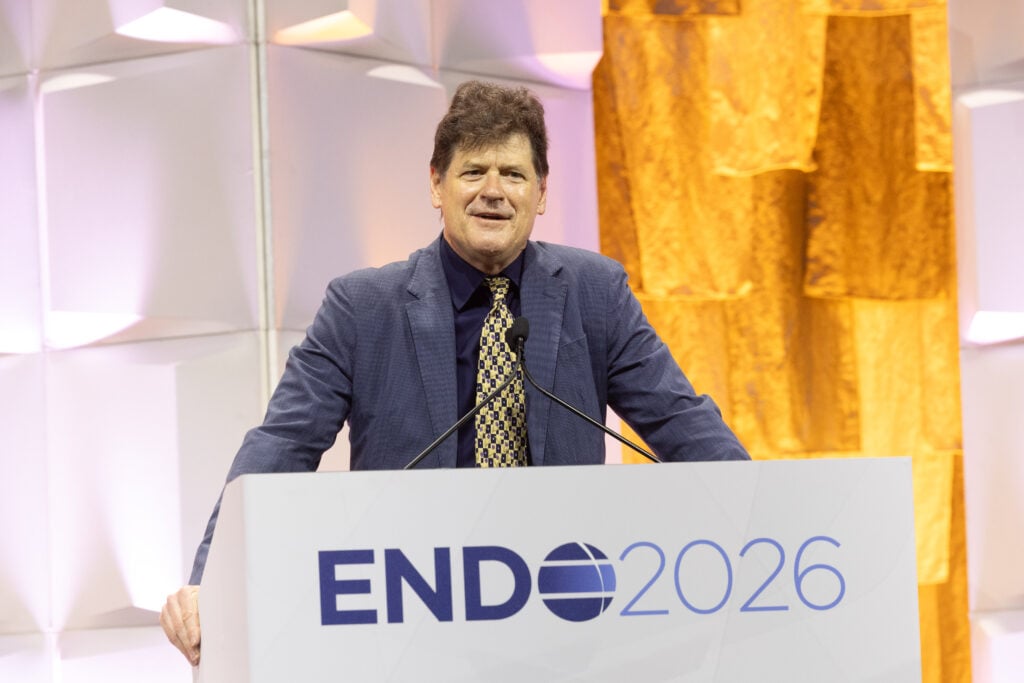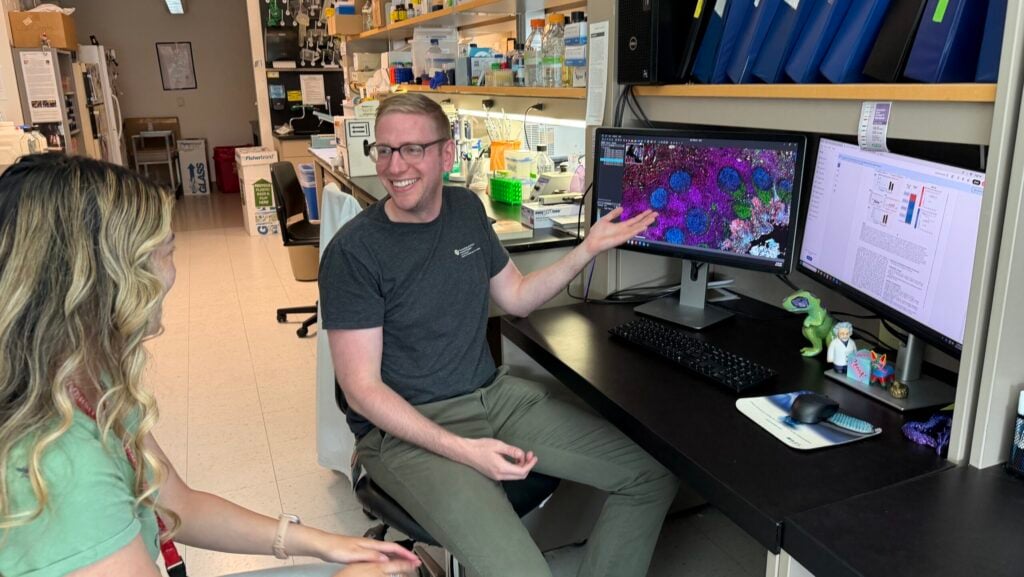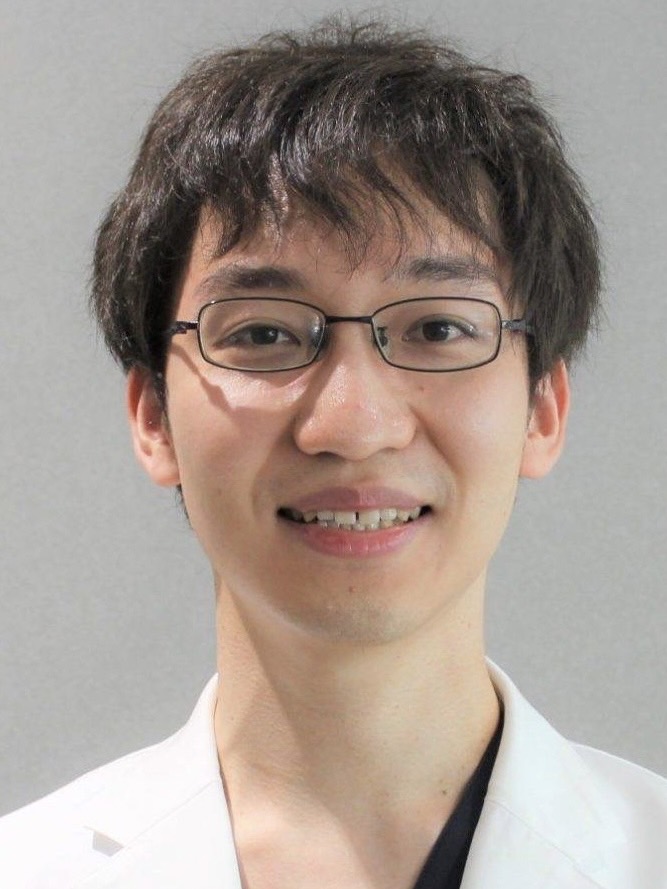
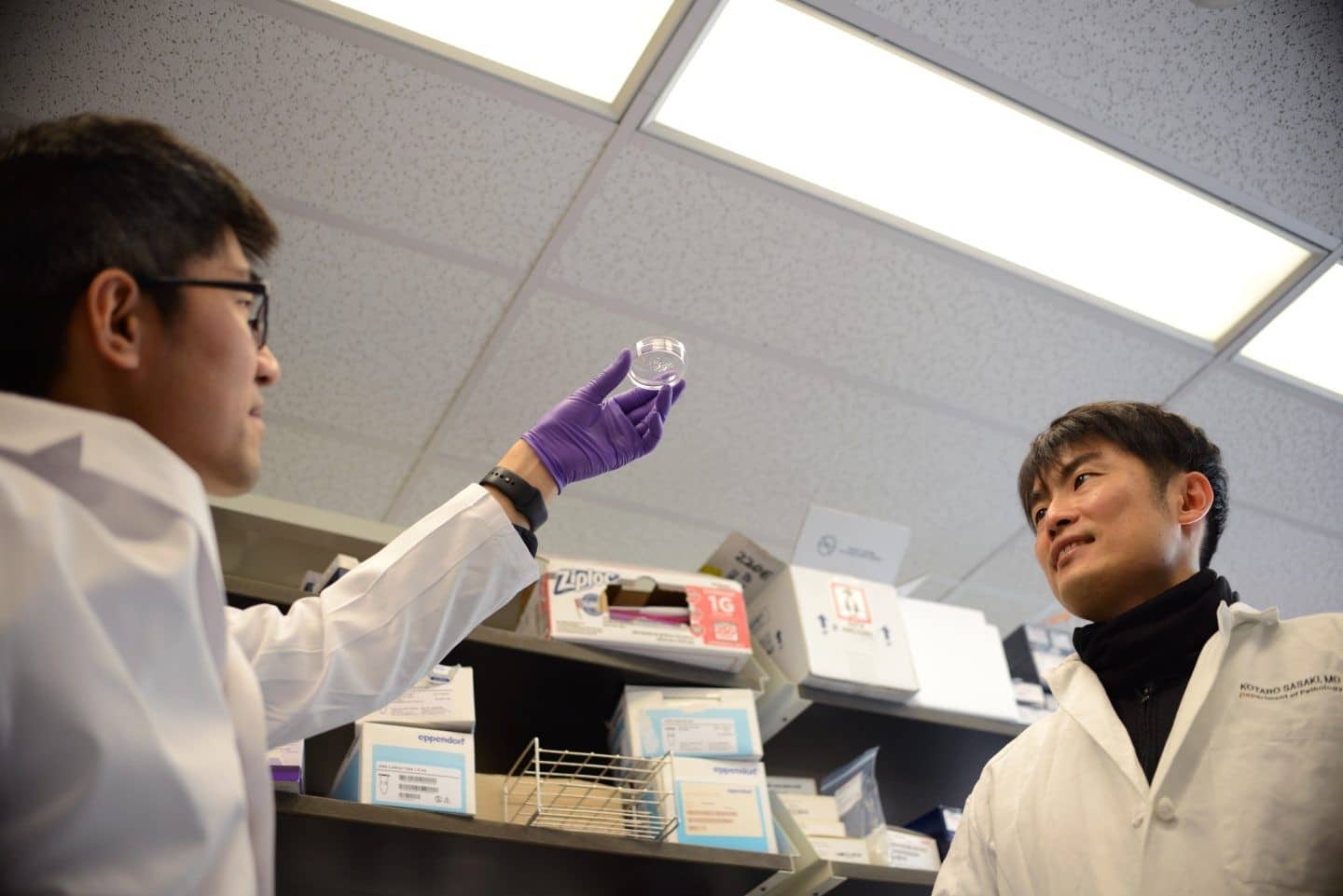
Almost three years ago, Kotaro Sasaki, MD, PhD, was lauded as one of the Endocrine Society’s Early Investigator Award winners. Now he discusses his research that involves building a human adrenal gland from stem cells, the importance for scientists to attend ENDO, and why the process of publishing research can often prove challenging.
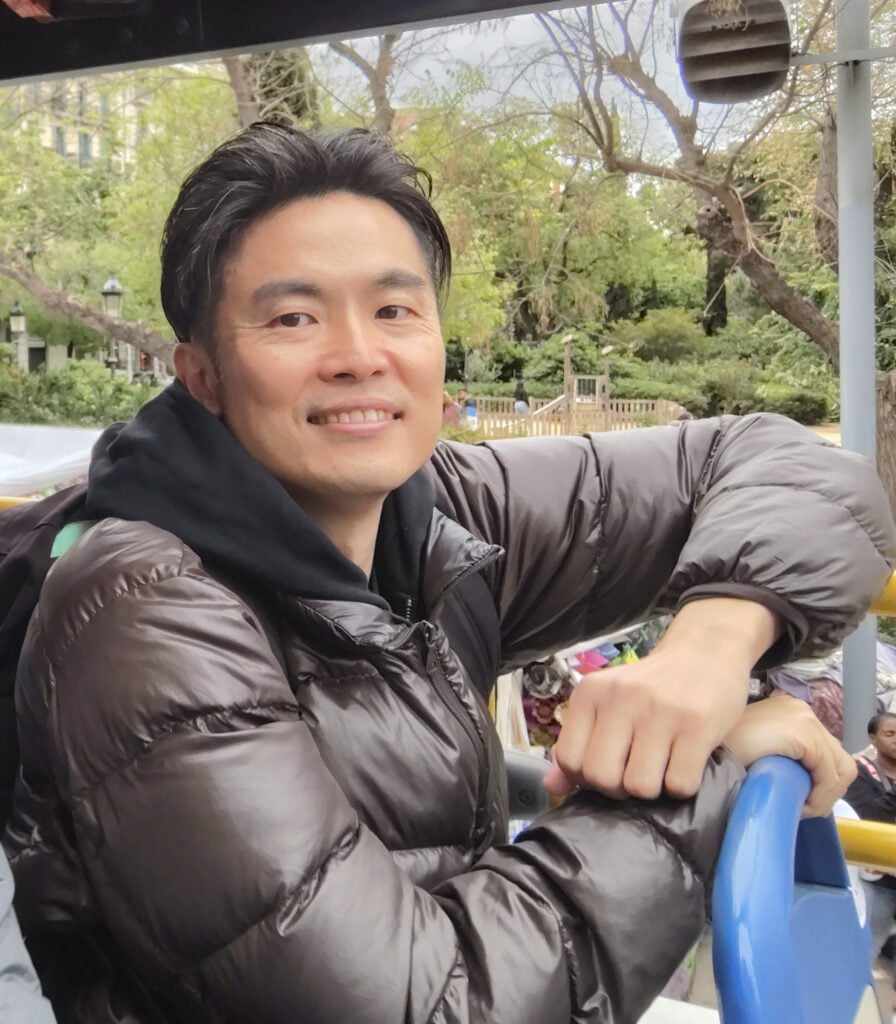
What if adrenal disease could be treated not with lifelong pills, but with lab-grown human tissue designed to restore what the body has lost? That question lies at the heart of the work of Kotaro Sasaki, MD, PhD.
Sasaki is Richard King Mellon associate professor of Biomedical Sciences at the University of Pennsylvania’s School of Veterinary Medicine and of Laboratory Medicine at the Perelman School of Medicine. Before joining the faculty in 2018, he earned his medical degree from Hokkaido University School of Medicine (Sapporo, Japan) and PhD from Kyoto University Graduate School of Medicine (Kyoto, Japan). Sasaki also completed his pathology residency and fellowship training at the University of Pittsburgh and the University of Washington.
In 2023, Sasaki was recognized by the Endocrine Society as one of five endocrinologists to receive the Early Investigator Award. At the time, although he was fairly new to the field of adrenal gland research, his contributions were significant. Sasaki’s research discoveries are helping lay the foundation for understanding the molecular basis of human reproduction, and endocrinology.
The Sasaki Lab has built first-in-class human pluripotent stem-cell derived adrenocortical organoids that are capable of producing cortisol and androgens in ACTH-responsive manner both in vitro and in vivo. This platform recapitulates key features of prenatal human adrenocortical development, providing a foundation for mechanistic studies and translational applications. “Our technology is poised to transform the field,” he tells Endocrine News.
We spoke with Sasaki about his groundbreaking discoveries and how he manages the multitude of challenges he faces daily in the Sasaki Lab.
Endocrine News: How do you see your research eventually improving the lives of people with adrenal diseases?
Sasaki: Our goal is to build a human adrenal gland “in a dish” from stem cells. One long-term application is cell therapy for people with primary adrenal insufficiency, such as Addison’s disease, in which the adrenal gland can no longer produce essential steroid hormones. Today, patients must rely on lifelong steroid replacement, and there is no curative treatment for patients with primary adrenal insufficiency. Our vision is to recreate adrenal tissue as organoids from stem cells and ultimately transplant those cells back into patients to restore adrenal function.
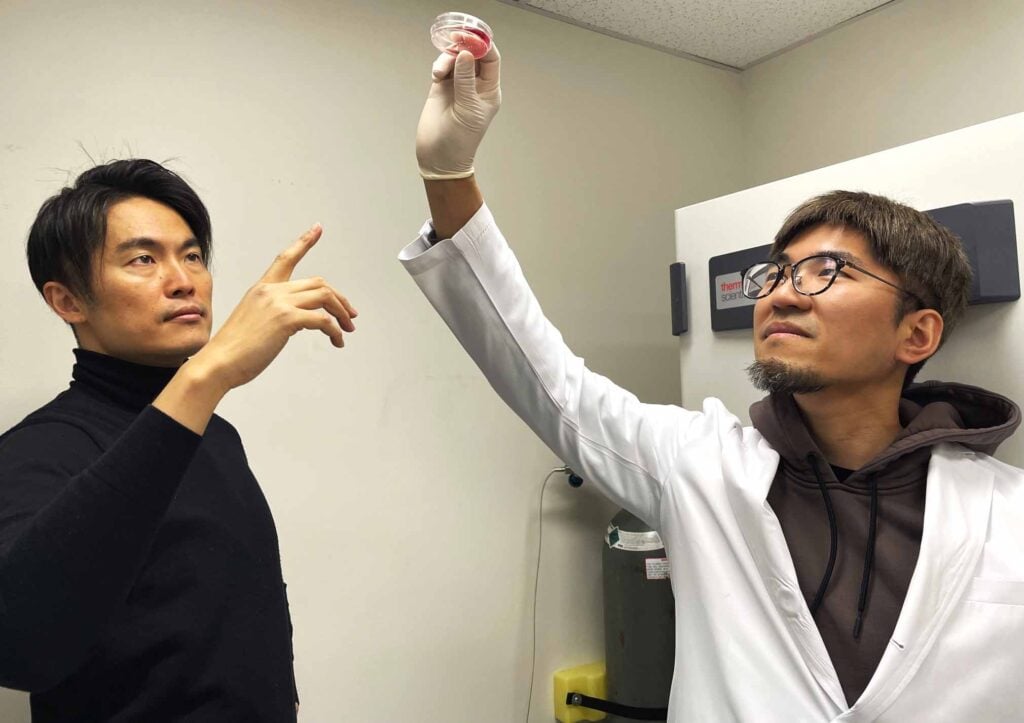
The adrenal gland is an essential organ for our life and there’s millions of patients who are suffering from primary adrenal insufficiency worldwide. The adrenal gland is a critical endocrine organ for our stress response, right? So, when our body faces stress, such as infection, injury, or emotional stress, the pituitary gland transmits signal to the adrenal gland to produce essential stress hormone, called cortisol. That, in turn, increases the blood pressure, increases the blood glucose levels, thus enabling the body to cope with these challenges. Without adequate adrenal function, we cannot survive.
“Today, patients must rely on lifelong steroid replacement, and there is no curative treatment for patients with primary adrenal insufficiency. Our vision is to recreate adrenal tissue as organoids from stem cells and ultimately transplant those cells back into patients to restore adrenal function.” — Kotaro Sasaki, MD, PhD, Richard King Mellon associate professor, biomedical sciences, University of Pennsylvania’s School of Veterinary Medicine; associate professor, laboratory medicine, Perelman School of Medicine, Philadelphia, Pa.
So, we started this project about five years ago, and back then, there were few, if any, high-quality studies showing how to generate the adrenal gland in a dish from stem cells in a robust and physiologically meaningful way. Our approach has been to first understand how nature builds the adrenal gland during development, and then carefully recapitulate that process in a dish, step by step, using stem cells.
EN: You were honored with one of the Early Investigator Awards in 2023 and, at the time, had only been a member of the Endocrine Society for two years. How has your involvement with the Society changed since then?
Sasaki: I attend ENDO almost every year and it has become an invaluable community for me. It’s the best opportunity for me to interact with other scientists working on the adrenal gland and related endocrine biology. Because I am relatively new to the adrenal field, building these connections has been especially important, learning how others approach science, and tackle challenges such as tissue regeneration. ENDO provides a unique forum for those exchanges, and my involvement with the Society has continued to grow through those interactions.
EN: What’s the biggest challenge facing the Sasaki Lab at this time? Is it the research, managing a lab team, or, perhaps, financial resources?
Sasaki: Honestly, all of them are challenges. Managing people, doing the science, and securing funding all require constant attention. Another major challenge I often encounter is the publication process. When we submit a paper, we often receive extensive and thoughtful critiques from reviewers, some of which can be tangential and not directly related to the scope of the study, and addressing all of them takes a significant amount of time. These days, it is not uncommon for the process from initial submission to publication to take a year or more. Now, I am fortunate to have the stability to work through long revision cycles, but for my postdoc and students, time is a real constraint as they need to move forward with their careers. Sometimes, trainees are unable to see a project through to publication before transitioning to their next position, which is a shame. Ideally, I want everyone in the lab to complete a project from start to finish, including publication, but the length of the current review process makes that increasingly difficult.
“[ENDO] is the best opportunity for me to interact with other scientists working on the adrenal gland and related endocrine biology. Because I am relatively new to the adrenal field, building these connections has been especially important, learning how others approach science, and tackle challenges such as tissue regeneration. ENDO provides a unique forum for those exchanges, and my involvement with the Society has continued to grow through those interactions. — Kotaro Sasaki, MD, PhD, Richard King Mellon associate professor, biomedical sciences, University of Pennsylvania’s School of Veterinary Medicine; associate professor, laboratory medicine, Perelman School of Medicine, Philadelphia, Pa.
There’s a paper I’m currently working on that we started in 2021, so it’s already taken about four years. During that time, we have focused on building and refining a new platform, continuously improving it until it reached a truly solid state. We are now close to resubmission, and I expect it to be published. It will be a substantial paper that represents the culmination of five years of our intense, sustained effort, and I believe it will have a major impact on the field.
EN: Juggling all of those challenges can be all-consuming. What’s your favorite way to unplug when you leave the bench?
Sasaki: Outside of the lab I like reading books, working out in the gym, and traveling. One of the nice aspects of research is that travel often overlaps with conferences, where you can meet new people and exchange ideas, so that has become one of my favorite activities outside day-to-day lab work. Research is very competitive, so working hard is extremely important, but at the same time, you need some time to just relax. I often tell my lab members that finding the right balance matters, as does having people around you who support and understand your science, such as family, spouse, or friends. Having those who appreciate the nature of this work is especially important, because research can be difficult for outsiders to fully grasp. It is extremely time consuming and labor intensive, and there are days when we spend the entire day in the lab to move a project forward.
Shaw is freelance writer based in Carmel, Ind. She is a regular contributor to Endocrine News and writes the monthly Laboratory Notes column.