A Personal Pituitary Journey: From Pituitary Tumors to iPSCs-Based Models for Congenital Hypopituitarism
By Maria Andrea Camilletti, PhD
Feb 2026
On behalf of the Endocrine Society’s Early-Career Special Interest Group, Maria Andrea Camilletti, PhD, takes us on a guided journey from family influences to how she developed such a keen interest in the pituitary, and explains why it brings her so much joy.
As a child, I knew I wanted to be a scientist without really knowing what a scientist actually did. Perhaps it was due to my family’s influence; my mother was a biochemist and my grandfather and uncle were both agronomists and engineers and they all taught me to be curious about the world. These influential family members were who first introduced me to the marvelous world of the life sciences when I was very young.
In 2007, I began my studies in biological sciences at the Faculty of Natural and Exact Sciences at the University of Buenos Aires (UBA), a very prestigious public university in Argentina. The university was a bustling environment, and I felt lucky to be there where I could learn from excellent professors who were also active scientists. Their commitment and motivation were inspiring.
In 2011, I met Graciela Díaz, a recognized researcher in pituitary tumors, and joined her lab at the Institute of Biology and Experimental Medicine (IBYME) for a student fellowship. She was initiating her independent career at the time. Graciela showed me all the aspects of becoming a neuroendocrinology researcher, including the obstacles of doing science in a country with various economic challenges. Most importantly, she got me profoundly engaged with the pituitary gland.
This tiny gland, located in the base of the brain, controls many essential body functions, including reproduction, growth, behavior, metabolism, and overall homeostasis.
“Immersing myself in bioinformatics and clinical genomics was both a challenging and rewarding experience. Working with patient data allowed me to exchange research results with renowned experts and physicians managing pituitary disorders from different hospitals across Argentina.” — Maria Andrea Camilletti, PhD, assistant researcher, Laboratorio de Investigaciones Aplicadas en Neurociencias (LIAN), Instituto de Neurociencias (INEU-CONICET), Fundacion para la Lucha contra las Enfermedades Neurologicas de la Infancia (FLENI), Buenos Aires, Argentina
After completing my PhD, I was convinced I wanted to stay on the pituitary research path, so I joined the laboratory of María Inés Pérez Millán, a brilliant, young researcher who had just set up her lab in Buenos Aires after a six-year postdoc at the University of Michigan. My postdoc project was part of María Inés’s ambitious idea to create a multigene panel for congenital hypopituitarism (CH), a complex genetic disease characterized by a deficiency of one or more pituitary hormones. The goal was to improve the molecular diagnosis of CH by detecting gene-specific candidate variants.
Immersing myself in bioinformatics and clinical genomics was both a challenging and rewarding experience. Working with patient data allowed me to exchange research results with renowned experts and physicians managing pituitary disorders from different hospitals across Argentina. We screened more than 170 pediatric patients for genetic alterations using our own custom-based sequencing panel, ultimately solving 15.3% of the sporadic cases. However, most of the variants we found were classified as variants of uncertain significance (VUS). This meant that additional functional assays were necessary to dissect the pathogenic mechanism, if one was present definitively.
New Questions Demand New Approaches
To find a reliable tool for exploring the role of novel genes and genetic variants for CH, we turned to induced pluripotent stem cell (iPSC) technologies as an excellent cellular model for our studies.
With this shift in focus, I joined the Institute of Neuroscience at FLENI, one of the leading neurological institutes in Argentina and Latin America, with a new position as an independent researcher in the Laboratory of Applied Research to Neurosciences.
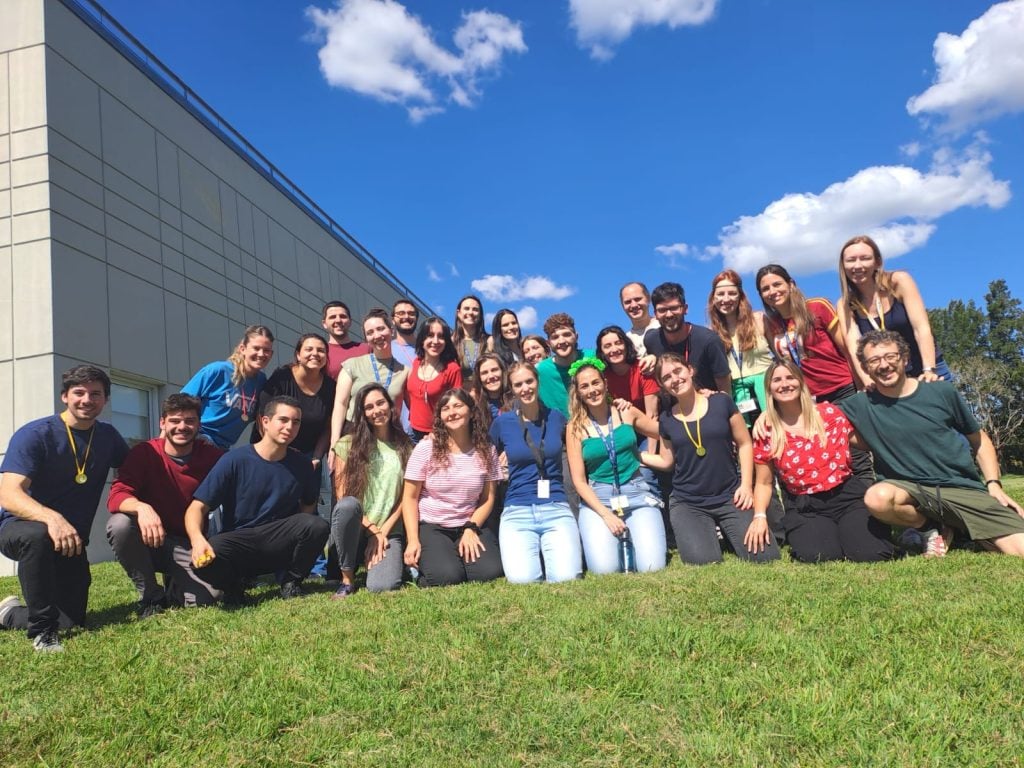
The entire team stepped away from the laboratory on a sunny day in Buenos Aires to take a group photo. The team is comprised of undergraduate students, PhD fellows, postdocs, and researchers who all work in the Laboratorio de Investigaciones Aplicadas en Neurociencias (LIAN), Instituto de Neurociencias (INEU-CONICET), Fundación para la Lucha contra las Enfermedades Neurológicas de la Infancia (FLENI).
iPSCs were first generated through groundbreaking technology developed by Shinya Yamanaka and Kazutoshi Takahashi in Kyoto, Japan, in 2006, and since then, they have revolutionized medicine. They possess two unique features that make them attractive for health research: their capacity for self-renewal and the ability to differentiate into virtually any specialized cell type, including endocrine cells. Because iPSCs can be generated directly from a patient’s own mature somatic cells (like skin or blood), they circumvent many of the ethical issues associated with embryonic stem cells.
Modeling Disease for Personalized Medicine
My current research is specifically centered on expanding our knowledge of congenital hormonal deficiencies by generating iPSC-based in vitro models.
To achieve this, we generated an iPSC line from a patient diagnosed with GH deficiency and craniofacial malformations who carries a novel, heterozygous nonsense variant in FOXA2 (c.686C>A; p.S229*). This gene is poorly characterized in hormonal diseases, and its role in pituitary development is largely unknown. This study, a collaboration with specialists from the Garrahan Hospital and the Faculty of Natural and Exact Sciences, represents the crucial first step for disease modeling. The next steps are aimed at obtaining pituitary cells from the generated patient iPSCs (and comparing them with control-iPSCs) to examine the effect of the FOXA2 variant on the clinical phenotype.
“I hope our research contributes to the community by offering better diagnosis, genetic counseling, and future treatments for patients and their families. [Induced pluripotent stem cell]-based technologies have shown potential for modeling hormonal deficiencies and hold promise for cell transplantation to treat hypopituitarism in the future, offering new opportunities for personalized therapies.” — Maria Andrea Camilletti, PhD, assistant researcher, Laboratorio de Investigaciones Aplicadas en Neurociencias (LIAN), Instituto de Neurociencias (INEU-CONICET), Fundacion para la Lucha contra las Enfermedades Neurologicas de la Infancia (FLENI), Buenos Aires, Argentina
This is particularly relevant for providing better diagnoses of pituitary hormonal deficiencies locally, and for helping to fill the gap of why FOXA2 heterozygous variants can cause CH in children. Additionally, my lab is currently working on generating a FOXA2 knockout iPSC line using gene-editing tools. We will use genomics and proteomics approaches to investigate the role of this gene in pituitary differentiation and to reveal the transcriptional regulatory landscape of this novel gene during this process.
The Thrill of the Lab and Mentorship
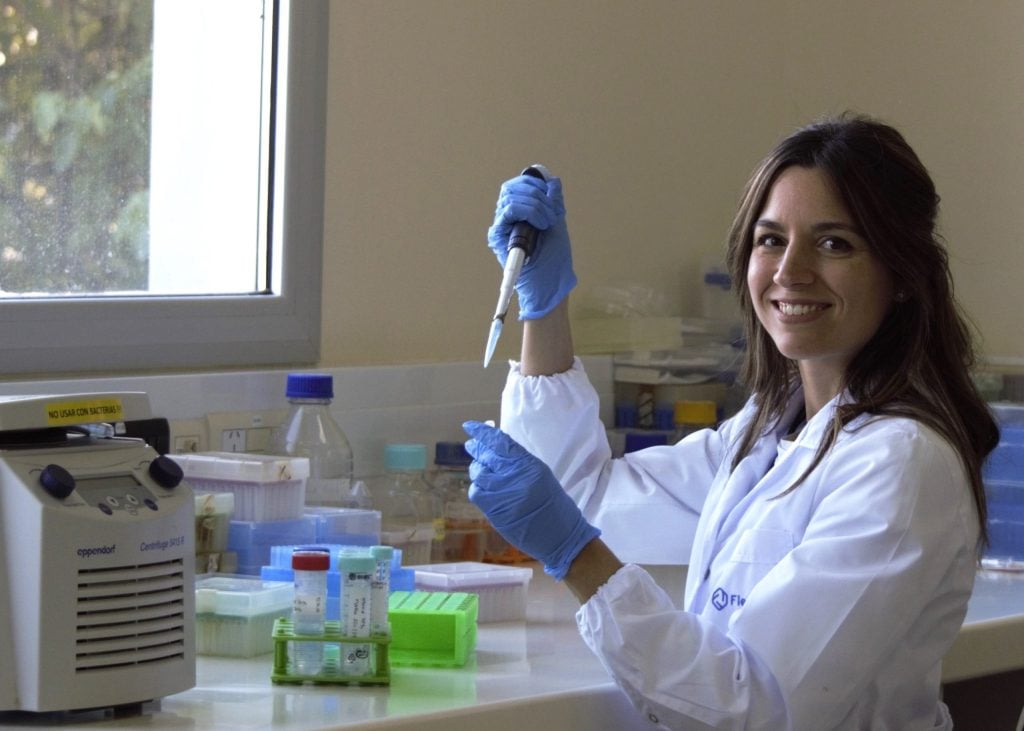
I personally have a lot of fun in the laboratory. Culturing iPSCs is complicated, but it’s incredibly satisfying when you finalize protocols without contamination or technical problems. Working with iPSCs can be challenging because they stress easily, and antibiotics are not allowed to maintain the cultures! As a lab mate often says, you have to become a kind of “ninja-culture technician” when working with this cellular type.
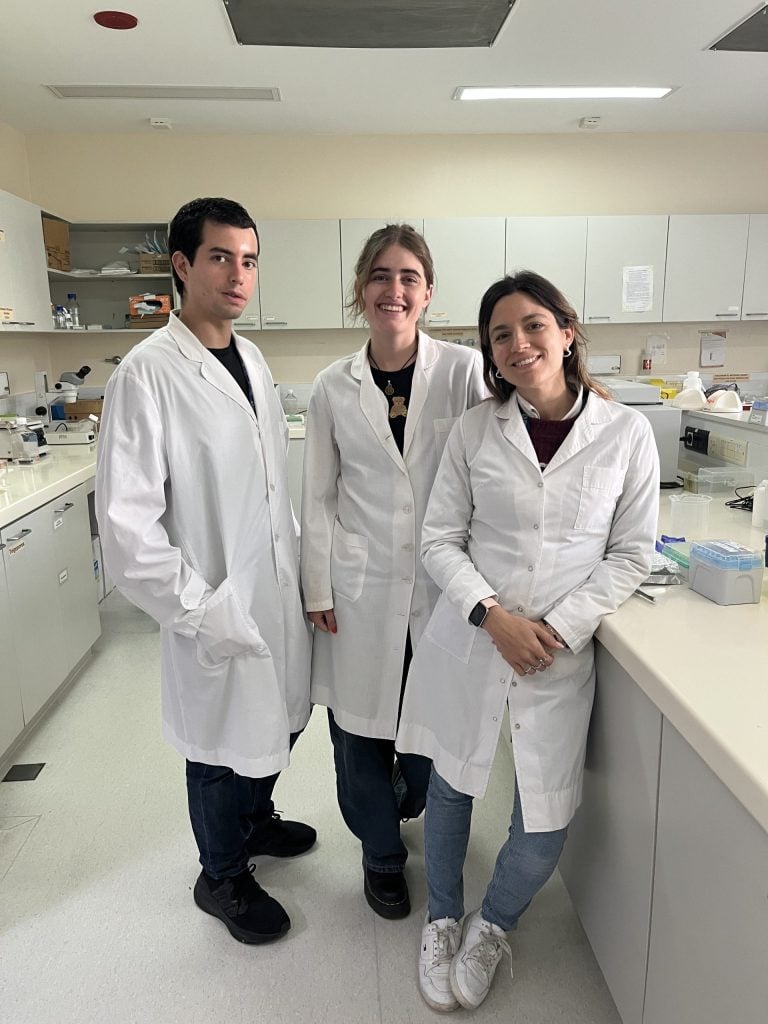
Camilletti (right) in the lab with two of her students, Gonzalo Tomás Chirino Felker, PhD fellow (left) and Chiara Grosso, undergraduate student (center).
Additionally, teaching new PhD students is very motivating, especially when we discuss scientific data or get the chance to exchange results with a broader audience at national or international conferences. The feeling of mentoring the next generation of scientists is deeply rewarding.
At the end of the day, I hope our research contributes to the community by offering better diagnosis, genetic counseling, and future treatments for patients and their families. iPSC-based technologies have shown potential for modeling hormonal deficiencies and hold promise for cell transplantation to treat hypopituitarism in the future, offering new opportunities for personalized therapies.
Camilletti is an assistant researcher at the Laboratorio de Investigaciones Aplicadas en Neurociencias (LIAN), Instituto de Neurociencias (INEU-CONICET), Fundacion para la Lucha contra las Enfermedades Neurologicas de la Infancia (FLENI), Buenos Aires, Argentina
The JCEM Case Reports Clinical Pearls session at ENDO 2025 featured three presentations of rare challenging endocrine cases that could answer questions for endocrinologists who could be treating patients with similar symptoms, possibly triggering further investigations that might lead to optimal outcomes. The audience for the third-annual JCEM Case Reports Clinical Pearls session at ENDO…




 Loading ...