2025 Researchers Roundtable: Discussing Endocrine Science with the 2025 Early Investigator Award Winners
By Mark A. Newman, Executive Editor, Endocrine News
Dec 2025
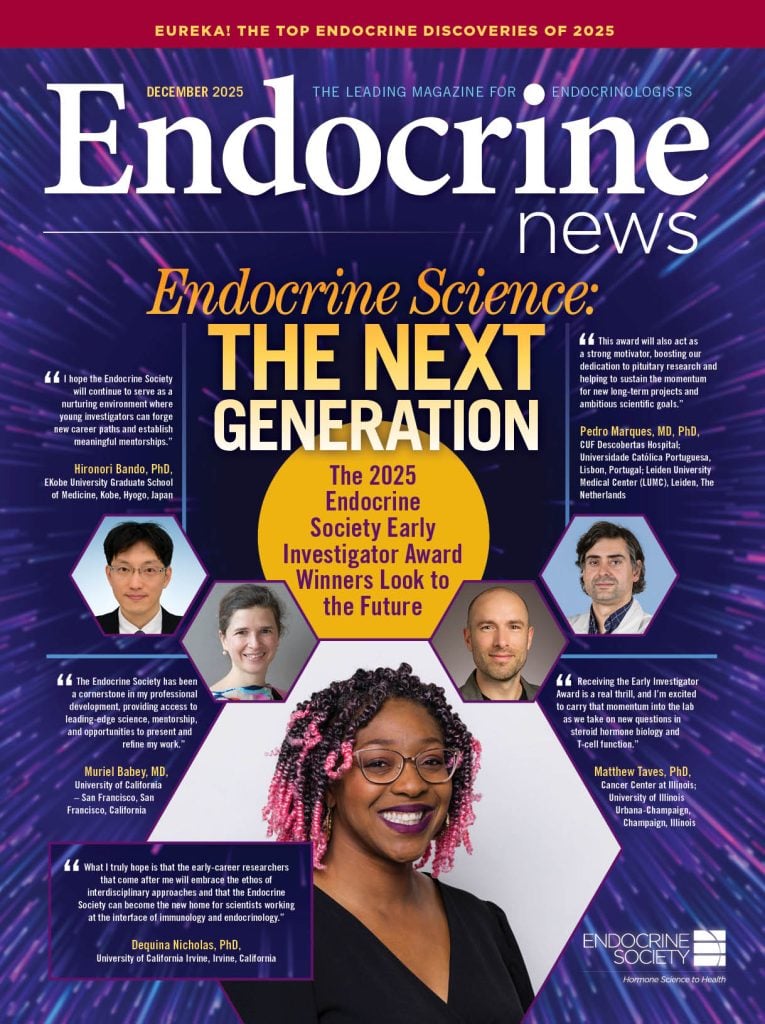
Every year the Endocrine Society recognizes endocrinologists who are in the early stages of their research careers with the Early Investigator Awards. Endocrine News spoke to the five award recipients from around the world to find out more about their award-winning research, the award’s potential impact, as well as the biggest challenges facing them today.
When the recipients of the Endocrine Society’s 2025 Early Investigator Awards presented their research at ENDO 2025, the atmosphere was electric and filled with anticipation at San Francisco’s Moscone Center.
One by one, as each of this year’s winners got up to speak, attendees in the room were treated to an eclectic array of research ranging from acquired and congenital hypopituitarism; the influence of non-skeletal tissues on skeletal health; the microenvironment of pituitary tumors; the impact of glucocorticoids on immunity, specifically tissue- and cell-specific steroid production and signaling in T lymphocytes; and the causal relationships of immune cells to the pathophysiology of type 2 diabetes and polycystic ovary syndrome (PCOS).
Moderating the proceedings was Endocrine Society Past-President Stephen R. Hammes, MD, PhD, the Louis S. Wolk Distinguished Professor of Medicine, chief of the Division of Endocrinology, Diabetes and Metabolism, and executive vice-chair of the Department of Medicine at the University of Rochester in Rochester, N.Y. “There is nothing more important to the Endocrine Society than our early-career physicians, educators, and researchers,” Hammes tells Endocrine News. “The Society helped launch and support my own research career many years ago, and it continues to do the same for this current generation of rising stars.”
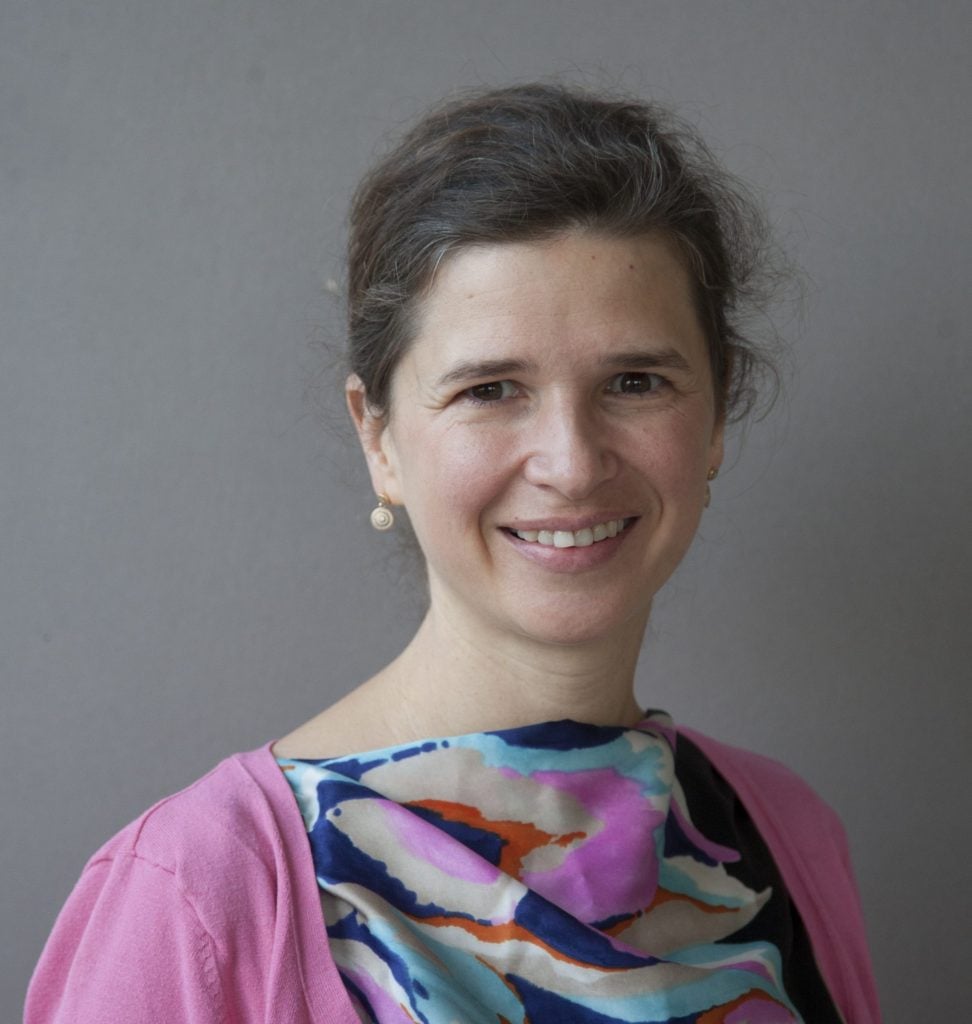
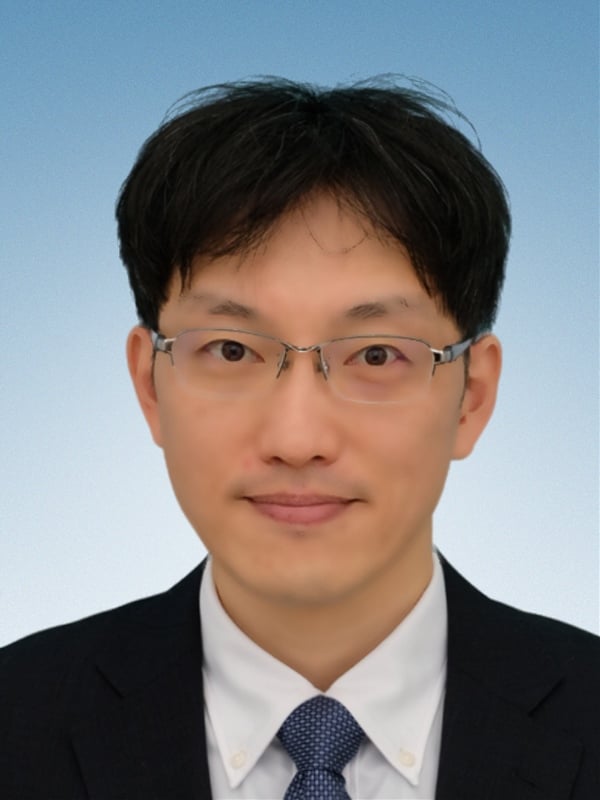
The 2025 winners are: Muriel Babey, MD, assistant professor, adjunct, Division of Endocrinology, Metabolism, and Diabetes, University of California – San Francisco, San Francisco, Calif.; Hironori Bando, PhD, associate professor, Division of Diabetes and Endocrinology, Kobe University Graduate School of Medicine, Kobe, Hyogo, Japan; Pedro Marques, MD, PhD, endocrinologist, CUF Descobertas Hospital; assistant professor and researcher, Medical Faculty of Universidade Católica Portuguesa, Lisbon, Portugal, and at the Leiden University Medical Center (LUMC), Leiden, The Netherlands; Dequina Nicholas, PhD, assistant professor, Molecular Biology and Biochemistry, University of California Irvine, Irvine, Calif.; and Matthew Taves, PhD, assistant professor, Department of Animal Sciences, Cancer Center at Illinois; Carl R. Woese Institute for Genomic Biology, Neuroscience Program, University of Illinois Urbana-Champaign, Champaign, Ill.
Endocrine News was fortunate enough to catch their presentations in San Francisco and caught up with them to learn more about their research, the unique challenges they’ve each faced, and what the award means for their work.
Endocrine News: Tell us a little bit about your research and your motivation to apply for the Early Investigator Award.
Muriel Babey: My research focuses on how non-skeletal tissues, such as the hypothalamus influence skeletal health in the context of metabolic disease and aging. My work builds on our recent discovery of CCN3, a brain-derived osteoanabolic hormone that plays a critical role in maintaining maternal bone mass during lactation (Babey, Krause, et al., Nature 2024). We found that CCN3 acts on mouse and human skeletal stem cells at low, sub-nanomolar concentrations, independent of sex and age, to promote bone formation. As a clinical endocrine fellow, I joined the Ingraham Laboratory at UCSF, which offered an outstanding environment for scientific growth and mentorship. This supportive, collaborative setting allowed me to develop cross-disciplinary expertise and shape my early-stage research program, now funded by an NIH K08 Career Development Award, to define CCN3’s actions in bone and marrow fat metabolism, characterize its dynamics in physiologic states such as lactation, and explore its therapeutic potential in skeletal fragility.
“The Endocrine Society has been a cornerstone in my professional development, providing access to leading-edge science, mentorship, and opportunities to present and refine my work. I see the Endocrine Society as an enduring partner in my career, offering a platform for scientific exchange, leadership growth, and advocacy for the next generation of physician-scientists.” – Muriel Babey, MD, assistant professor, adjunct, Division of Endocrinology, Metabolism, and Diabetes, University of California – San Francisco, San Francisco, Calif.
My motivation to apply for the Early Investigator Award is to gain support and visibility for this translational work, accelerate its impact for patients, and deepen my engagement with the Endocrine Society’s vibrant scientific community
Hironori Bando: I have been conducting research on acquired and congenital hypopituitarism to elucidate the pathogenesis. Originally trained as an adult endocrinologist, I have encountered numerous cases of acquired hypopituitarism, providing a natural foundation for clinical and translational research. As my understanding of acquired forms deepened, I gradually broadened my focus to include congenital hypopituitarism. Transitions from research on acquired to congenital hypopituitarism are relatively rare, and few investigators pursue both domains in depth. In this context, I believe my trajectory represents a distinctive research pathway. With this in mind, I applied for this award to highlight the existence of such cross-cutting researchers and to present this atypical yet valuable research approach.
Pedro Marques: My research is focused on the microenvironment of pituitary tumors. We have been carrying out a range of studies aimed to understand the composition of the microenvironment and the role of its different components, such as immune cells, stromal cells and cytokines/chemokines in the biological behavior, phenotype, and clinical outcomes of pituitary tumors, as well as their impact in several tumorigenic mechanisms, like tumor cell proliferation, invasion, angiogenesis and epitelial-to-mesenchymal transition (EMT) pathway activation. I applied for the Early Investigator Award because this is specifically designed to support and recognize early-career researchers in endocrinology, like myself. I believe that this award may truly advance my career in many different ways. Firstly, it is a very competitive and prestigious award which validates the significance and quality of my research. Secondly, it gives visibility to my work and to my research topic, not to mention the unique opportunity to present my research at the world’s largest endocrine conference. Thirdly, I saw it as a good opportunity to further boost my CV and network connections, as award ceremonies and presentations like this allow connections with other researchers and leaders in the field. Lastly, I believe that this award will be a strong motivator for me and my colleagues, further boosting our drive and dedication to endocrine research.
“One of my biggest ongoing challenges is figuring out how to manage both time and projects effectively. In research, this often involves balancing high-risk/high-reward projects with more foundational, “safer” projects. It’s not always clear when a high-risk idea is worth pushing through versus when it’s better to move on to something else. I’ve gotten better at recognizing when to let go of something that isn’t working, but it’s still a skill I’m working hard at developing.” – Matthew Taves, PhD, assistant professor, Department of Animal Sciences, Cancer Center at Illinois; Carl R. Woese Institute for Genomic Biology, Neuroscience Program, University of Illinois Urbana-Champaign, Champaign, Ill.
Dequina Nicholas: My lab aims to determine causal relationships of immune cells to the pathophysiology of type 2 diabetes and polycystic ovary syndrome (PCOS). Throughout my career, my goal has been to use collaborative and interdisciplinary approaches to solve long-standing questions in the field. When merging the fields of immunology and endocrinology, we know the immune system becomes active in disease, but rarely are we clear on how this happens in the absence of infection. Over the past 15 years of my academic research career, I have asked out-of-the-box questions which required developing new techniques and approaches to determine the role of immune cells in type diabetes and PCOS. My ideas were not always well received and generally have been difficult to publish. Applying for the Early Career Investigator Award felt like an opportunity to have not just my contributions to endocrinology recognized, but a chance to showcase the importance of questioning dogma, doing the difficult experiments, and the reward for pushing boundaries despite not being easy in the moment. I never honestly thought I would get this award and to be frank, it still does not feel real. I am humbled and honored by this recognition and hope that it is the start to truly build bridges across disparate academic fields to drive discovery in endocrinology.
Matthew Taves: My research focuses on how glucocorticoids regulate immunity, with an emphasis on tissue- and cell-specific steroid production and signaling in T lymphocytes. I study how these pathways shape immune development, anti-pathogen responses, and cancer progression. Because this work intersects endocrinology, immunology, and oncology, I’ve explored different meetings to try and find a scientific community that I feel would be a good home in which to develop my research program and career. Over the past few years, I’ve found that the Endocrine Society has done a great job of fulfilling this role, particularly through formal and informal mentoring efforts. I’ve really settled on the Endocrine Society as my central community, and this has motivated me to become more actively engaged. I decided to apply for the Early Investigator Award as an opportunity to contribute to and grow within this community.
EN: What were some of your biggest challenges at this point in your career as a scientist and researcher?
Babey: The COVID-19 pandemic coincided with my entry into the Ingraham Laboratory, requiring rapid adaptation to a very restrictive research environment, including disruptions of mouse studies and shifts in research priorities. As I transition to independence, securing sustained funding in this uncertain funding climate and building a multidisciplinary team with the right technical expertise will be a significant undertaking. I aim to expand my research program beyond CCN3 to identify new secreted factors that regulate bone remodeling, an effort that requires bridging molecular discovery with translational models, which is both scientifically exciting and technically demanding at this career stage.
Bando: Currently working in the clinical department, I am required to dedicate a greater portion of my time to patient care and the education of medical students and junior physicians, resulting in less time available for research compared to my postdoctoral period. I aspire to achieve a more balanced allocation of duties that would allow me to devote additional time to research work.
“I attended ENDO at a time when I was grappling with how to advance my original research. By engaging with the presentations, I discovered a new direction for my work and connected with a mentor who would guide my next steps. Similarly, I hope the Endocrine Society will continue to serve as a nurturing environment where young investigators can forge new career paths and establish meaningful mentorships.” – Hironori Bando, PhD, associate professor, Division of Diabetes and Endocrinology, Kobe University Graduate School of Medicine, Kobe, Hyogo, Japan
Marques: As an early-career clinician-scientist aiming to consolidate my lab and line of research, the biggest challenge has been related to funding and access to key resources, particularly talented PhD students or postdocs, which in turn depends very much on financial aspects. The funding opportunities and grants are relatively scarce, and grant applications are always very competitive and have limited funds available. The field of pituitary tumors (the focus of my research) tends to receive lower priority when competing with other more prevalent and possibly more impactful diseases for human health, such as breast cancer, melanoma, prostate cancer, lung cancer, or diabetes, which therefore limits the chance of obtaining funding. Another key aspect relates with the fact that I am originally from Portugal, where my current lab is based. Portugal is a relatively small country where national funding opportunities are scarce, which further limits access to funding crucial to acquire key reagents/materials, but also to recruit talented colleagues and expand the research group.
Nicholas: So many challenges! Where to start? Navigating publishing as a new PI and managing the impact of personal life on my career and vice versa. As a new PI doing interdisciplinary work, my lab’s findings do not necessarily fit nicely within the scope of many journals. Editors of immunology journals do not immediately see the significance of the reproductive endocrinology, and many times editors of endocrinology journals do not have the tools to evaluate the minutiae of immunologic approaches. Layered on top of that, we mix clinical and basic science approaches which make finding appropriate reviewers difficult. Though difficult, my team will better learn how to navigate publishing interdisciplinary work with persistence, just as I have throughout my career. The second biggest challenge at this point in my career is managing the demands of motherhood with running an academic lab. I constantly feel pulled in opposite directions. When I’m working, I feel like a bad mom. When I am spending time with my family, I feel like I am getting behind on work. The Endocrine Society has been wonderful in demonstrating that I can integrate both aspects of my life. On site day care at the meetings and members that are supportive of scientists with family are just two examples. It has been at the ENDO Early Career Forum that I have received and still use advice from members on how to navigate this crazy yet rewarding journey.
“I hope that receiving this award will make the field a little more receptive to my out-of-the box ideas. What I truly hope is that the early-career researchers that come after me will embrace the ethos of interdisciplinary approaches and that the Endocrine Society can become the new home for scientists working at the interface of immunology and endocrinology.” – Dequina Nicholas, PhD, assistant professor, Molecular Biology and Biochemistry, University of California Irvine, Irvine, Calif.
Taves: One of my biggest ongoing challenges is figuring out how to manage both time and projects effectively. In research, this often involves balancing high-risk/high-reward projects with more foundational, “safer” projects. It’s not always clear when a high-risk idea is worth pushing through versus when it’s better to move on to something else. I’ve gotten better at recognizing when to let go of something that isn’t working, but it’s still a skill I’m working hard at developing. Rather than thinking that I’m “dropping a project,” I now try to think of it as choosing between alternate projects — this (perhaps obvious) shift in thinking helps me avoid getting stuck. I’m also much quicker to run ideas by colleagues for perspective. I also tend to let work spill into all available hours, so maintaining a healthy work-life balance is something I have to keep working at.
EN: How do you hope receiving the Early Investigator award will help support your goals as an endocrine scientist, and what role do you see the Endocrine Society playing in your career?
Babey: The Early Investigator Award will strengthen my progress toward establishing an independently funded, translational research program in skeletal endocrinology. The recognition will enhance opportunities to form new collaborations, recruit talented trainees, and disseminate our findings to both basic and clinical audiences. The Endocrine Society has been a cornerstone in my professional development, providing access to leading-edge science, mentorship, and opportunities to present and refine my work. I see the Endocrine Society as an enduring partner in my career, offering a platform for scientific exchange, leadership growth, and advocacy for the next generation of physician-scientists.
Bando: I attended ENDO at a time when I was grappling with how to advance my original research. By engaging with the presentations, I discovered a new direction for my work and connected with a mentor who would guide my next steps. Similarly, I hope the Endocrine Society will continue to serve as a nurturing environment where young investigators can forge new career paths and establish meaningful mentorships.
Marques: I believe it will advance my career further and it will help me in many ways in establishing myself as a leading clinician-scientist in the field of pituitary and neuroendocrinology. Firstly, it validates my past and current work, and it enhances its visibility in the world-stage of endocrine research. The credibility and recognition in academia is really important, and this is something that this award may significantly impact. This award is an important boost to my CV, which certainly will help in future grant or job applications, as I trust it will have a positive effect on the various selection procedures. Furthermore, it may open some new opportunities, for example it may lead to invitations to conferences, workshops, editorial roles, panels, or leadership promotions, which are crucial for the continuous development of my career. Additionally, this award grants a wide visibility to my work and research field through its promotion in the various channels of Endocrine Society, including at ENDO 2025, which is important for future projects and successful collaborations. I believe that this award will also act as a strong motivator, boosting our dedication to pituitary research and helping to sustain the momentum for new long-term projects and ambitious scientific goals.
“I applied for the Early Investigator Award because this is specifically designed to support and recognize early-career researchers in endocrinology, like myself. I believe that this award may truly advance my career in many different ways. Firstly, it is a very competitive and prestigious award which validates the significance and quality of my research.” – Pedro Marques, MD, PhD, endocrinologist, CUF Descobertas Hospital; assistant professor and researcher, Medical Faculty of Universidade Católica Portuguesa, Lisbon, Portugal, and at the Leiden University Medical Center (LUMC), Leiden, The Netherlands
Nicholas: I hope that receiving this award will make the field a little more receptive to my out-of-the box ideas. What I truly hope is that the early-career researchers that come after me will embrace the ethos of interdisciplinary approaches and that the Endocrine Society can become the new home for scientists working at the interface of immunology and endocrinology. It would be awesome to formalize the dream of my shero Dr. Cherie Butts to feature ImmunoEndocrinology in our society. The Endocrine Society is already my scientific home. I foresee growing in service to the society that has already given me so much opportunity. The Endocrine Society will be a pillar in my scientific career. It is where my trainees will network and become part of the scientific community. It is where they will have a peer network and find collaborators just as I have. It is where I will be supported by mentors, sponsors, and advocates, and it is where I will continue to lift up others as I advance in my career, just as my mentors have lifted me up.
Taves: Receiving the Early Investigator Award is a real thrill and I’m excited to carry that momentum into the lab as we take on new questions in steroid hormone biology and T cell function. Recognition at this early stage helps build confidence for me but also my growing research team, especially trainees who are involved in these projects. I hope to use this opportunity to grow and strengthen connections within the Endocrine Society’s mentoring and scientific networks, and to contribute to the Society’s work through service, collaboration, and by encouraging my trainees to engage with ENDO meetings and programs.
This award also affirms the value of interdisciplinary approaches in endocrine research. I loved seeing aspects of immunology highlighted in several of the Early Investigator Award research projects, and I absolutely agree with Dr. Dequina Nicholas that the ENDO meeting should continue growing into a hub for endocrine-immune discovery and translational research. As someone whose work bridges those fields, I’m excited to pitch in and continue building this to support the next generation of endocrine scientists.
For his part, despite the many activities Hammes participated in over the course of ENDO 2025 in San Francisco, he says that was he saw and heard during the five winners’ presentations will stay with him for a long time. “Having the opportunity to listen to the amazing science being performed by this year’s Early Investigator awardees was the highlight of my ENDO 2025 experience,” he says, “and I could not be more pleased to see that the future of endocrine research is in great hands.”
When physician-scientist Yoshitomo Hoshino, MD, PhD, heard the news of receiving this year’s Bardin Award, he was grateful for the opportunity to present his research at ENDO 2025, the world’s most prestigious endocrinology conference. He tells Endocrine News more about his award-winning abstract, how studying bone disease became his life’s work, and his future research…
Recipient of the Endocrine Society’s 2025 Roy O. Greep Award for Outstanding Research, Barbara Kahn, MD, discovered very early on that pursuing basic science could be just as rewarding as treating patients with chronic illnesses. She tells Endocrine News about her career journey, why she relishes working with so many enthusiastic junior scientists, and the…





 Loading ...